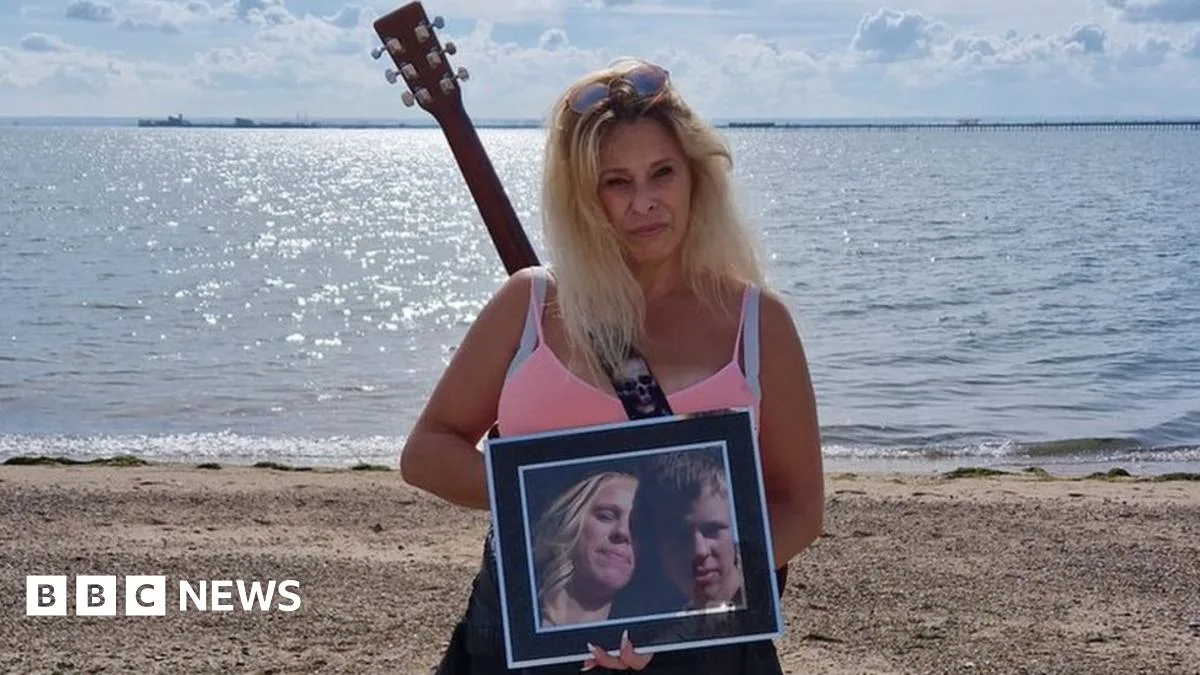
A mother whose teenage son died after inhaling gas canisters has revealed what she tells young people when she sees them doing 'balloons' in the street. Emma Cain's son Jon was just 17 when he died from cardiac arrest after inhaling canisters of butane in 2011. He had only begun experimenting with the substance with his friends three weeks earlier, and on the day he died, his pals had purchased eight canisters of lighter fluid in one transaction.
Now, mum-of-five Emma is warning that more families like hers are being left heartbroken from solvents and laughing gas (nitrous oxide), despite these being Class C drugs under the law. Last year, an inquest heard how 20-year-old Amy Louise Leonard from Bolton died in similar circumstances after inhaling laughing gas. A few days earlier, Amy had shared a Facebook message urging young people to 'put down their balloons', describing how repeated abuse had left her temporarily unable to walk.
Dangerous Trends and Discarded Canisters
A dangerous trend of motorists using balloons behind the wheel has been linked to several serious road collisions. In April, motorist Mohammed Ahmed was jailed for causing a four-vehicle crash on the A725 in East Kilbride after inhaling nitrous oxide, leaving three people injured. Councils across the UK report mounting issues with discarded laughing gas canisters, which are causing 'millions in damage' each year in explosions at refuse sites. Others are left dumped on residential streets by recreational users, despite laws stating only legitimate businesses can purchase nitrous oxide.
Emma's Painful Reminder
Emma said that when she sees the discarded gas canisters that litter many streets in Britain's towns and cities, it is a painful reminder of the misadventure that took her son's life. She explained: 'I get angry. I came out of my son Joshua's flat a few weeks ago, and as I walked past the green area where they put their rubbish... there was a good seven or eight canisters, put there for rubbish. And it just makes me so angry.'
Recalling the devastating moment in 2011 when she learned what had happened to her son, Emma said: 'It was early in the morning, I was getting my youngsters ready for school. When the police called me, they said that something had happened, and that they were sending some officers to see me. When I came off the phone, I threw it on the sofa. A few seconds later I picked it up and went onto Jon's profile on Facebook, and someone had written 'RIP Jon Cain' - that's how I found out. I remember collapsing to the floor and being picked up.'
Remembering Jon
Emma remembers Jon as an 'amazing boy' who would 'throw himself halfway across the room' just to make his brothers laugh. She recalled a special moment close to his 17th birthday when he asked her to go to The X Factor with him. During the show, she crept down to the front to ask security if Cheryl Cole would come out and say happy birthday to him. Cheryl gave a signed photo to Jon, which Emma still has to this day, and at the end of the night, he even had his picture taken with Louis Walsh. The keen guitarist also auditioned for Britain's Got Talent twice and died shortly before his third bid.
Jon was placed into care aged 15 for behavioural issues. His mum said he was 'easily influenced' by his peers, and she now believes he may have had an undiagnosed disorder, such as ADHD or autism, conditions which were 'not as understood' at the time.
Living with Grief
Opening up about her grief all these years later, Emma, 49, said: 'There are days I will just sit there, and I will just burst into tears. And there's days when I'm okay - sometimes I feel guilty for being okay. But I know he doesn't want me to be miserable, he doesn't want me to be upset every day - and I just try and do what I can to make him proud, because I believe he's living through me now.' The tragedy has also left its mark on Jon's four siblings. 'It's not just obviously the parents that lose someone - it affects their friends, it affects their siblings. Jon was Joshua's hero, he was his idol... and he has had to deal with a lot due to the loss of his brother,' she explained.
Taking Action: Schools and Outreach
A decade-and-a-half on, Emma now goes into schools to teach children about the dangers of drugs, with laughing gas having become the second most popular illicit substance among young people in that time. Working with organisations like Achievement Through Football (ATF), she talks to children at risk from falling into anti-social behaviour and substance abuse, often those who have been repeatedly excluded from school. She also runs a Facebook page called Jon's Village in his memory and collaborates with event groups like Raving For a Reason to reach young people through the music and culture they are already interested in.
Despite being among those to publicly campaign for a laughing gas ban before it became law in 2023, Emma says that recent incidents show it is 'clearly still a problem' today. She has stopped people she sees doing it to tell them what happened to Jon. Emma recalled one time she was at the beach at Southend-on-Sea with her family marking what would have been Jon's 28th birthday and saw a 'huge' crowd of teenagers inhaling gas from balloons. Carrying a photo of Jon with her, she walked up and down the seafront, speaking to 'anyone' she saw with a balloon to show them her son's picture and tell them how Jon died inhaling gas. 'They stopped - these were normal kids,' she said.
'I don't think they see it as dangerous because of silly names like 'laughing gas'. What they don't realise is that it's not mixed with oxygen, like it is at the dentist's or the hospital. It's pure gas... they just don't realise how dangerous it is.' Emma is also keen to raise awareness of the re-emergence of solvent abuse among youths, a worrying trend she is hearing more of in her charity work.
Parents Must Talk to Their Kids
Emma believes that while schools and the police are 'doing what they can' to deal with substance abuse, a major part of the responsibility falls on parents to talk to their children about why laughing gas and solvents aren't a 'safe' high - even if they don't suspect their kids are using them. She said: 'Talk to your kids. Just talk to them. Let them know the dangers, research it - whether they're doing it or not.'
The mum has also expressed frustration after figures showed Britain has 1,200 fewer youth clubs than it did in 2010, arguing that the lack of things to do outside of schooltime leaves teens 'bored' on the streets with nothing to do, making them more likely to end up 'taking drugs and carrying knives'. Not only would more investment in youth clubs take kids off the streets, she said, it would also provide spaces for people like her - who live with the tragic aftermath - to speak to young people about drugs in terms they understand. She explained: 'You've got to be involved with what they're into. Whether it's music, football - you have to give these messages where they're going to be heard.'
Government Response
The government has said that they, police and local councils are working to clamp down on abuse of nitrous oxide, which is illegal for possession with the intent of inhalation. Numbers of nitrous oxide seizures for the year ending March 2025 increased by 143%, from 2,564 to 6,223, compared with the previous year, while reported use of nitrous oxide is at the lowest since records began in 2017. Suppliers are also being reminded that allowing the gas to be sold on for recreational use can see offenders handed prison sentences of up to 14 years.
Speaking to the Mirror, a government spokesperson said: 'Our thoughts are with every family that has lost a loved one due to the misuse of drugs. Suppliers of nitrous oxide have a clear legal duty to ensure products are not sold for recreational use. Those found guilty of supply or possession with intent to supply could face up to 14 years behind bars. It is also an offence to illegally dispose of canisters and councils have legal powers to take enforcement action against offenders.'






