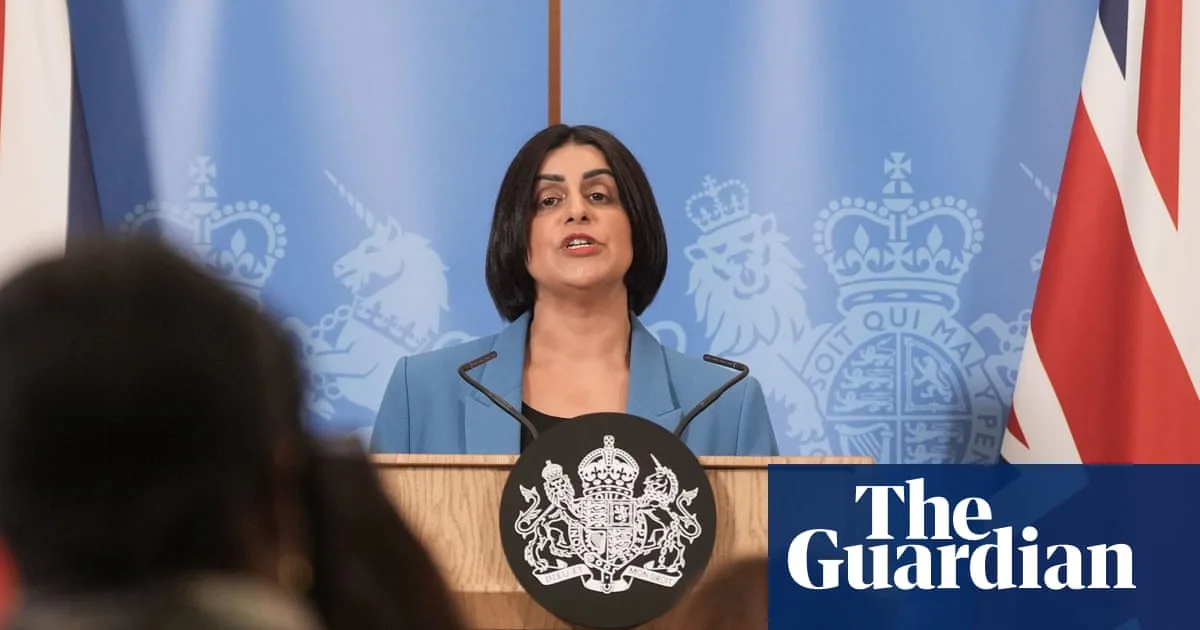
Home Secretary Faces Accusations of 'Shocking Secrecy' Over Asylum Scheme
Home Secretary Shabana Mahmood has declined to disclose how many failed asylum seeker families have accepted financial incentives of up to £40,000 to voluntarily depart from Britain. This refusal comes exactly one month after the launch of the contentious government programme, which has ignited fierce political debate and accusations of governmental opacity.
Conservatives Condemn Lack of Transparency
The Conservative opposition has vehemently criticised the Labour administration, accusing the Home Secretary of maintaining what they describe as 'shocking secrecy' surrounding the initiative. Shadow Home Secretary Chris Philp articulated deep concerns, stating that British taxpayers are entitled to complete transparency rather than concealed information when public funds are being allocated in such a manner.
Philp emphasised: 'It is shameful that Shabana Mahmood is hiding the truth about her new scheme. This raises the question that few, if any, asylum seekers have accepted this deal because it is far more profitable to remain in the UK long-term, receiving free housing, healthcare, schooling and free money via our absurdly generous benefits system.'
Scheme Details and Financial Implications
Under the parameters of Mahmood's scheme, eligible failed asylum seeker families are offered £10,000 per individual, with a maximum cap of £40,000 per family, in addition to provided air tickets for their return journey. The programme was officially inaugurated on March 5, with the acceptance deadline concluding on March 12.
Officials have justified the substantial financial outlay by highlighting the exorbitant costs associated with housing these families in migrant accommodation. Most families eligible for this offer are currently residing in migrant hotels, with annual accommodation expenses averaging approximately £158,000 per family. A Home Office spokesperson clarified: 'Taxpayers should not be footing the bill to accommodate failed asylum families in hotels. Housing a single family in a hotel currently costs the Home Office up to £158,000 a year.'
Potential Expansion and Criticism
The Labour government's programme represents a significant increase in generosity compared to existing voluntary returns schemes, which are typically capped at £3,000. Officials have indicated that the initiative could be expanded to encompass thousands more families if ministerial evaluations deem it successful.
However, the scheme has attracted substantial criticism from migration campaigners. Alp Mehmet, chairman of Migration Watch UK, which advocates for stricter border controls, described the provision of such 'eye-watering' cash incentives as 'absurd' and 'simply wrong'. He further commented: 'It is also unfair to people in this country who are struggling financially to see these very significant sums being handed out to people who have no right to be here.'
Data Gaps and Broader Context
The Home Office currently acknowledges that thousands of failed asylum seeker families are being supported through public funds, yet precise numbers remain unknown due to acknowledged weaknesses in departmental data-gathering processes. Sources have confirmed, however, that approximately 700 Albanian families who have exhausted their legal appeals continue to be supported at public expense.
Eligible families under this scheme are those whose asylum claims have been formally rejected by the Home Office and who have subsequently exhausted all available avenues in the appeals process within the judicial system.
Officials have stated that figures regarding programme uptake will be published 'in due course', though no specific timeline has been provided. When the scheme was initially launched, authorities mentioned they would consider increasing the financial incentive 'depending on take-up', opening the possibility that offers could be elevated to higher levels if initial response proves insufficient.
Political Repercussions and Alternative Proposals
The controversy unfolds against a backdrop of ongoing small boat crossings in the English Channel. Recent incidents include a dangerous crossing attempt off Gravelines, France, where migrants were observed scrambling onto an overloaded dinghy, resulting in five individuals being rescued from the water and two men in their forties tragically losing their lives.
Chris Philp has proposed alternative measures, arguing: 'If the Government had the strength to properly police our borders and deport illegal immigrants they would not have to offer huge piles of taxpayers' money to induce them to leave. Leaving the European Convention on Human Rights and modern slavery treaties would allow illegal immigrants and failed asylum seekers to be quickly deported.'
He concluded with a stark warning: 'This is likely to be yet another of the Home Secretary's schemes to lie in tatters.' The political confrontation over immigration policy and expenditure transparency shows no signs of abating as the government maintains its position on the voluntary returns initiative.






