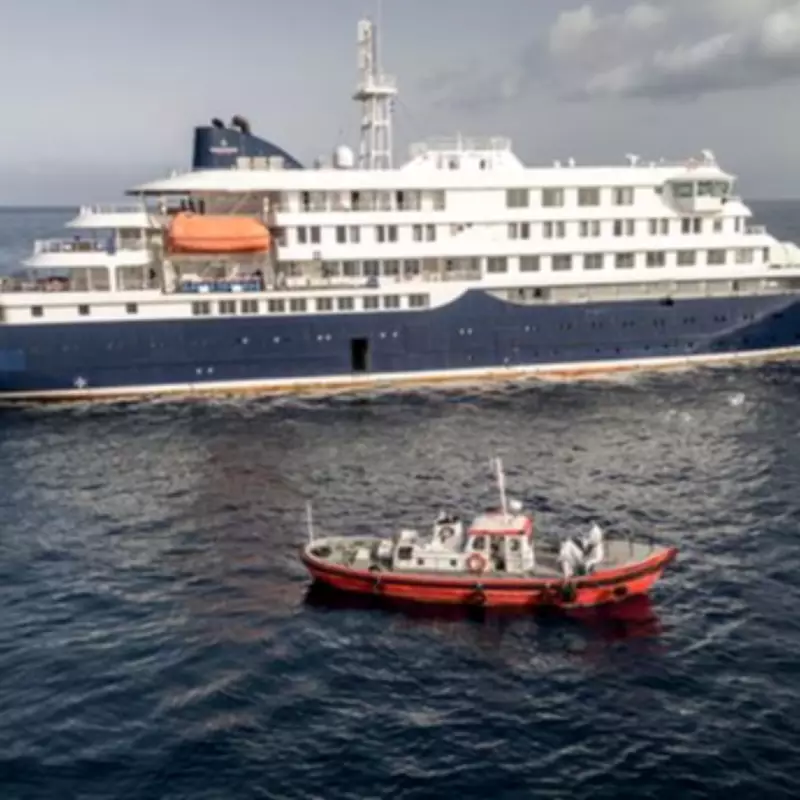
Passengers stranded aboard the MV Hondius have described the grim reality inside the virus-stricken vessel, with empty restaurants and abandoned decks now haunting the once-bustling polar exploration ship. The 107-metre liner, designed for Arctic and Antarctic adventures, is now marooned off Cape Verde after a hantavirus outbreak claimed three lives and left 147 passengers confined mostly to their cabins.
A Ship Transformed
Built in 2019, the MV Hondius caters to outdoor enthusiasts seeking birdwatching, kayaking, and hiking in remote polar regions. Instead of glitzy entertainment, passengers are advised to bring layers for hours of daily walking. However, the current scene is starkly different: the restaurant and alfresco dining areas are deserted, decks are empty, and crew members wear masks. Activities have been axed, and passengers remain in their rooms awaiting updates.
Reviews once praised the "once in a lifetime" experience and "camaraderie" among crew and guests. But now, travel blogger Jake Rosmarin shared a tearful video, saying: "We're not just a story. We're people with families waiting for us at home." Another passenger, Qasem Elhato, 31, told the Associated Press that morale remains high, with passengers reading, watching movies, and enjoying hot drinks.

The Outbreak and Its Origins
Three people have died: a 70-year-old Dutch man, his 69-year-old wife, and a 69-year-old British man. A fourth passenger died on May 2, cause unknown. Argentine officials suspect the outbreak may be linked to a birdwatching tour at a landfill in Ushuaia before boarding. Hantavirus, typically spread through rodent droppings, can cause severe respiratory illness. The WHO has noted potential human-to-human transmission among close contacts.
Evacuation and Quarantine
Three patients have been evacuated to the Netherlands, with health workers in hazmat suits seen at Cape Verde's airport. A Swiss man is being treated in Zurich. The ship had hoped to dock in the Canary Islands, but President Fernando Clavijo opposes entry, citing insufficient safety guarantees. Travel expert Alexandra Dubakova calls this a "diplomatic and humanitarian dilemma," as international law encourages aiding ships but allows states to refuse entry.
If docking is permitted, passengers will face health screenings, triage, and likely quarantine for up to eight weeks. Families may only communicate via phone or video calls initially. John William, a travel advisor, notes that high-level political intervention may be needed to force a docking in Tenerife.
Advice from a Quarantine Survivor
Elaine Spencer, who endured 14 days in quarantine on the Diamond Princess in 2020, advises passengers to stay focused: "It's the unknown that gets you. Keep reading, watching films, and exercising." She recalls the surreal experience and hopes the MV Hondius passengers receive clear communication.
What Comes Next
The operator, Oceanwide Expeditions, faces a delicate mission. Once a port is secured, a restricted area will be set up, and medical teams in full PPE will triage all passengers. Those with symptoms will be evacuated to negative pressure rooms; contacts may be quarantined; low-risk groups will be monitored. Home governments of the 23 nationalities aboard will arrange repatriation flights, but reunions may be delayed.
As Alexandra Dubakova concludes: "It's a tragic end to what was supposed to be a dream Antarctic expedition."