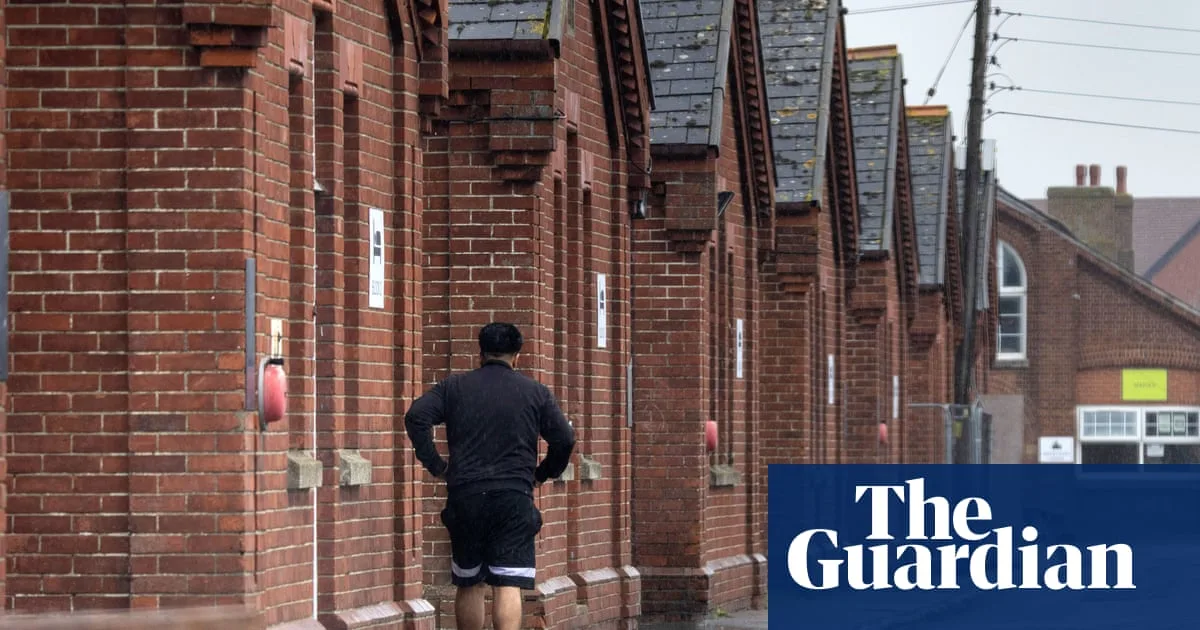
Kent village fears as migrants to be housed in residential bungalow
Kent village fears as migrants housed in bungalow

Neighbours of a bungalow in Walderslade, Kent, designated to house migrants under a government 'dispersal' scheme have voiced fears that the street will become unsafe for their grandchildren. The Daily Mail revealed on Saturday that Labour's pledge to close all 200 migrant hotels by 2029 would effectively mean relocating asylum seekers to residential streets nationwide.

Whitehall leak reveals plans

A Whitehall leak disclosed that two houses in Walderslade village, a suburb of Chatham in Kent, were among approximately 37 properties in the leafy Tonbridge and Malling borough council area likely to be needed to accommodate asylum seekers in the coming months. Further enquiries showed that two north London businessmen had separately purchased houses in Walderslade late last year, before being believed to have let them long-term to Home Office contractor Clearsprings.

At the same time, an Afghan asylum seeker in the village of Laleham, Surrey, was arrested after loitering outside a primary school. It emerged he was already being housed in a similar 'House in Multiple Occupation' also bought from a London businessman last year.

Wide Pickt banner — collaborative shopping lists app for Telegram, phone mockup with grocery list

Residents' growing anxiety

Residents of Walderslade, who have previously expressed concern about the two households of six migrants set to arrive on their doorsteps, have now shared their escalating anxiety. On the longer of the two cul-de-sacs where Home Office migrant-housing contractor Silversprings has taken out a long lease on a bungalow, lives disabled widow Jan Howard, 74. The grandmother and retired accounts clerk, who lives just a minute's walk away, said: 'I've got two teenage granddaughters that come round here at various times of the day and evening to visit me by themselves – and I know what some people have done. I won't feel safe them coming round any more.'

She added: 'This road is a community. Everyone helps everybody, and I sometimes leave my keys in the door by mistake – but someone always knocks and brings them to me. Migrants shouldn't be coming here. I've been told there will be six in the house while they're being processed – then another lot will come in. So we'll never get to know the people who come in. And we're all worried about Ernie, the elderly man who lives right next door to the house involved. He's only recently lost his wife, he's vulnerable and he can do without all this.'

Carer Sara Ryder, 59, who has three grandchildren and lives seconds from the converted bungalow, said: 'We're just so upset because we have grandchildren, and don't know who's going to turn up. The grandchildren have played in the street, but that's not going to happen any more. We reckon when the migrants arrive, they'll be dropped off in the middle of the night.'

Her friend Sue Birch, another carer with five grandchildren who has lived on the cul-de-sac for 22 years, said: 'It's generally only been owner-occupiers here, we've never had anything like this. There's other more suitable places, in central Chatham for example, where there's thousands of flats being built and there are facilities for people like that. What are they going to do here? They're men, and I'm worried they're going to hang around, check us out and make us feel uncomfortable. Would the people who have set this scheme up like them to live next door to them? I don't know who to vote for, I don't know who we can trust. Nothing is really grounded any more – it's completely out of our hands.'

Glynis Coughlan, 68, married to retired driving examiner Peter, lives a few doors from the migrant bungalow and is a full-time carer for her disabled son Benjamin Fuller, 36. Mrs Coughlan said: 'When we moved in it was specifically because we felt the whole close was a safe environment. Nobody comes down here unless they have to, and we walk round here a lot – we bring our son Benjamin, who has cerebral palsy, out on his sit-down scooter. We're worried about migrants arriving because we don't know what type of person they are, and how they're going to react to us. And because we're expecting it to be all men, we feel really uncomfortable. There's better places for migrants, like the closed-down Pontins holiday camp at Camber Sands on the coast an hour's drive away. They could do that accommodation up, they'd have their own rooms in chalets… I voted Reform at the last election. I'm definitely going to do so again now.'

Pickt after-article banner — collaborative shopping lists app with family illustration

Her son Benjamin Fuller, on his mobility scooter, added: 'It's scary. I feel vulnerable. I get upset pretty easy, and depressed and anxious. And it's very underhand the way it has been done, without consultation of the people it's going to affect.'

Profits from migrant housing

Almost all of the enormous profits made by Clearsprings – which holds the Home Office contract to house migrants across southern England and Wales – go to former teen-disco and caravan-park tycoon Graham King. The money he makes from asylum seekers has been adding up to an astonishing total of almost £100 million a year, and King is predicted to become the migration industry's first billionaire. Clearsprings has not responded to requests for comment.

The Home Office maintains its policy to close migrant hotels – following multiple protests by neighbours – is the right one, and that it aims to house those dispersed in facilities such as former barracks. However, a Home Office spokesman refused to say what proportion of former hotel occupants would in reality have to be relocated to domestic houses across the country on a similar template to that proposed in Tonbridge and Malling.