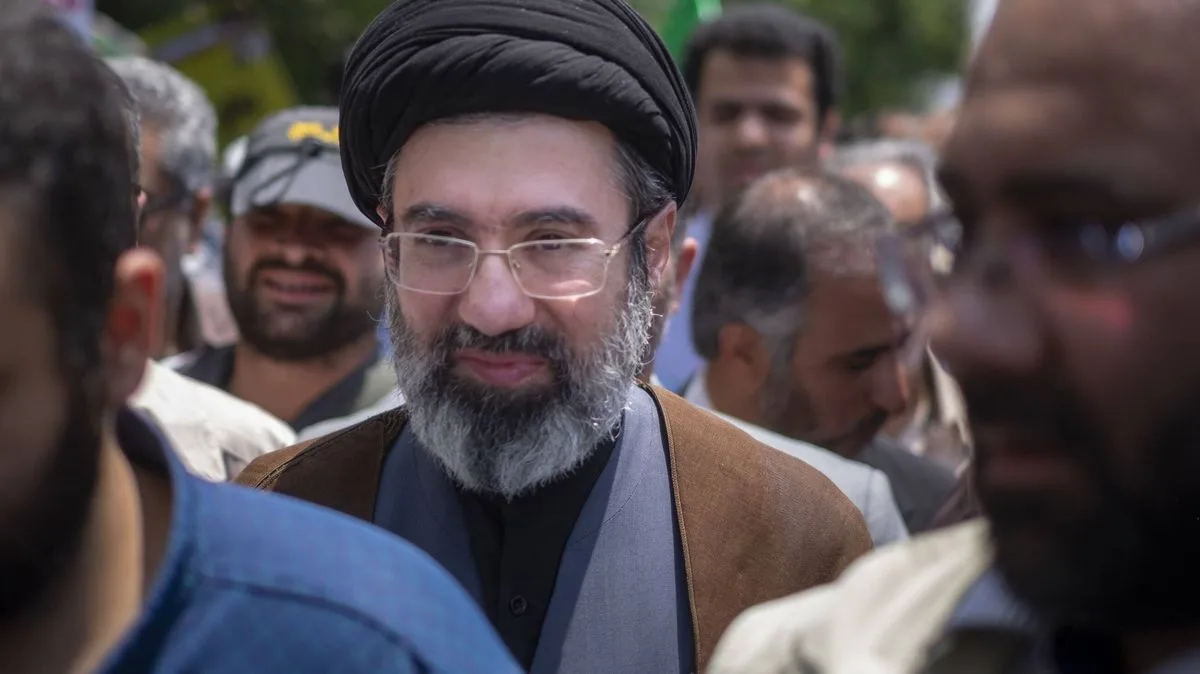
Iran's new supreme leader, Mojtaba Khamenei, has not been seen in public since the outbreak of war with the US, with reports emerging that his face was severely burnt in an airstrike and he requires plastic surgery. The 56-year-old succeeded his father, Ali Khamenei, who was killed in the same strike on 28 February.
According to The New York Times, Khamenei sustained serious injuries in the airstrike, including severe burns to his face and lips, making it difficult for him to speak. He has undergone multiple surgeries, including three operations on one leg, and is awaiting a prosthetic limb. He has also had surgery on one hand and is gradually regaining movement.
Senior Iranian officials told the Times that Khamenei remains mentally sharp and engaged, but maintains minimal direct contact with the leadership. Senior commanders and government officials refrain from visiting him, fearing that Israel could track them to his location and assassinate him.
Communications to Khamenei are handwritten, sealed in envelopes, and relayed via a human chain of trusted couriers who travel by car and motorcycle along highways and back roads. His guidance is returned through the same chain. President Masoud Pezeshkian, a heart surgeon, and the health minister have been involved in his treatment.
Khamenei has transferred decision-making authority to his generals. Experts suggest that his strong bonds with the military, forged during his youth as a volunteer in the Iran-Iraq war, have established them as the predominant power in the country.