ICE's Covert $45 Billion Warehouse Acquisition Strategy for Detention Centres
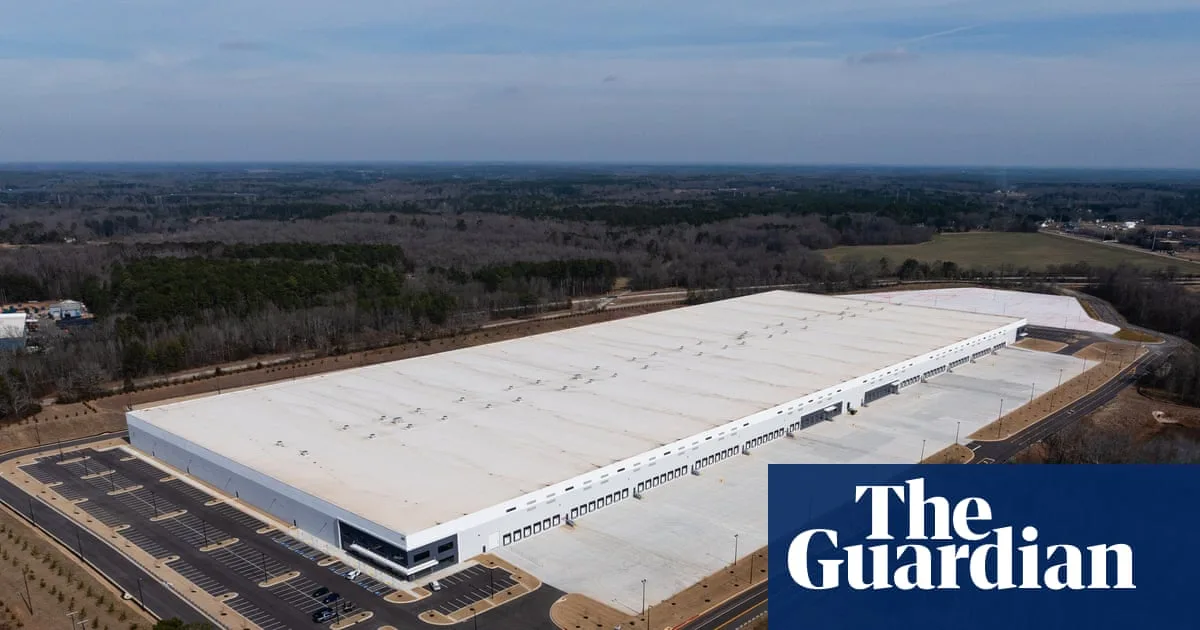
Immigration and Customs Enforcement (ICE) is executing a clandestine $45-billion expansion of detention facilities by purchasing large warehouses across at least twenty American communities, frequently bypassing local government notification. This covert approach has generated significant alarm among municipal leaders who discover deals only after transactions are finalized, raising profound questions about transparency, infrastructure strain, and community impact.
Local Officials Left in the Dark as Deals Are Sealed
In Socorro, Texas, a predominantly Hispanic town of 40,000 residents near El Paso, rumours circulated about federal interest in three enormous warehouses. Before local authorities could verify the information, a deed was filed revealing the Department of Homeland Security had already completed a $122.8 million purchase for the 826,000-square-foot properties. Mayor Rudy Cruz Jr. expressed frustration, stating that no federal communication occurred regarding the impending transformation of the warehouses into a detention centre. "Nobody from the federal government bothered to pick up the phone or even send us any type of correspondence letting us know what's about to take place," Cruz remarked, noting the strategy appears designed to avoid opposition.
Nationwide Pattern of Stealth Purchases Emerges
This scenario repeats in numerous locations, including Arizona, Georgia, Maryland, Pennsylvania, and Texas, where ICE has acquired at least seven warehouses through similar undisclosed processes. The agency acknowledges seeking additional detention space but refrains from disclosing specific sites before acquisitions. Communities often learn about ICE's intentions through journalists or activist-shared spreadsheets rather than official channels. DHS objects to labelling the sites as warehouses, emphasising they will become "very well structured detention facilities meeting our regular detention standards."
Substantial Expansion Plans Confirmed
The scale of the warehouse project became clearer on February 13 when New Hampshire's governor's office released an ICE document outlining a $38.3 billion plan to increase detention capacity to 92,000 beds. Since President Donald Trump took office, ICE detainee numbers have surged from 40,000 to 75,000 across over 225 sites. The document details eight large-scale detention centres housing 7,000 to 10,000 detainees each, sixteen smaller regional processing centres, and ten existing "turnkey" facilities. Funding originates from last year's tax and spending cuts legislation, which nearly doubled DHS's budget.
Legal and Financial Concerns Mount in Affected Communities
Professor Emeritus Charles Tiefer of the University of Baltimore Law School explains that the Trump administration utilises military contracts for construction, enabling secrecy and rapid movement without standard processes. Communities express worries about infrastructure, particularly water and sewage systems, and financial repercussions. In Berks County, Pennsylvania, Commissioner Christian Leinbach highlighted the loss of over $800,000 in local tax revenue after ICE purchased an $87.4 million warehouse promoted as a logistics centre. Although ICE touts worker income taxes, the facilities themselves are exempt from property taxes.
Specific Community Reactions and Opposition
In Social Circle, Georgia, officials were stunned to learn through a reporter about plans for a facility holding 7,500 to 10,000 people—twice the city's population. The city stated it lacks capacity for such demand, criticising ICE's reliance on a non-existent sewer treatment plant in its analysis. Similarly, Surprise, Arizona, officials sent a harsh letter to Homeland Security Secretary Kristi Noem after ICE bought a massive warehouse near a high school without warning, prompting the state attorney general to consider legal action declaring it a public nuisance.
Public Outcry and Historical Context in Socorro
Back in Socorro, public comments at a City Council meeting extended for hours, with residents referencing three recent deaths at a nearby Fort Bliss ICE detention facility. Jorge Mendoza, a retiree with Mexican immigrant grandparents, voiced concerns about innocent individuals being ensnared. The meeting overflowed with opponents, some standing beside murals honouring the Braceros Program, which historically boosted Socorro's economy before 1950s mass deportations. Former U.S. Department of Justice attorney Eduardo Castillo advised officials that challenging the federal government, while intimidating, is "not impossible," urging action to prevent "another inhumane detention facility."
The chaotic process includes ICE admitting a "mistake" in announcing purchases in Chester, New York, and Roxbury, New Jersey, though the Roxbury sale later closed. With backlash growing even in areas that supported Trump, the stealth warehouse acquisitions underscore deepening tensions between federal immigration enforcement strategies and local governance, leaving communities scrambling for information and fearing substantial long-term consequences.






