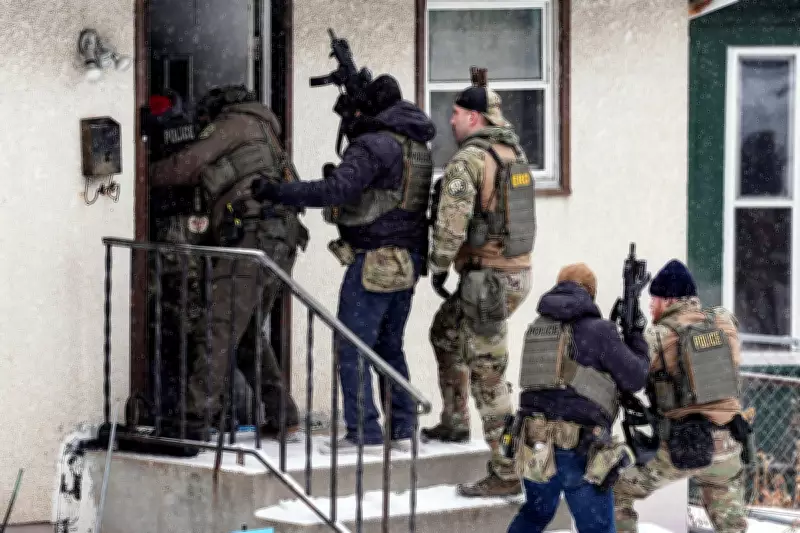
In a significant policy shift, Immigration and Customs Enforcement (ICE) officers operating in Minnesota have been issued fresh operational orders that fundamentally alter their approach to both public engagement and enforcement priorities. The new guidance, which comes after a period of intense scrutiny, instructs agents to refrain from any interaction with protesters or individuals deemed 'agitators' within the state. This directive marks a clear departure from previous tactics that had, on occasion, led to chaotic and violent confrontations between federal personnel and demonstrators.
A Focus on Criminal Nexus
Concurrently, the updated enforcement protocol mandates that ICE officers concentrate their efforts specifically on arresting migrants who possess a verifiable criminal background. The orders specify that all targets for apprehension must demonstrate a 'criminal nexus,' a term that broadens the criteria beyond mere convictions. This allows for arrests based on an individual's comprehensive criminal history, which may include charges or other documented illegal activities, not solely finalised court judgements.
Catalyst for Change
This substantial recalibration of ICE's operational stance in Minnesota is not occurring in a vacuum. It follows the tragic deaths of two American citizens, Renee Good and Alex Pretti, during separate confrontations involving federal law enforcement in Minneapolis. These incidents generated considerable negative public perception and media coverage, placing immense pressure on the administration to reassess its strategies.
In response to the growing criticism, internal personnel changes have been implemented, and there has been a formal acknowledgement from within the agency that "certain improvements could and should be made." Former ICE official Tom Homan, while engaged in damage control efforts in Minneapolis, publicly conceded that "no agency is perfect," subtly underscoring the need for the procedural adjustments now being enacted.
Implications and Enforcement
The new orders are designed to de-escalate potential flashpoints by removing ICE officers from volatile protest situations, thereby aiming to prevent a repeat of past clashes. By narrowing the enforcement focus to migrants with criminal records, the agency ostensibly seeks to align its actions more closely with public safety objectives, potentially mitigating some of the controversy surrounding broader immigration enforcement actions. The full impact of these policy changes on ICE operations and community relations in Minnesota remains to be seen as the directives are put into practice.