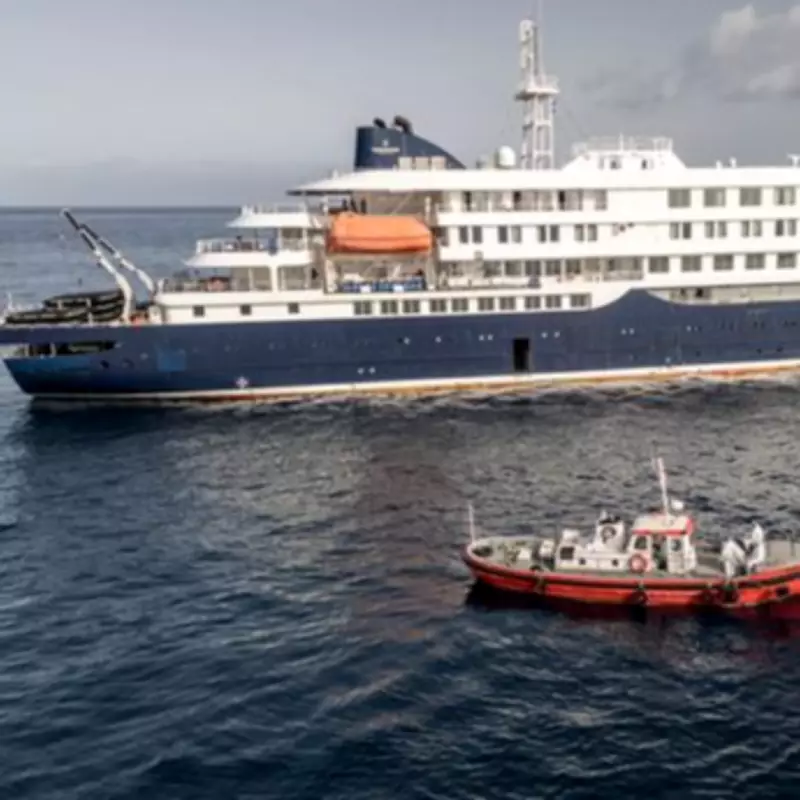
A deadly hantavirus outbreak on a cruise ship is being closely examined by experts as a potential turning point in understanding the virus's ability to spread between humans. Professor Paul Hunter, a leading microbiologist from the University of East Anglia, has described the situation aboard the MV Hondius as a vital test case for assessing the future threat posed by hantavirus.
The Dutch vessel, which had been stranded off the coast of Cape Verde in west Africa, has seen eight suspected cases of hantavirus linked to the ship, including three fatalities. Among those affected are two British nationals: a passenger who was evacuated to South Africa and remains in critical but stable condition, and a crew member believed to be the ship's doctor. The British medic was one of three individuals evacuated on Wednesday, all now en route to the Netherlands for medical treatment.
Expert Analysis on Transmission Risks
Professor Hunter noted that this outbreak could provide crucial insights into how hantavirus spreads from person to person. He stated: "Sometimes outbreaks happen that affect how we understand a particular infection. This could be very important in understanding how hantavirus spreads from person to person and the authorities will be investigating this very thoroughly."

Initially, experts were cautious about the possibility of human-to-human transmission, as evidence had been disputed. However, the infection of the ship's doctor has strengthened the case for such spread. Professor Hunter explained: "The fact that a doctor might have it would fit with the idea that human-to-human transmission had occurred. This virus doesn't spread that well, but when it does, it tends to affect healthcare workers because they have to get closer to you than pretty much anyone other than lovers or family."
Incubation and Onward Transmission
The virus can have an incubation period of up to several weeks, and Professor Hunter emphasized that while the risk of onward transmission in Europe is low, it is not impossible. He reassured that casual contact, such as walking past an infected person, is unlikely to pose a risk.
South Africa's health ministry confirmed that two passengers tested within the country have the Andes strain of the virus, which is rare but suspected to be transmissible between humans. Professor Hunter added: "The finding of the Andes variant strengthens the hypothesis that the initial cases were acquired in Argentina. This is endemic in Argentina and its host is the Long-tail pygmy rice rat, which as far as I know does not occupy ships. The question remains how this infection then spread to the later cases."
Ship's Journey and Evacuations
The MV Hondius had been anchored off Cape Verde while arrangements were made to evacuate crew members. The latest evacuations have allowed the ship to continue its three-day journey to the Canary Islands, after Spanish authorities granted permission for it to dock. A dispute had arisen with the president of the Canary Islands, who expressed concerns about the ship docking in Tenerife. Spanish health officials reported that the British medic is now in a more stable condition after being in critical care.
Tourists, many of them pensioners, have been living in close quarters and sharing dining facilities since the ship departed from Argentina on its transatlantic voyage about a month ago. This environment has raised concerns about the potential for further spread of the virus.