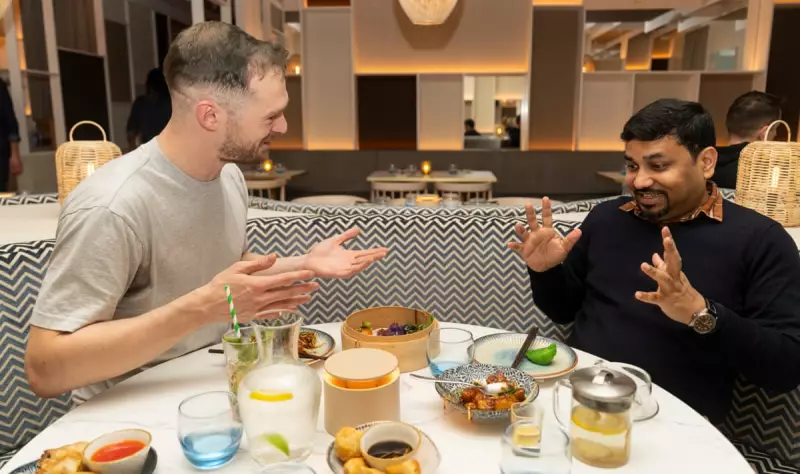
In a London restaurant, two men from opposite ends of the political spectrum sat down for a meal and a conversation that would test the UK's deep political divides. Peter, a 34-year-old former civil servant and Green Party member, faced Akshat, a 43-year-old Conservative-voting risk manager.
A Meeting of Minds Over Starters
Peter, who describes himself as left and a globalist, admitted to initial nerves. "I was a little nervous," he confessed, wondering if he would be "attacked for being a snowflake." Akshat, originally from India and a UK resident for five years, described himself as slightly right of centre. Despite their differences, they bonded over a shared love of London and their experiences as immigrants, with Peter having grown up in Dublin and lived in the US and Spain.
Over shared starters including fish spring rolls and daikon cakes, with Peter drinking mojitos and Akshat enjoying beers, they began a rational discussion. Akshat noted that the issues, while UK-centric, were universal, and he found Peter to be less dogmatically liberal than he had anticipated.
The Main Course: A Clash on Immigration
The conversation soon turned to the heated topic of immigration. Akshat presented a culinary metaphor, comparing immigration to adding salt to a dish. "When you add a little bit, the dish tastes wonderful. Add too little or too much and the dish is either too bland or too salty." He expressed concern about economic migrants potentially weighing on the benefit system.
Peter challenged this view, pointing to the complex reality of the UK's immigration system. He highlighted the hostile environment policy initiated under Theresa May, high visa fees, NHS surcharges, and restricted access to benefits. "The red carpet isn't rolled out for anyone," he stated. He found it incredible that recent policy changes effectively say, "we want your work, but we don't want you," arguing for a greater level of humanity.
Finding Common Ground and Colonial Reckoning
Despite their disagreement on immigration, the two found some shared perspectives. Both were sceptical of unchecked capitalism, though Akshat emphasised that wealth creation benefits society. They agreed that some parts of society, like politics and the media, thrive on stoking division.
The debate then moved to the contentious issue of colonial reparations. Peter argued for a reckoning with colonial history, using the example of the Irish famine. For him, decolonisation isn't just about signing a cheque but examining historical wrongs.
Akshat firmly disagreed, stating that you cannot judge history with present-day morality. He questioned the practicality, asking if the UK was even in a position to pay a hypothetical huge compensation to a country like India, and emphasised that current society had no control over past events.
Key Takeaways from the Dinner Debate
After two and a half hours, accompanied by dessert and sweet Japanese wine, the dinner concluded. While neither man persuaded the other to change their core beliefs, they both valued the civil exchange. Peter noted that they enjoyed the dinner and would hopefully be more open to future conversations with people of differing views. Akshat echoed this, stating that while his views weren't changed, he understood Peter's concerns and believed in working towards the betterment of society through dialogue.