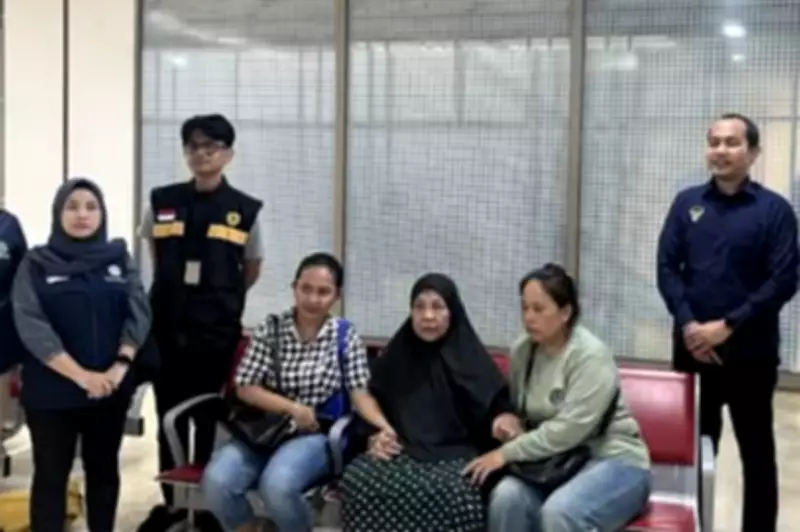
Indonesian Grandmother Freed After 15 Years on Malaysian Death Row Returns Home
An Indonesian grandmother who spent approximately 15 years on death row in Malaysia for drug trafficking has finally returned home after receiving clemency. This case, according to rights activists, exposes the systematic exploitation of poor migrant women in cross-border drug operations, highlighting a deeply troubling pattern of deception and vulnerability.
A Journey of Deception and Exploitation
Ani Anggraeni – a name her trafficker placed on her passport without her knowledge – boarded a flight from Kuala Lumpur to Jakarta on Thursday, 2 April 2026. This followed the governor of Penang granting her a pardon on 19 March, just before Eid al-Fitr. The grandmother, 66, whose real name is Asih, had never travelled abroad before she was deceived into carrying drugs across borders in 2011.
"I feel like it's unreal, but it's real," she told the South China Morning Post. "I can only be grateful to return to Indonesia and meet my family."

Asih left Indonesia in 2011 after a woman named Duwi offered her work as a carer in Malaysia, promising a high salary and covering her accommodation and travel expenses. However, without her knowledge, Duwi falsified Asih’s name on her passport and instructed her not to use her real name when travelling. This tactic, described by Hayat, the Kuala Lumpur-based anti-death penalty group that later took up her case, is a common modus operandi used by human traffickers to deceive immigration authorities.
Arrest and Harsh Sentencing
Upon arrival in Malaysia, Asih was directed to travel to Vietnam to collect a suitcase and deliver it to Duwi's relative in the northern state of Penang. She was arrested at the Penang airport on 21 June 2011 after authorities discovered 3.87kg of methamphetamine in the bag. A Malaysian court subsequently sentenced her to death under the Dangerous Drugs Act in 2012, a harsh penalty that reflected the country's strict drug laws at the time.
Survival and Systemic Failures
During her time in prison, Asih endured immense hardship, including surviving endometrial cancer, undergoing a hysterectomy, and experiencing multiple incidents of abuse, according to news reports. In a joint statement, Hayat and Jakarta's Community Legal Aid Institute emphasized that Asih's case was about more than a conventional drug charge.
"It is a profound narrative of deception, exploitation, and systemic vulnerability," they stated, adding that it highlighted "the insidious ways women are ensnared by human trafficking syndicates, manipulated into illicit operations without ever fully comprehending the reality of their circumstances."
The groups argued that Asih and women in similar situations were not masterminds but "victims of a flawed system that has failed to protect them," and called her repatriation a critical legal and humanitarian precedent. They noted that at least eight Indonesian women remain imprisoned in Malaysia after having their death sentences commuted, typically coming from impoverished families, recruited with job offers or romantic advances, and coerced into carrying bags containing drugs without their knowledge.
Broader Legal Context and Reforms
Asih's release coincides with Malaysia's ongoing efforts to address the consequences of its 2023 decision to abolish the mandatory death penalty. This reform gives judges discretion in 11 offences and allows for resentencing for those already on death row. According to Hayat, the number of people on death row for drug offences has significantly decreased, from 705 in 2024 to 40 in 2025. An execution moratorium has been in place since 2018, with the last known execution carried out in 2017, indicating a shift towards more humane legal practices.
This case underscores the urgent need for stronger protections for vulnerable migrant workers and a more nuanced approach to justice in drug-related offences, particularly where exploitation and coercion are evident.