Conservative Georgia Town Unites Against ICE Detention Centre Plans
In a surprising show of defiance, Social Circle, a small Georgia town with a predominantly conservative electorate, is mounting a robust opposition to a proposed Immigration and Customs Enforcement (ICE) detention facility. The federal government's $128 million purchase of a vast warehouse, intended to hold up to 10,000 detainees, has sparked widespread local outrage over secrecy and infrastructure inadequacies.
Local Officials Take a Stand
Eric Taylor, the city manager of Social Circle, recounted a recent phone call from ICE staffers requesting water activation for the 1 million square foot warehouse. "I told them I'm not going to do it," Taylor stated firmly. "Not until they come and talk to me." Alongside the mayor and police chief, Taylor has publicly opposed the Department of Homeland Security's plans, which could establish one of the largest immigration detention centres in the United States in this rural community.
The town's concerns are multifaceted, focusing on critical infrastructure shortcomings. Taylor highlighted that the sewage system, dating back to 1962, is already operating at full capacity, handling 660,000 gallons daily. With the potential influx of detainees, he warned, "you'll have poop on the ground over there." Additionally, the water supply from the Alcovy River is stretched thin, nearing its permitted limit of one million gallons per day during peak summer months.

A Coalition of Strange Bedfellows
Despite Social Circle's location in a county where nearly 75% voted for Donald Trump, a diverse coalition has emerged in opposition. John Miller, a local business owner, noted that the town's Facebook announcement of ICE's purchase garnered nearly 1,000 comments, reflecting unprecedented community engagement. "This is a close, tight-knit community," Taylor emphasised. "I can tell you there is unity around this issue."
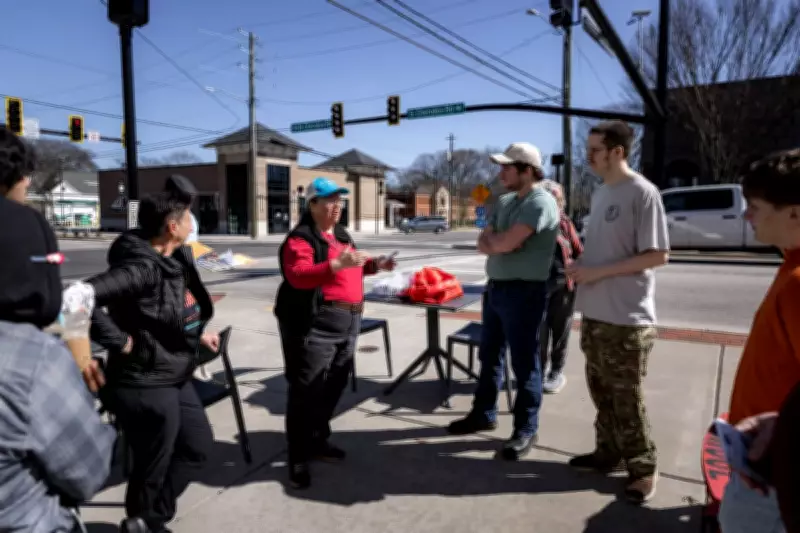
Residents expressed their worries during canvassing efforts. Harriett Nunnally, a retired dental hygienist, remarked, "I would rather not have it here. I don't see any pluses ... nobody wants a prison in their backyard." Becca Moore, an interior designer, described the plans as "awful," voicing concerns about detention conditions and lack of transparency.
Youth and Business Concerns
Even local students are engaged in the debate. Chelsea Gordon, 13, said ICE's plans were "horrible," adding, "I feel like people wouldn't want to live here" with the facility nearby. Daniya Locklin, 14, mentioned her friends from other countries, stating, "I would hate to see them go."
Business owners like Mabel Standridge, who runs Standridge Color with her husband, highlighted safety risks, referencing immigration-related killings in Minnesota. "There's always a chance such a tragedy could happen here," she cautioned. Standridge also pointed to emergency service limitations, noting Social Circle has only one ambulance, which could delay critical responses.
Federal Disengagement and Community Action
The lack of federal communication has been a persistent issue. Taylor revealed that no ICE or Homeland Security officials had contacted local government as of Thursday, despite plans advancing. The One Circle Community Coalition, formed last July, sent a detailed letter to the Department of Homeland Security on 29 January, asserting, "Our identity is built on our small-scale, rural character – a character that is incompatible with a federal facility of this scale." The letter concluded poignantly, "We are Americans after all. Will we come first, or be left out completely?"
In a further setback, a scheduled meeting with a U.S. Citizenship and Immigration Services representative was cancelled without notice, leaving city staff waiting for 45 minutes past the appointed time. This incident underscores the ongoing frustration and distrust among residents towards federal authorities.
As Social Circle continues to push back, the town's resistance highlights broader national tensions over immigration enforcement and local autonomy, with infrastructure strains and community cohesion at the forefront of the debate.