Facial Recognition Drones Deployed in Channel to Target Migrant Smugglers
The Home Office has initiated a trial of military-grade facial recognition drones over the English Channel, aiming to crack down on migrant smugglers operating small boats. These advanced drones are equipped with radar-enabled cameras capable of identifying human faces from distances of up to half a mile, even if individuals have altered their clothing or appearance.
Evasion Tactics and Technological Response
Border Force officers have reported that smugglers frequently change their outfits or shave at sea upon spotting British rescue vessels, blending in with passengers to avoid detection. This tactic has historically allowed many perpetrators to escape prosecution. The new drone technology, first reported by The Times, is designed to overcome these evasion methods by providing persistent surveillance and accurate identification.
The Home Office hopes this strategy will significantly increase prosecution rates for assisting unlawful immigration, an offence that can carry a life sentence. However, the technology must undergo rigorous testing and legal review before full deployment to address practical and regulatory hurdles.

Context of Channel Crossings and Enforcement
Dangerous small boat crossings in the Channel have surged over the past three years, with 41,472 arrivals recorded in 2025. So far this year, 4,766 migrants have made the journey, representing a 28 percent decrease compared to the same period last year. Despite this decline, recent incidents highlight ongoing risks.
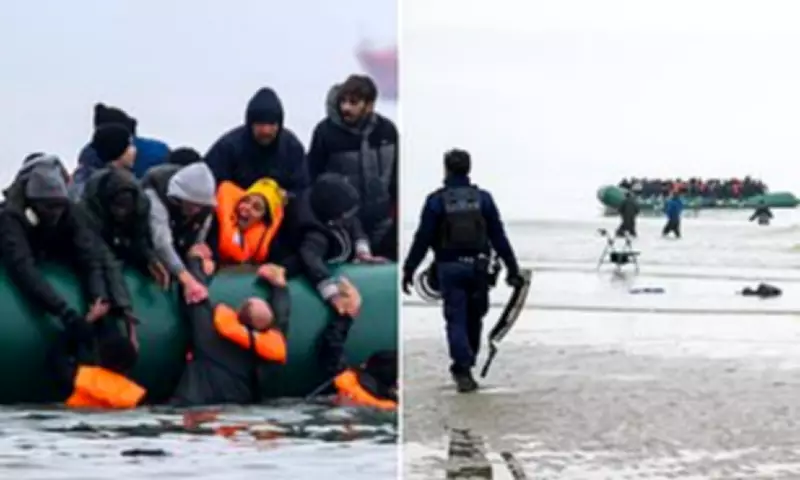
Last week, two people died and three were injured when hundreds of migrants attempted to board a rubber dinghy bound for Dover from France. Smugglers exploited improved weather conditions in northern France to launch at least five boats after a week of no crossings.
The Daily Mail observed around 50 migrants sprinting across Gravelines Beach, removing coats and shoes before donning life vests as they awaited smugglers. A group of eight police officers filmed the scene but did not intervene.
Legal Actions and Policy Developments
In a recent case demonstrating enforcement efforts, two Vietnamese nationals were jailed for over a decade after profiting an estimated £750,000 from advertising illegal Channel crossings on Facebook. Hoang Nguyen received 10 years and six months, while Hop Nguyen received 12 years, both for assisting unlawful immigration between January 2023 and April 2024.
These individuals, who arrived in the UK via small boats themselves, helped traffic at least 250 migrants at costs up to £18,000 before absconding from Home Office accommodation.
Concerns about a summer spike in arrivals persist after the UK failed to renew a three-year deal funding French beach patrols. Home Secretary Shabana Mahmood recently agreed to a two-month extension of the current arrangement until the end of May.
Government Statements and Future Outlook
A Home Office spokesperson stated: 'This government is restoring order and control to our border. This includes utilising technology to improve and accelerate our work.' They added that the Home Secretary has announced sweeping reforms to tackle illegal migration by removing incentives and scaling up returns of those without legal status.
The facial recognition drone initiative represents the latest measure in the Home Office's ongoing battle to reduce Channel crossings, combining technological innovation with legal enforcement to target smuggling networks more effectively.