Channel Migrant Fatalities Escalate Following UK-France Border Security Agreement
Shocking new analysis reveals that the number of migrants who died or went missing while attempting to cross the English Channel soared dramatically after a major UK-France agreement to halt illegal small boat crossings. The report, compiled by the Centre for Sociodigital Futures at the University of Bristol and Swiss research agency Border Forensics, presents a grim picture of escalating human tragedy linked to border enforcement policies.
Deadly Statistics Following the £460 Million Pact
In the final four months of 2023, shortly after then-Conservative Prime Minister Rishi Sunak agreed a £460 million pact with French President Emmanuel Macron, seventeen people died or disappeared in six fatal Channel incidents. The following year proved even more devastating, with eighty-three people recorded dead or missing across twenty-two incidents—making 2024 the deadliest year on record for Channel crossings. Another twenty-nine fatalities occurred in twenty incidents during 2025, according to researchers.
The substantial funding increase allowed French authorities to significantly intensify Channel policing. Charities operating in northern France reported a noticeable cultural shift within French law enforcement, with police adopting more aggressive tactics and feeling pressured to demonstrate decisive action to justify the UK financial support. This heightened enforcement has created a cascade of dangerous consequences.

Overcrowding and Dangerous Smuggler Tactics
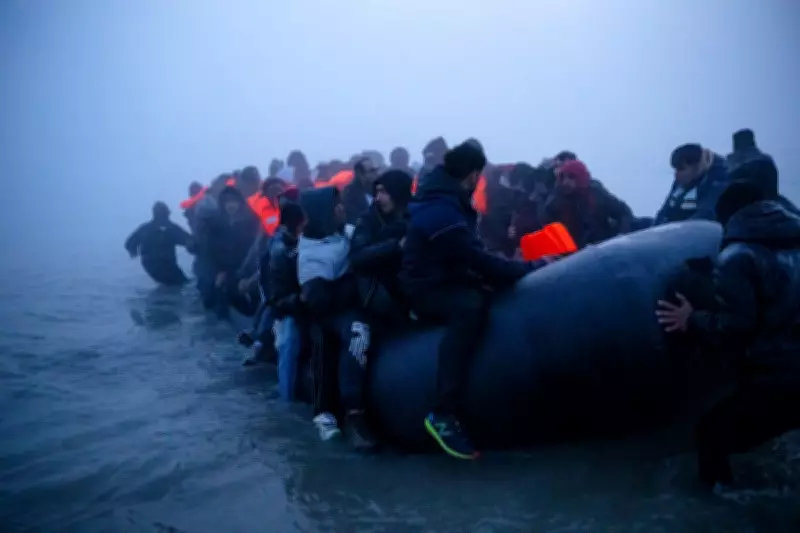
The report documents that dinghies have become increasingly overcrowded, with some vessels cramming more than one hundred people aboard. As French police presence surged along the coastline, people smugglers resorted to perilous new methods, including so-called "taxi boats" that pick up migrants from the water and launch from points further along the coast. These practices have moved deadly incidents closer to French shores in recent years.
Researchers found that the correlation between crossing numbers and fatalities is not straightforward. In 2022, when over forty-five thousand people successfully crossed the Channel, only seven deaths were reported. This contrasts sharply with the post-deal period, suggesting that enforcement measures themselves are contributing to the danger.
Tragic Human Cost and Changing Patterns
The human toll includes specific tragedies like that of Wudanese, a twenty-four-year-old Eritrean woman who became the first person killed inside a dinghy in September 2023. She was asphyxiated under the weight of other passengers when approximately eighty people attempted to board a vessel departing from Bleriot-Plage near Calais. Greater beach surveillance and restrictions on purchasing inflatable kayaks have made independent crossings more difficult, pushing migrants who cannot afford smugglers to rush overcrowded dinghies at the last moment—a scenario that allegedly contributed to Wudanese's death.
With dinghies overloaded and of poor quality, they tend to fail earlier in journeys, often close to French beaches. Home Office data shows an average of seventy-one people per boat during winter months last year, with Border Security Commander Martin Hewitt reporting one vessel carrying one hundred twenty-five people.
Expert Analysis and Proposed Solutions
Travis Van Isacker, research fellow at the Centre for Sociodigital Futures, stated that "these distinct but entangled border policing practices have had the cumulative effect of creating more dangerous circumstances for migrants." He added that state policies to prevent small boat crossings "are a clear driver in the increased number of deaths amongst migrants in the Channel."

Tony Smith, former director general of the Border Force, emphasized that overcrowding is the primary cause of drownings, with most deaths occurring near the French shoreline rather than further out at sea. He described smugglers operating "a very sophisticated international organised crime business" that constantly adapts along the coastline. Smith suggested practical measures like floating barriers to prevent dinghy travel through inland waterways and the formation of joint UK-French maritime patrols, noting that "this is going to be an ongoing problem unless we get agreement."
Official Responses and Ongoing Negotiations
A Home Office spokesperson acknowledged each death as a tragedy, stating: "Crossing the Channel on a small boat is never safe... We are tackling international immigration crime and working with France to bear down on small boat crossings to save lives." The spokesperson referenced government reforms aimed at removing incentives for illegal migration.
The UK and France are currently negotiating the next three years of funding, with British officials in Paris this week discussing the continuation of border security cooperation. The French interior ministry has been contacted for comment on the report's findings.
The data for the analysis combined official numbers with information collected by migrants' rights associations and activists documenting border violence, providing a comprehensive view of the human cost of Channel crossing policies since 2019.