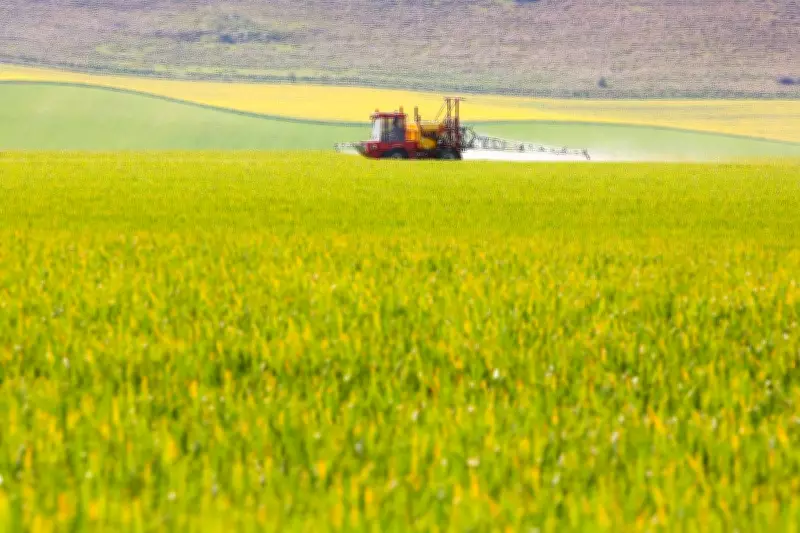
Campaigners are urging the UK Government to prohibit the use of glyphosate as a pre-harvest drying agent on crops, following studies linking the herbicide to cancer and other illnesses. Glyphosate, widely known as the active ingredient in Roundup, is used by some farmers to control weeds and to desiccate crops before harvest.
The Soil Association has warned that this practice leaves residues in everyday foods such as bread, breakfast cereals, and beer. Nearly half of crop samples tested in the UK—including wheat, barley, and oats—contained traces of the chemical.
EU Ban and UK Renewal Process
The European Union banned the use of glyphosate as a pre-harvest drying agent in 2023. Campaigners now call on the UK to follow suit. According to Farmers Weekly, the renewal of glyphosate’s licence in Great Britain has entered a critical stage. The Health and Safety Executive (HSE) is set to launch a major public consultation before a final approval decision later this year. The consultation will allow farmers, industry, and farming organisations to review the scientific dossier submitted by the Glyphosate Renewal Group (GRG), a coalition including Bayer, Syngenta, Nufarm, and five other companies seeking renewal.

Glyphosate remains approved in Great Britain until December 15, after ministers extended its authorisation to allow regulators time to assess new data. Farming organisations argue that continued access to glyphosate-based weedkillers—including as a pre-harvest desiccant for cereals and oilseed rape—is essential for food security, climate goals, and farm viability.
Health Concerns and Scientific Evidence
In 2015, the World Health Organisation classified glyphosate as a probable carcinogen. In March this year, an international group of scientists reviewed new science published over the last decade at the Seattle Glyphosate Symposium. Their expert statement concluded that glyphosate and glyphosate-based herbicides (GBHs) harm human health and can cause cancer. It added: “The evidence that glyphosate and GBHs harm human health at levels of current use is now so strong that no additional delays in regulation of glyphosate can be justified.”
Campaign Demands and Farmer Support
In an open letter, the Soil Association, Nature Friendly Farming Network, Greenpeace, Riverford, The Wildlife Trusts, and other environmental and health groups call on the Government to end pre-harvest desiccation in the UK. If implemented, this could prevent glyphosate from being sprayed annually on crops covering up to 780,000 hectares—an area five times the size of London, according to Soil Association estimates. The charity has also launched a petition and urges support for farmers to adapt their practices while maintaining viable businesses, alongside research into alternatives.
Cathy Cliff, campaigns co-ordinator at the Soil Association, said: “No-one wants a chemical linked to cancer in their sandwiches or breakfast cereal. The UK is already lagging behind Europe, which takes a much tougher stance on pesticides that pose a risk to human health. The Government must act to protect public health by stopping this toxic chemical from being sprayed on our food at harvest. Many farmers are already reducing their use of harmful pesticides, and the Government must work harder to support their efforts.”
Dr May van Schalkwyk, from the Centre for Pesticide Suicide Prevention and Global Health Policy Unit at the University of Edinburgh, stated: “There is a mounting body of independent evidence of the harm to people’s health and the environment from glyphosate-based pesticides. Government action is long overdue.”

Guy Singh-Watson, founder of organic vegetable box company Riverford, commented: “Glyphosate use in our food system is poison in plain sight. Spraying crops with a chemical classified as ‘probably carcinogenic’, often just days before harvest, creates a direct route from field to plate that should concern us all. This is not only a public health issue, but also a farming one too. Many farmers are locked into using these chemicals by a system that leaves them with few commercially viable alternatives. The Government has a responsibility to ensure our food is produced without compromising the health of people or the planet. Banning glyphosate as a pre-harvest desiccant is a sensible first step, and farmers must be supported to make the transition away from chemical dependence.”
Government Response
A Government spokesman said: “Like all pesticides, glyphosate is subject to strict regulation in Great Britain and are only approved for use if the evidence shows that they won’t harm human or animal health, and won’t have unacceptable effects on the environment. Our UK Pesticides National Action Plan supports moves by farmers, growers and other land managers to minimise the use of pesticides and increase integrated pest management – a holistic and sustainable approach to pest, weed and disease control.”