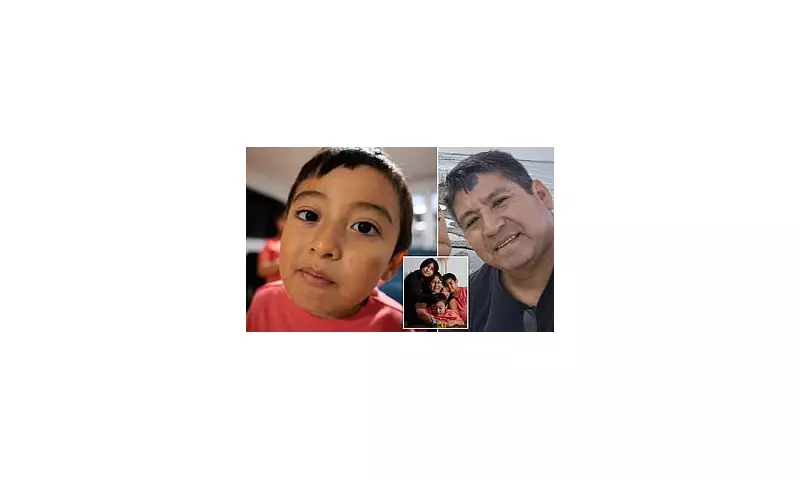
Philadelphia Boy's Life in Peril as Father Accepts Deportation to Bolivia
A five-year-old Philadelphia boy with multiple serious health conditions now faces potentially life-threatening consequences after his father, an undocumented immigrant from Bolivia, accepted deportation from the United States. The family's heartbreaking situation highlights the complex human impact of immigration enforcement on vulnerable individuals.
Critical Medical Dependence on Father
Jair Merida, aged five, suffers from brain cancer, autism, and a severe eating disorder known as avoidant-restrictive food intake disorder. His survival depends on being fed PediaSure nutrition drink, which he would only accept from his father, Johny Merida. The 48-year-old father would leave work daily to provide this essential care for his son.
This critical care arrangement collapsed in September when immigration officers detained Johny Merida during a traffic stop on Roosevelt Boulevard in Philadelphia. The father had lived in the United States without official permission for approximately two decades following a previous deportation in 2008.

Family's Desperate Situation
With Merida held at the Moshannon Valley Processing Center in rural Pennsylvania for nearly five months, his family has struggled profoundly. His wife, Gimena Morales Antezana, 49, stopped working to provide around-the-clock care for Jair but can no longer afford basic necessities including rent, water, and heat for their three children.
"We have been trying to survive, but it is difficult with the children because they miss their dad so much," Morales Antezana told the Philadelphia Inquirer. "It's scary to think that if something happens we don't have a hospital to take him to, but knowing his dad will be there makes it a little lighter to bear."
Medical Professionals Express Grave Concerns
Healthcare providers have documented the potentially devastating consequences of separating Jair from his father. Cynthia Schmus, a neuro-oncology nurse practitioner at the Children's Hospital of Philadelphia, wrote that "Jair's father's daily support in feeding his son is integral to his overall health" and warned the boy was "at risk of significant medical decline" without proper feeding.
Mariam Mahmud of Peace Pediatrics Integrative Medicine in Doylestown noted that Jair had consumed less than 30 percent of his necessary daily calories since his father's detention and would be unable to "obtain effective medical care in Bolivia." The boy faced constant hospitalization risk during this period.
Deportation Decision Despite Risks
After nearly five months in detention, Merida has accepted deportation to Bolivia rather than continue fighting to remain in the United States. His attorney, John Vandenberg, explained that his client "couldn't do it anymore" in what he described as a "tough environment in the jail."
"Even if we wanted to go back to Bolivia, there's no hospital," Merida told the Inquirer. "The treatment is not adequate." This assessment aligns with US State Department warnings that Bolivian hospitals "cannot handle serious conditions" and that medical care is "adequate, but of varying quality" in large cities but "inadequate" elsewhere.
Family's Uncertain Future
The entire family plans to reunite with Merida in Cochabamba, Bolivia, despite the fact that Jair's mother and siblings - all three children were born in the US and are American citizens - are not required to leave the country. They make this difficult choice despite medical professionals' warnings about inadequate pediatric cancer care in Bolivia.
Jair completed chemotherapy in August 2022, but his brain tumor regrew, prompting oral chemotherapy to resume less than two years later. Doctors recently informed the family that the tumor has not grown, which they hope will allow them to seek medical assistance once in Bolivia.

Legal Complexities and Family History
Merida was previously deported in 2008 when attempting to enter the United States from the Mexican border east of San Diego using a Mexican ID with the false name Juan Luna Gutierrez. He crossed into the US almost immediately afterward and, according to the Inquirer, was never charged with a felony in the United States.
His attorney claims Merida has no criminal record in either the US or Bolivia. The US Court of Appeals for the Third Circuit temporarily blocked Merida's deportation in September, and a T-visa application for his wife - which provides a path to citizenship for human trafficking victims and their families - was submitted but has seen no progress for months.
Both parents were authorized to work legally in the United States under a 2024 asylum claim. A GoFundMe organized by a family friend emphasizes that returning to Bolivia "would put Jair's life at serious risk, where pediatric cancer survival rates are far lower than in the US."
"This is going to be a constant struggle every day until God decides," Morales Antezana said, capturing the family's profound uncertainty as they prepare for a future with inadequate medical resources for their seriously ill son.