Boston's 'Spirit of Rebellion' Fuels Resistance to ICE Immigration Crackdown
Boston resists ICE crackdown with 'strategised resistance'

Boston is channelling its historic "spirit of rebellion" in a fierce standoff against federal immigration authorities, as a sweeping enforcement crackdown sows fear through the city's immigrant communities.

A City Under Siege: Raids and Arrests Escalate

The atmosphere in the Massachusetts capital is tense. Masked officers in unmarked vehicles are conducting immigration raids at traffic stops, supermarkets, and even courthouses. The operation, dubbed "Patriot 2.0" by the US Department of Homeland Security, began in September and is the second major crackdown this year.

One stark case is that of Any Lucia López Belloza. The 19-year-old Babson College freshman was arrested by Immigration and Customs Enforcement (ICE) agents at Boston's Logan Airport on 20 November, just before a flight to visit family for Thanksgiving. Within 48 hours, she was deported to Honduras in waist, ankle, and wrist chains—a country she had left at age seven seeking asylum.

"I'm losing everything," she told the Boston Globe from her grandparents' home, her American Dream shattered.

The crackdown's human cost is mounting. An Ecuadorian couple in Boston, survivors of human trafficking, have been arrested by ICE twice in four months. The mother was detained for over two months in the summer; her husband was taken on 9 December and remains held in Plymouth. Their seven-year-old daughter is now traumatised and afraid to attend school.

"It has been very hard," the mother said through an interpreter. "I am scared to go to the store."

Official Rhetoric vs. Community Reality

Federal authorities defend the operations. Acting ICE director Todd Lyons vowed to "flood" Boston, criticising the city's sanctuary policies. The agency claims "Patriot 2.0" led to 1,400 arrests of "illegal aliens" in September alone, including hundreds accused of serious crimes.

However, many in Boston view these claims with deep scepticism. Last month, ICE agents swarmed a car wash in the student neighbourhood of Allston, detaining nine workers from El Salvador and Guatemala. None had criminal records, and some had valid work papers. They were reportedly missing for five days, shackled and pressured to sign their own deportation orders.

City Councillor Liz Breadon called the incident "pretty close to the definition of kidnapping."

The crackdown's net appears wide. Abdirahman Yusuf of the Somali Development Center reported a 66-year-old Afghan refugee and former US military collaborator, a father of six, was recently detained. "I've seen his scars," Yusuf said.

Grassroots Resistance and 'Strategic Pushback'

In response, Boston is mounting a concerted, community-driven defence. Mayor Michelle Wu has repeatedly demanded transparency and upheld the city's sanctuary laws. Legal challenges are underway, and the Beyond Bond & Legal Defense Fund offers detainees financial assistance.

At the heart of the resistance is LUCE (the immigrant justice network of Massachusetts), a grassroots hotline launched in March. It now fields 150 calls daily, supported by 4,000 multilingual volunteers who educate people on their rights and provide practical aid.

"It came from strategising resistance," said Pietra Adami, director of the Brazilian Women's Group, a LUCE partner. "People are showing up for their community, saying: 'hands off my neighbour'."

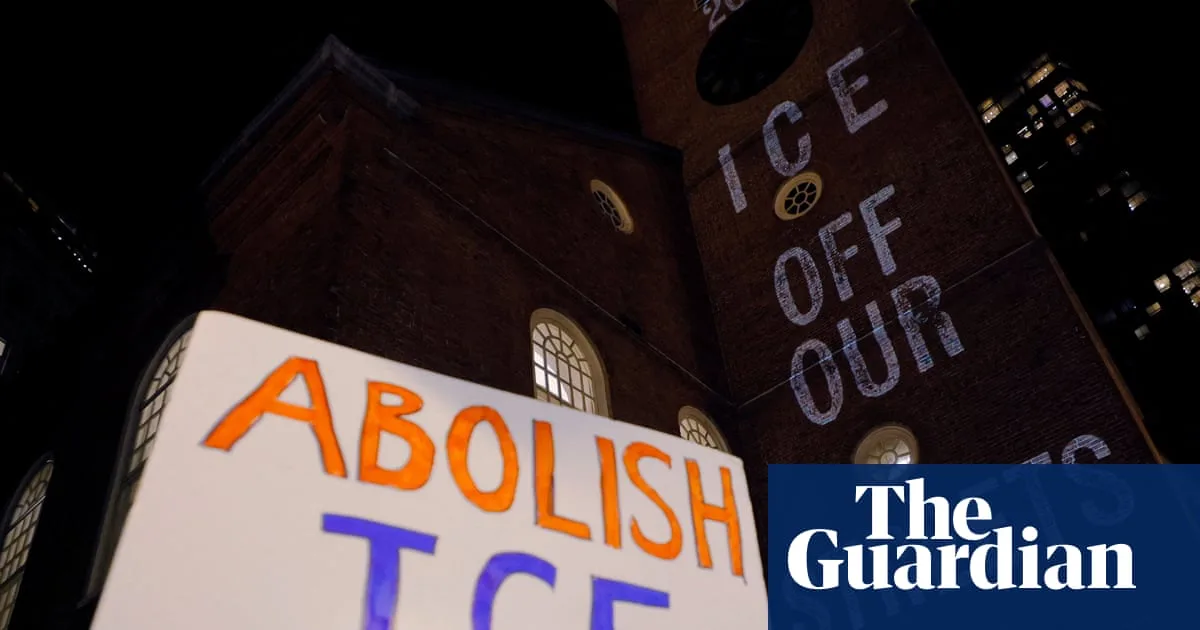
Creative protests have emerged. The Catholic church of St Susanna in Dedham replaced its traditional nativity scene with an empty cradle and a sign reading "ICE WAS HERE". Activists recently marked the 252nd anniversary of the Boston Tea Party with an "ICE Tea Party," dumping 342 pounds of ice into the harbour in a symbolic act of defiance.

"I see a lot of similarities with what happened in 1773," said speaker Nikki May at the event, "but also the spirit of rebellion."

As the festive season unfolds, Boston's battle lines are drawn not just in courtrooms and streets, but in the very identity of a city built by immigrants, now fighting to protect them.




