Critical Equipment Failure in California's Deadliest Avalanche Tragedy
New investigative details have emerged regarding a tragic equipment malfunction that could potentially have saved lives during the deadliest avalanche in modern California history, which claimed nine lives on February 17. The final accident report published by the Sierra Avalanche Center on Tuesday reveals disturbing findings about the safety gear carried by some victims.
The Fateful Morning on Donner Summit
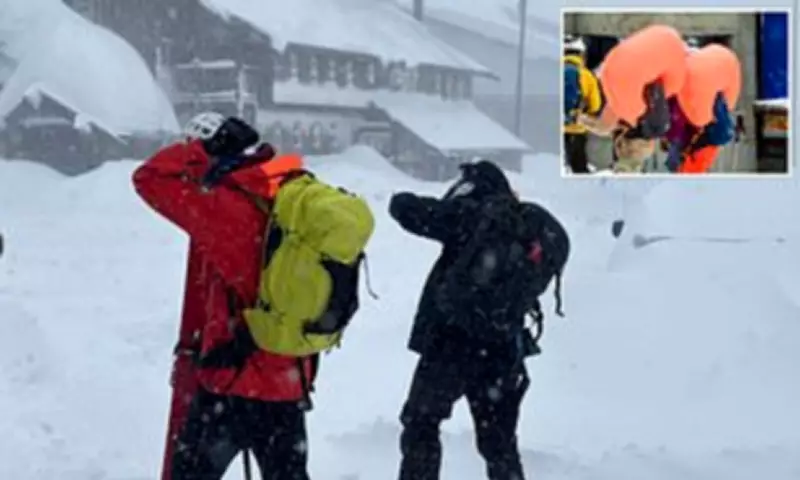
On the morning of February 17, fifteen experienced skiers embarked on guided trips on Donner Summit, a mountain pass situated above Lake Tahoe. At approximately 11am, chaos erupted when a ski guide in the group shouted "avalanche," prompting frantic attempts to escape the impending wall of snow. When search and rescue crews eventually reached the scene, they made a startling discovery: several of the skiers had been wearing specialized avalanche airbag backpacks, but none of these critical safety devices had been deployed.
The report does not specify which backpack brands the skiers were using, nor does it conclusively determine whether the airbags malfunctioned or were simply not activated by their wearers. This uncertainty leaves crucial questions unanswered about whether proper deployment could have altered the tragic outcome.

How Avalanche Airbag Systems Work
Avalanche airbag backpacks operate on a principle similar to parachutes, featuring rapid-deployment airbag systems designed to keep skiers near the snow's surface during an avalanche. This positioning is critical because burial under snow represents the primary cause of fatalities in such incidents. When properly inflated, these airbags create vital air pockets that allow trapped individuals to access oxygen while awaiting rescue teams during emergencies.
The February 17 avalanche ultimately killed nine people, establishing it as California's deadliest avalanche event in modern recorded history. The victims included three guides and six close friends who were mothers from an elite Lake Tahoe ski school community.
Survivor Accounts and Timeline of Events
The Sierra Avalanche Center's report notes that much of its information was gathered from two survivors' detailed accounts published in an extensive New York Times article. These survivors, Anton Auzans and Jim Hamilton, were not part of the group of nine women who perished, though both groups had been traveling together during the excursion.
According to their recollections, the trip began on a Sunday with mild weather and clear blue skies, despite a winter storm looming on the horizon. By Tuesday, the day of the avalanche, conditions had deteriorated dramatically, with authorities having issued formal avalanche warnings. Auzans remembered one guide urgently telling the groups: "We have to get out of here now."
The skiers faced wind gusts exceeding 50mph, with snow already reaching hip depth. After climbing to Perry's Peak, the group believed the worst was over when they spotted a downhill path to their vehicles. Hamilton fell behind while adjusting his ski boot, with a guide waiting for him, while Auzans trailed behind the group of women.
Auzans recalled someone screaming "avalanche" before everything went dark. He managed to dig himself out and immediately called 911. "I honestly tried my best. I tried my best. I was buried. I helped to save three people," Auzans told the Times. "We were all in danger. We did as much as we could. We pushed until we started finding people that were deceased. Making the decision to stop the search was one of the hardest things I've ever had to do."
Rescue Operations and Victim Recovery
Auzans and the guide worked desperately to dig the women out of the snow, finding them all clustered near one another when the avalanche struck. They managed to extract one woman who was breathing but unable to speak, and spotted another woman's leg and a third person's backpack before conditions forced them to retreat.
The Sierra Avalanche Center report indicates that survivors eventually moved downslope to a safer location away from the avalanche path and created an emergency shelter. Tahoe Nordic Search and Rescue did not reach the accident site until approximately 5:30pm, recovering eight of the nine victims and escorting the six survivors to safety.

Avalanche mitigation efforts began three days after the tragedy, with helicopters deploying 660-gallon water buckets on the slopes. The ninth victim was located before nightfall during these operations. Rescue missions officially concluded on Saturday, February 21.
Victims and Community Impact
The Nevada County Sheriff's Office identified the victims as Carrie Atkin (46), Lizabeth Clabaugh (52), Danielle Keatley (44), Kate Morse (45), Caroline Sekar (45), Katherine Vitt (43), Andrew Alissandratos (34), Michael Henry (30), and Nicole Choo (42). Most were from Soda Springs, California, with others from Verdi, Nevada, and South Lake Tahoe, California.
In a joint statement, families of the six women described them as close friends who had bonded through their shared love of outdoor activities and skiing. The Sierra Avalanche Center concluded its report by acknowledging the tragedy's profound impact: "All the fatal avalanche accidents we investigate are tragic events. We do our best to describe each accident to help the people involved, and the community as a whole better understand them."
The report further noted: "Many of the details surrounding this accident remain unknown, especially concerning human factors, decision making, travel plans, specifics of the avalanche, etc. As more details emerge over time, more learning opportunities will present themselves." This statement underscores the ongoing investigation into why the avalanche airbags—potentially life-saving equipment—remained undeployed during California's deadliest snow disaster.