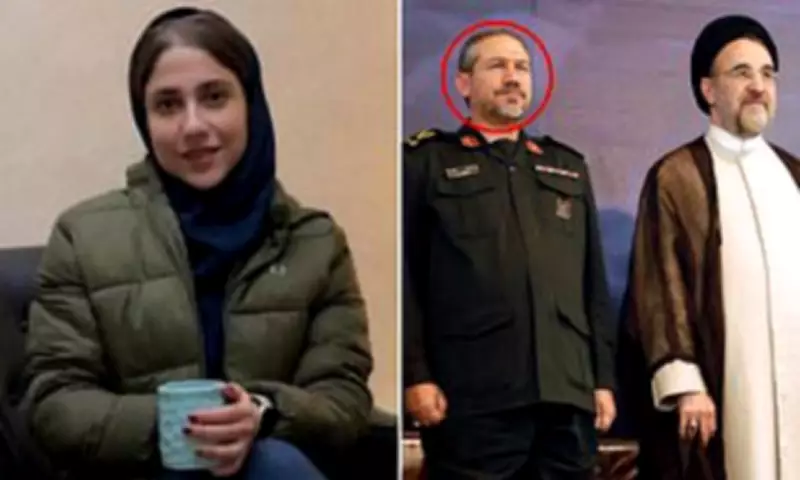
Australian Outrage Over Iranian Psychologist's Residency Sparks Deportation Calls
A significant and vocal movement is building across Australia, with thousands demanding the deportation of an Iranian psychologist whose father is a high-ranking military commander within Iran's controversial regime. Hanieh Sadat Safavi, the daughter of Major General Yahya Rahim Safavi, was reportedly granted permanent residency in Australia in October 2024, a revelation that has ignited fury and fear within the Iranian diaspora community.
Family Ties to a Feared Regime
Major General Yahya Rahim Safavi is a former senior advisor to Iran's Supreme Leader, Ayatollah Ali Khamenei, and is closely linked to the Islamic Revolutionary Guard Corps (IRGC). The IRGC was formally designated as a state sponsor of terrorism by the Australian government in November 2023. General Safavi has been a prominent champion of policies widely condemned by international human rights organisations for their brutality and repression of Iranian citizens.
Ms Safavi, who describes herself professionally as a psychologist specialising in cognitive behavioural therapy, emotionally focused therapy, and family counselling, is believed to have lived in Australia for approximately two years. Her journey reportedly began in Townsville, Queensland, before she relocated to Melbourne with her husband, Ali Golchin.

Petition Gains Massive Support
The public outcry has crystallised around a petition on Change.org, which has amassed over 81,000 signatures in less than a month. The petition organisers argue forcefully that Australia must not become a sanctuary for individuals connected to regimes responsible for severe human rights abuses.
"We, as concerned members of the global Iranian community and supporters of human rights, call on the Australian government to conduct a thorough, lawful, and transparent review of the residency status of Hanieh Sadat Safavi and similar individuals," the petition states. "This is not a call for discrimination, but a demand for accountability, due diligence, and respect for the values Australia stands for."
Community Voices Fear and Confusion
Suren Edgar, 42, the vice president of the Australian Iranian Community Alliance (AICA), who fled Iran in 2014, expressed profound shock and concern. He highlighted the painful context for many Iranian-Australians who sacrificed everything to escape the regime.
"Many Iranian-Australians fled the country in the last few years, and they left behind their family members, careers and, in some cases, imprisoned relatives," Mr Edgar told the Daily Mail. "When they see close relatives of senior regime figures obtaining permanent residency without any kind of public clarification, it creates fear and confusion for us."
Mr Edgar pointed to the apparent speed of Ms Safavi's visa approval, noting it took just eight months, compared to the five to seven years typical for many other immigrants. "How is that possible for someone who has a direct link to the IRGC through her family?" he questioned.
Visa Pathway and Professional Status
According to reports, Ms Safavi initially entered Australia on a student visa granted on February 29, 2024. She subsequently obtained permanent residency in October 2024 via a Skilled Independent Visa (subclass 189). The Australian Health Practitioner Regulation Agency (AHPRA) database lists a provisionally registered psychologist under the name Hanieh Sadat Safavi Homami, believed to be the same individual. Her registration, granted in October 2023, notes qualifications including a Master's in Family Counselling from the University of Tehran. However, she cannot practice clinically until her foreign credentials are formally approved through a transitional program.
Broader Security Context and Government Response
The controversy unfolds against a tense backdrop of Australia-Iran relations. The Australian government expelled Iran's ambassador in 2023 over allegations he directed attacks on Jewish targets, including a firebombing at the Adass Israel Synagogue in Melbourne in December 2024. This action preceded the official listing of the IRGC as a terrorist organisation.

Community members like Mr Edgar continue to live with the fear of reprisals from the Iranian regime. "When you're active against that regime... we know how brutal that regime is," he said, emphasising that the call for scrutiny is about consistent application of security standards, not discrimination.
A spokesperson for the Department of Home Affairs declined to comment on the specific case, citing privacy laws. The department reiterated its standard position: "All non-citizens applying for an Australian visa are considered on an individual basis against legal requirements... The Department works with law enforcement and intelligence partners to cancel or refuse visas of non-citizens who are at risk to Australia’s national security. All visa applications are assessed on a case-by-case basis."
The lack of specific transparency, however, has done little to assuage the growing concerns within the Australian Iranian community, who are demanding clear answers regarding the vetting process for individuals with direct links to sanctioned foreign entities.