
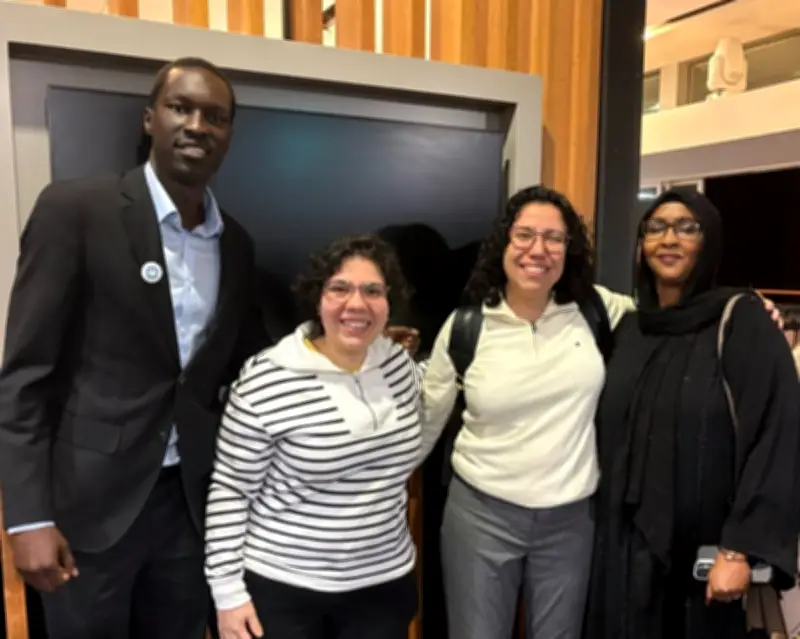
Luisana and Ana are new to Melbourne, but their journey there was 'totally different' to other refugees. After leaving their home in Venezuela, they spent five years in Peru waiting for their new lives to begin. As refugees in a same-sex relationship and without the protection of citizenship, they feared for their safety.
Then the messages from Australia started to arrive. Approved for resettlement here, the couple were matched with volunteers from a community group in Melbourne called Rosie's Welcome. Among the nearly 1,000 people resettled in Australia as part of the Community Refugee Integration and Settlement Program (CRISP), Luisana and Ana quickly found safety and a sense of community.
'Sometimes when I compare my journey with other refugee friends, our journeys are totally different,' Ana said. 'When you have community support, you feel you have family. You feel you have help if you need it in some moments. It has changed some lives.'
Before they arrived in Australia, volunteers had organised accommodation, food, essentials including sim cards and were ready to provide social support and friendship. Both women have studied for cybersecurity jobs at TAFE.
After a four-year pilot, the Albanese government has made the program permanent, to be delivered by the non-profit Community Refugee Sponsorship Australia. After screening by the United Nations High Commissioner for Refugees, arrivals are settled with support from almost 200 informal groups around the country.
A review led by researchers at the University of Queensland, released on Friday, found in 10 months, 92% of overseas arrivals were in long-term housing, 43% are employed and 97% had started English language training. The evaluation found among those who resettled in regional areas, 64% of arrivals had joined the workforce in their first 12 months in Australia.
Julian Hill, the assistant minister for citizenship, customs and multicultural affairs, told Guardian Australia the program was strengthening communities at a critical time. 'Programs like CRISP strengthen social cohesion and belie the myths pushed by extremists who want Australians to fear each other,' he said. 'In truth, we live well together when we actually meet, talk, share a meal and build trust. Australians are generous people. When you strip away the noise, most of us want to help our neighbours and give people a fair go.'
Since the end of the second world war, more than 950,000 refugees and others in humanitarian need have been resettled in Australia. Countries in the Middle East, Africa and Asia are prioritised in the humanitarian program. Australia has 20,000 places for refugees in the annual humanitarian intake, designed to help people displaced because of conflict, persecution and human rights abuses.
Immigration and refugee settlement face tough political scrutiny between now and the next federal election. Labor is bringing down the number of overseas arrivals, with the Coalition and One Nation both calling for tougher settings to address house prices and infrastructure pressures.
Community Refugee Sponsorship Australia's CEO, Lisa Button, said the new program evaluation showed both volunteers and resettled refugees were benefiting. 'It benefits all involved and has ripple effects that strengthen social cohesion in Australia by building a kinder, more informed and more connected community,' Button said. 'I can't tell you how many times Australian community members have told our team how meaningful and enriching they have found this experience to be.'




