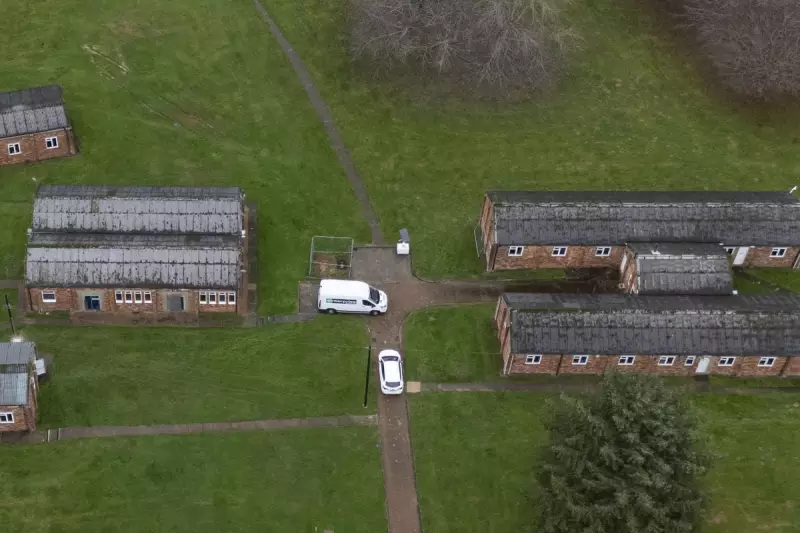
The first cohort of asylum seekers has been transferred to a disused military training facility in East Sussex, marking a significant shift in the government's accommodation strategy for migrants awaiting claim decisions. This move comes as ministers face mounting pressure to fulfil their commitment to cease using hotels for temporary housing by the conclusion of the current parliamentary term.
Initial Relocation to Crowborough Training Camp
Some twenty-seven adult male asylum seekers have now been accommodated at the Crowborough Training Camp, a former military installation that has been repurposed to potentially house up to five hundred individuals. The Home Office has confirmed that all residents undergo comprehensive health screenings and police background checks prior to their arrival at the facility.
The site operates under twenty-four-hour security surveillance with closed-circuit television monitoring and stringent sign-in protocols for all inhabitants. This transitional accommodation represents the initial phase of a broader initiative that includes plans to utilise Cameron Barracks in Inverness, Scotland, as additional alternative housing becomes operational.

Statistical Context and Government Rationale
Latest official statistics reveal a concerning upward trend in hotel-based asylum accommodation, with figures climbing by thirteen percent to reach thirty-six thousand two hundred seventy-three individuals by the end of September. Home Secretary Shabana Mahmood has articulated the government's position clearly, stating that illegal migration continues to exert "immense pressure on communities" across the nation.
"We are removing the incentives that draw illegal migrants to Britain, closing asylum hotels that are blighting communities," Mahmood declared. "Crowborough is just the start. I will bring forward site after site until every asylum hotel is closed and returned to local communities."
Local Opposition and Planning Controversy
The relocation has not proceeded without significant local resistance. Wealden District Council has registered formal opposition to the scheme, while community protests have emerged in Crowborough itself. The council leadership has raised serious concerns about procedural compliance, alleging that the Home Office may be attempting to circumvent standard planning permission requirements.
Council leader James Partridge emphasised that "planning law exists to protect people and places", arguing that proper assessment of impacts on landscapes, noise levels, safety considerations, traffic patterns, and environmental factors should precede any change of land use. He further asserted that communities deserve meaningful consultation regarding decisions that directly affect their localities.
"No organisation, however large, can bypass proper scrutiny when communities are affected," Partridge stated, confirming the council's intention to continue pressing for full legal compliance from the Home Office regarding the barracks' conversion.
Broader Policy Implications
This accommodation transition represents a tangible manifestation of the government's broader immigration policy objectives. By moving away from hotel-based housing toward dedicated facilities like military barracks, ministers aim to reduce both the financial burden and community disruption associated with temporary asylum accommodation.
The success of this approach at Crowborough will likely influence future site selections and implementation strategies as the government works toward its parliamentary deadline for eliminating hotel usage entirely. How effectively these facilities balance security, humanitarian considerations, and community integration remains to be seen as the programme expands to additional locations across the United Kingdom.