Asylum Seekers Relocated to Former Military Barracks as Government Accelerates Hotel Phase-Out
The first cohort of asylum seekers has been transferred to a disused military barracks in East Sussex, as the Government intensifies efforts to eliminate the controversial use of hotels for temporary accommodation. This move comes amid mounting political pressure to address the escalating costs and community impacts associated with housing migrants in commercial establishments.
Crowborough Training Camp Becomes Initial Accommodation Site
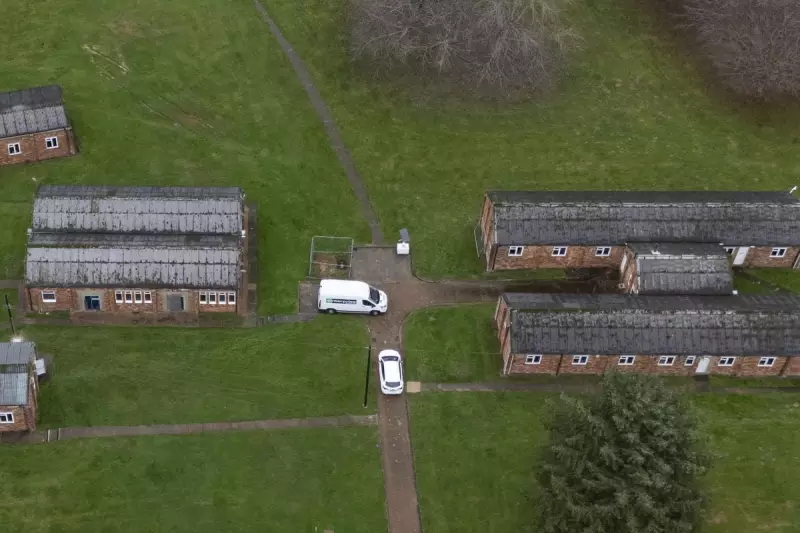
Some twenty-seven adult male asylum seekers have now taken up residence at Crowborough Training Camp, a former military facility that has been repurposed to eventually accommodate up to five hundred individuals while their UK asylum applications undergo processing. The Home Office has confirmed the site features round-the-clock security surveillance, comprehensive CCTV coverage, and stringent sign-in protocols for all residents.
All individuals relocated to the barracks have undergone thorough health assessments and police background checks prior to their arrival, according to official statements. The Government has designated this East Sussex location alongside Cameron Barracks in Inverness, Scotland, as pivotal components of their strategy to transition away from hotel dependency.

Government Commitment to Eliminate Hotel Accommodation
Home Secretary Shabana Mahmood has reiterated the Government's firm commitment to completely phase out hotel accommodations for asylum seekers before the conclusion of the current parliamentary term. "Illegal migration has been placing immense pressure on communities," Mahmood stated. "That is why we are removing the incentives that draw illegal migrants to Britain, closing asylum hotels that are blighting communities."
The Home Secretary emphasized that the Crowborough relocation represents merely the initial phase of a comprehensive national rollout. "Crowborough is just the start. I will bring forward site after site until every asylum hotel is closed and returned to local communities," she declared.
Escalating Numbers and Local Opposition
Latest Home Office statistics reveal a concerning 13% increase in asylum seekers temporarily housed in hotels, with figures reaching 36,273 by the end of September. This growing pressure has accelerated the Government's search for alternative accommodation solutions.
However, the Crowborough relocation has encountered significant local resistance. Wealden District Council (WDC) has expressed strong objections and is actively exploring potential legal challenges to block the move. Council leader James Partridge confirmed that authorities were notified about the initial group's arrival on Wednesday night and that the council would "continue to seek legal advice" regarding their options.
"Despite our strong objection, the minister hasn't listened to any of us," Partridge stated following notification from minister Alex Norris about the camp's activation. "We've immediately contacted our legal team to ask them to review the decision, to see if there's any way we can bring a legal challenge to it."
Planning Permission Controversy and Community Concerns
The local authority has raised serious concerns about the Home Office's approach to planning regulations, alleging that officials are attempting to circumvent standard planning permission procedures by relying on permitted development rights instead. WDC contends this approach "highlights a range of issues and inconsistencies" with previous Home Office communications.
"Planning law exists to protect people and places," Partridge emphasized. "It says that changes to the use of land and buildings must be properly assessed for their impact on landscapes, noise, safety, traffic and the environment, and that communities should have a voice in decisions that affect them."
The council leader acknowledged that while many residents feel "angry, frightened and worried about this" development, he urged the community to "make the best of it" and come together, drawing parallels with previous successful integration of Afghan families and Ukrainian refugees in the area.

Notably, the Crowborough site previously served as temporary accommodation for Afghan families evacuated during the 2021 withdrawal from Kabul before their resettlement elsewhere. This historical precedent has informed both community response and official planning considerations.
"We still believe the decision is wrong, but we do have to make the best of it," Partridge concluded, reflecting the complex balance between local opposition and practical accommodation needs.