Afghanistan's foreign ministry has urged Afghans who aided the United States during its two-decade war and are currently stranded in Qatar to return home, asserting that they can do so safely.
Background of the Statement
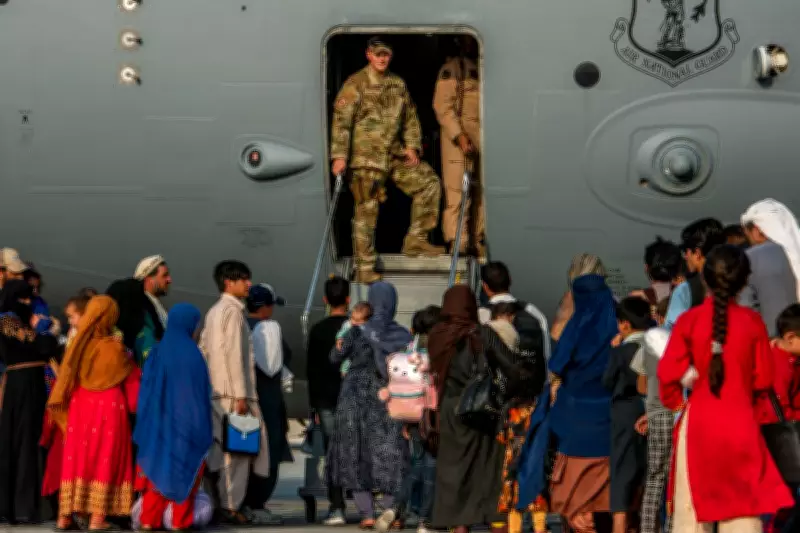
On Saturday, foreign ministry spokesman Abdul Qahar Balkhi issued a statement following reports that the Trump administration is considering sending approximately 1,100 Afghans who assisted U.S. forces, along with relatives of U.S. service members, to the Democratic Republic of Congo. The advocacy group #AfghanEvac revealed on Wednesday that U.S. officials had informed them of discussions between Washington and Kinshasa about relocating the refugees, who have been living at Camp As-Sayliyah, a U.S. base in Doha, for the past year.
Options for the Refugees
The State Department confirmed it is exploring options to resettle the refugees in a third country on a voluntary basis but did not specify which nations are under consideration. According to #AfghanEvac, another option presented to the refugees is returning to Afghanistan, where they fear reprisals or death at the hands of the Taliban, who have governed the country since the chaotic withdrawal of U.S.-led forces in 2021.

In his statement, Balkhi said: “Afghanistan constitutes the shared homeland of all Afghans and it invites all those concerned, as well as others sharing a similar situation, to return to their homeland, whose doors remain open to them, to do so with full confidence and peace of mind.” He added that those wishing to travel elsewhere could do so later through legal and dignified channels. He further emphasized that there are no security threats in Afghanistan and that no one is compelled to leave due to security concerns.
Refugees' Response
In a joint statement issued through #AfghanEvac, the Afghans at Camp As-Sayliyah expressed distress over the uncertainty, saying they learned of the relocation talks from the media rather than U.S. officials. “Many of us are not well. The uncertainty has been more than some of us can carry. There is deep depression,” the group said, noting that some are struggling with mental health issues. They firmly rejected the prospect of moving to Congo, stating: “We do not want to go to the Democratic Republic of Congo. It is a country in its own war. We have been in enough war. We cannot take our children into another one.” The African nation has endured decades of conflict between government forces and Rwanda-backed rebels in its eastern region.
The refugees also ruled out returning to Afghanistan, asserting: “The Taliban will kill many of us for what we did for the United States. This is not a fear. This is a fact. The United States knows this, because the United States is the reason we cannot go home.”
Policy Context
The relocation discussions, first reported by The New York Times, come over a year after President Donald Trump suspended his predecessor’s Afghan resettlement program through executive orders aimed at curbing immigration. This policy has left thousands of refugees who fled war and persecution, and had undergone lengthy vetting processes to start new lives in America, stranded at locations worldwide, including the Qatar base.