US Crude Oil Exports Hit Record High Amid Strait of Hormuz Crisis
US Crude Oil Exports Hit Record High Amid Hormuz Crisis

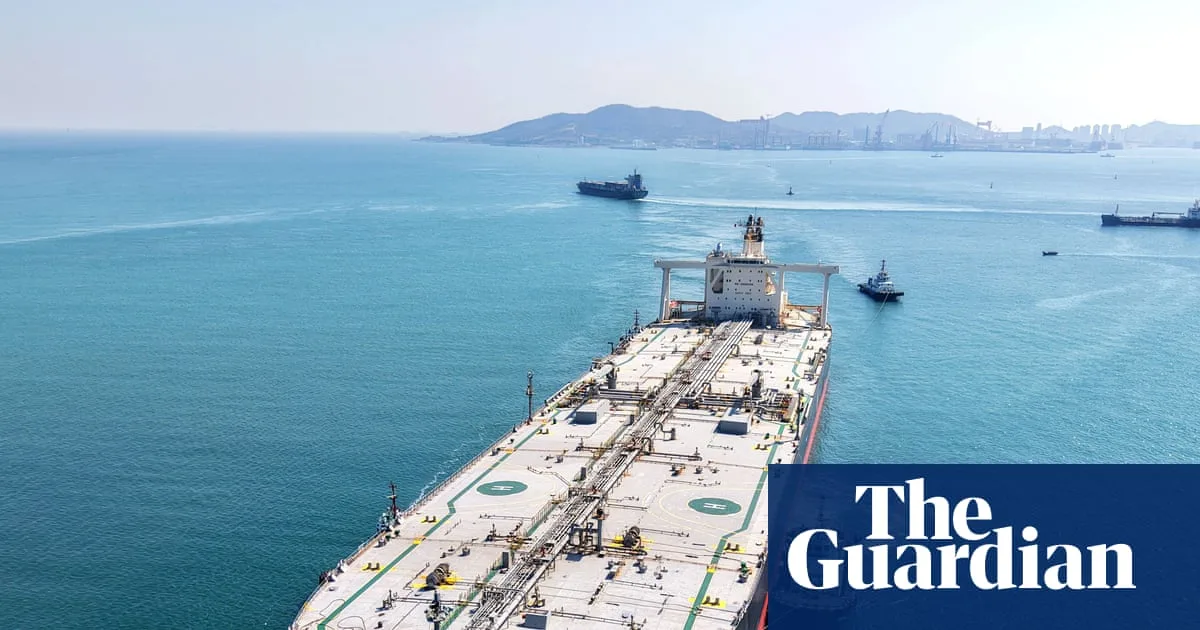
The United States has achieved record highs for crude oil exports, with Texas's Port of Corpus Christi experiencing unprecedented activity as the Strait of Hormuz remains under Iranian control. The port, the largest US gateway for oil, has seen historic traffic and a 30 percent increase in movements in recent weeks as global powers rush to purchase American crude amid the chaos in Iranian waterways.

Surge in US Sales

This surge comes as the Strait of Hormuz has been blocked by Iranian forces since the conflict erupted in February. Some of the last oil tankers from the Persian Gulf, which departed before the war began, arrived in California this weekend. According to data from Kpler, American exports hit a record 5.2 million barrels of oil per day in April, up from 3.9 million in February before the war.

March marked the busiest month for the Texas port, as CEO Kent Britton told CNBC that oil exports increased to 2.5 million barrels a day, compared to 2.2 million last year. 'It's a constant parade of tankers coming in and out,' he said. The Corpus Christi port accounted for roughly half of the country's total crude oil exports in April, with Houston exports making up most of the remainder, according to Kpler. It is now the world's third-largest oil export terminal.

Wide Pickt banner — collaborative shopping lists app for Telegram, phone mockup with grocery list

Impact on California

The crisis has left states like California on edge, as they anticipate their last oil shipment from the Strait of Hormuz while gasoline prices have reached around $6 per gallon. Around 60 large oil tankers, double the number from last year, are expected to arrive at US ports in the coming days, each carrying about 2 million barrels.

Matt Smith, director of commodity research at Kpler, told CNBC that much of the increased traffic comes from Asian countries that previously imported oil from the Middle East before the Strait was blocked. 'Asian markets are buying whatever they can get their hands on, so they're taking a lot of light sweet crude,' Smith said. However, he noted that the buyer increase is not expected to last after the war due to the type of oil the US produces. Light sweet crude oil is not a substantial substitute for Middle Eastern barrels.

'It's a hole that can't be plugged,' Smith added. 'The answer has to be ensuring secure supply from the Middle East.'

California's Last Shipment

Bound for California, the New Corolla prepared to set sail on February 24, just days before war broke out, the Los Angeles Times reported. The Hong Kong-flagged oil tanker is expected to reach California's Marathon Petroleum terminal in two weeks. This shipment marks the state's last while the war continues, and California will be forced to replace some 200,000 barrels of oil per day.

So far, the state has received fairly consistent shipments, with about 75 percent of its oil coming from foreign countries or Alaska, the Times reported. During the war, California sourced around 21 percent and 14 percent of its oil from Iraq and Saudi Arabia, according to Kpler data.

Tankers that loaded up and passed through the Strait before it was blocked have been able to continue supplying as needed. But if the strait remains closed, 'all bets are off,' said Ryan Cummings of the Stanford Institute for Economic Policymaking. 'Refineries have to source from elsewhere, and they are scrambling to find where to get that oil,' said Susan Bell, a senior vice president at Rystad Energy. 'They don't have very many options.'

Potential Shortages

Officials are now warning residents that oil and gas shortages may be imminent. Bell told the Times that refiners are looking for ways to make up for the loss in oil shipments from countries that already source it, such as Ecuador or the west coast of Canada. 'They would definitely look to Brazil for the medium grades,' Bell said. 'Guyana might be a little bit too light for them to want to ramp up, but you know, a liquid barrel is a liquid barrel, so maybe they won't be too fussy about the quality.'

Pickt after-article banner — collaborative shopping lists app with family illustration

The California Energy Commission said it is 'working closely with refiners' and is 'aware they are identifying and using alternate routes and sources of crude.' Nikki Woodard, a spokesperson for the commission, told the outlet that the agency is confident in the state's oil supply outlook for the next six weeks. 'We went into this with pretty healthy inventories, but those are being drawn down and that's when it gets really precarious,' Cummings said.

However, Wood Mackenzie oil analyst Jamie Lewis said she would 'expect to see prices increase sharply before we would see any shortages in California.' Kate Gordon, who runs the economic policy nonprofit California Forward, noted: 'Even in Texas, where they obviously have a huge amount of drilling and a lot of supply, prices are going up because the sellers are selling to whoever is paying the most during a moment of restriction. And everyone's facing restrictions all over the place. The only way to be less dependent on this global system is to reduce oil demand.'




