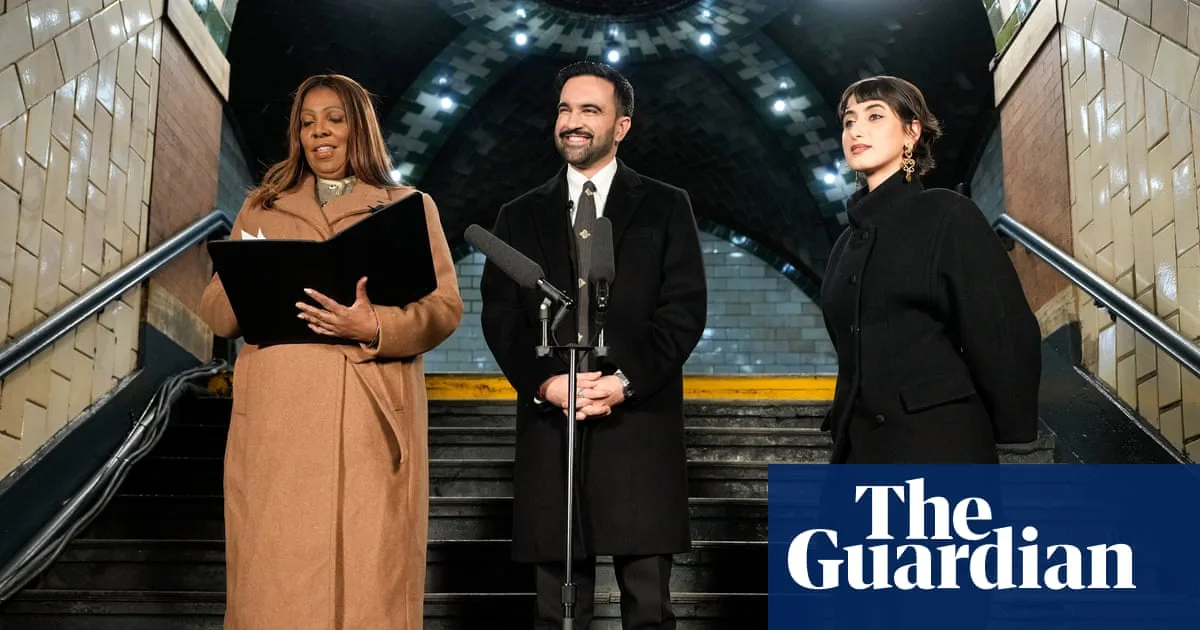
In a historic ceremony that defied political convention, Zohran Mamdani was sworn in as the 112th mayor of New York City on 1 January 2026. The inauguration, witnessed by his wife Rama Duwaji and thousands of supporters, was marked not by a private, exclusive event but by a sprawling public block party, setting the tone for an administration promising radical inclusion.
A Festival of Politics: Inauguration Day as Public Spectacle
Under a cloudless blue sky and biting arctic winds, Mamdani took the oath of office outside City Hall before a crowd of several thousand. The event was simultaneously broadcast on giant screens to tens of thousands more gathered on a closed Manhattan street nearby. This festive, open-invitation atmosphere was a deliberate departure from tradition, embodying the new mayor's core philosophy: the desire for mass participation in political life.
Throughout his campaign, Mamdani pioneered novel methods to draw people into his movement. It began in November 2024 with viral street interviews in Queens and Bronx neighbourhoods that had previously swung heavily for Donald Trump. His growing popularity mobilised an army of volunteers for canvassing, celebrated in his speeches. Later, he organised a city-wide scavenger hunt and a football tournament. Following his victory in November 2025, he immediately opened a jobs portal, receiving 74,000 applications. In mid-December, he held 15-minute public consultation slots for 12 straight hours.
Filling the Void: Rejecting Neoliberal Apathy
Mamdani's approach constitutes a direct rejection of what political scholar Peter Mair termed "ruling the void" – the depoliticisation and apathy that has characterised Western democracies for decades. For years, a neoliberal consensus framed politics as a necessary evil, with government's role limited and welfare stigmatised. Leaders from Ronald Reagan to Tony Blair inadvertently fuelled public disillusionment with power.
Mamdani's project seeks to transform politics from something "done to us" into something "we do." This vision has two pillars. The first is enacting universalist welfare policies like free childcare, free buses, and a rent freeze on stabilised apartments, offered without stigma. The second, and arguably more challenging, is continuously finding new ways to include citizens in governance. "I don't think the campaign can end," Mamdani recently stated. "The same people who got us to this point, we want to keep moving forward with them."
The Inauguration as Campaign Continuation
The block party felt like both a triumphant culmination and a symbolic launch. With supporters like Alexandria Ocasio-Cortez and Bernie Sanders in attendance, and chants of "tax the rich" echoing, the event paid explicit homage to the volunteer movement. Attendees received a pamphlet crediting the efforts of over 104,000 friends and neighbours. In his closing speech, Mamdani heralded "a new era" of "big government" dedicated to fostering solidarity.
While other figures, from Donald Trump to Nigel Farage, have tapped into a desire for political alternatives through rallies and social media, they often reinforce a negative, void-ruling image of politics. In the UK, Keir Starmer's assumption that people want "a politics that treads a little lighter" risks leaving a silent void for noisy actors to fill.
Mamdani, in stark contrast, operates on the conviction that people want more politics, not less – a movement to believe in, work for, and socialise through. "It will be loud, it will be different," he told the inaugural crowd, his words seeming to echo through Manhattan's canyons. His inauguration was not an end, but a defiant, hopeful new beginning for civic engagement.




