In the heart of former Labour strongholds across South Wales, a profound political realignment is underway. With the Senedd elections looming in May 2026, polls predict a catastrophic defeat for Sir Keir Starmer's party, potentially ending its century of dominance. The beneficiaries are Nigel Farage's right-wing Reform UK and the Welsh nationalist party Plaid Cymru, who are capitalising on deep-seated economic deprivation and a powerful sense of abandonment.
High Streets in Ruin, Faith in Labour Evaporates
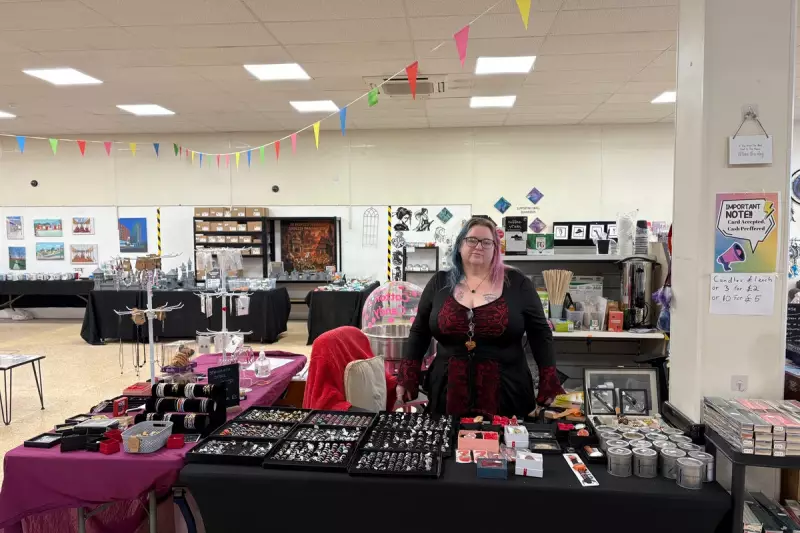
The tangible evidence of decline is starkest on the high streets. In Bridgend, just 20 miles from Cardiff, the Brackla Street arcade is a desolate sight. Dragons Indoor Market is one of only two occupied units, and its closure before Christmas will leave the entire centre empty. Shop owner Kim Whitehouse, who filled her unit with artisan crafts, is despondent. Her business thrived initially, but the subsequent closures of Poundland, Iceland, and Wilko reduced her customer footfall to "zero."
"There's so little in town. Everything that's opened has been a vape shop or a barbershop. There's not much chance or support for small businesses," she said. The town's indoor market was also forced to shut abruptly in September 2023 after dangerous Raac concrete was discovered in its roof. A local councillor, speaking anonymously, summarised the mood: "People are so fed up with Labour. People view them as penny-pinching from the people that need the money."

A Century of Loyalty Vanishes in the Valleys
This complaint echoes throughout the Welsh valleys, where communities grapple with high unemployment, low pay, an ageing population, long NHS waits, and poor services. In the former mining town of Maesteg, Nigel Farage's promise of a break from the "status quo" is gaining traction. Jason Ryall, 55, is among those switching to Reform, citing immigration, lack of business support, and no opportunities for the young.
"Practically every one of my friends are going to vote Reform," he stated. "We've had Labour for 100 years here, and nothing's changed." Another anonymous shop owner echoed the sentiment: "Labour has always been God in these parts. Not anymore, they've lost our trust." The closure of the final coal mine in 1985 and the recent shutdown of Port Talbot's last blast furnace, costing 2,000 jobs, have cemented a feeling of irreversible loss. Farage has vowed to reopen the furnaces, a policy locals like 76-year-old David John Waters view with deep scepticism. "It'll make no difference whatsoever who comes in. No disrespect, but it's all talk," he said.
Plaid and Reform Vie as Labour Trails in Third
The deprivation is acute in villages like Caerau, named in 2019 as Wales' fifth most deprived area. While some, like charity workers Nigel and Lesley Locke, praise their local Labour council for support, they blame those "up top." "It's general disenchantment with the whole lot of it," Lesley said. Her husband Nigel noted the groundswell for Reform UK, adding, "Starmer is not looked on in a good light."
Joe Rossiter of the Institute of Welsh Affairs highlighted the scale of the challenge. "The Valleys and west Wales are two of Europe's most deprived regions," he said, noting the end of EU infrastructure funding. Polls as of October 2025 show a two-horse race between Plaid Cymru and Reform UK, with Labour a dismal third.
"If those polls come to fruition, that is a fundamental realignment of Welsh politics," Rossiter concluded, signalling the potential end of an era that has defined Welsh political life for over 100 years. The May 2026 Senedd elections will be the ultimate test of this seismic shift.