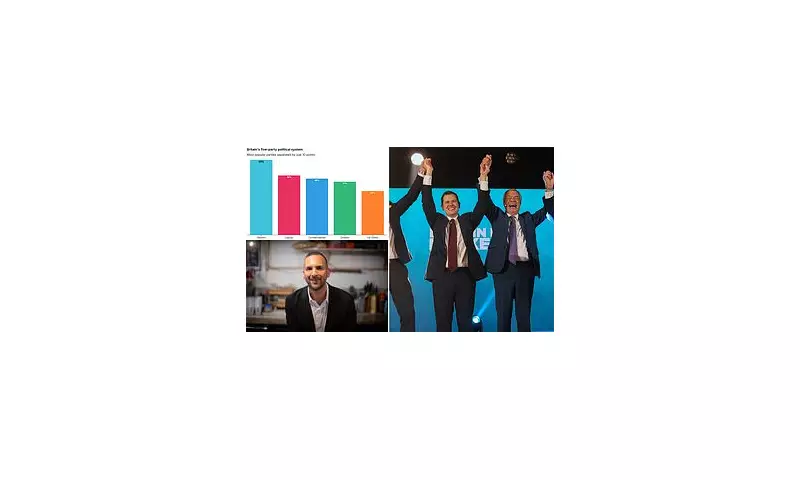
Britain could be heading for a prolonged period of political gridlock, with the latest opinion poll revealing a dramatically fragmented political landscape. The top five most popular parties are now separated by a mere ten percentage points, raising the distinct possibility of a coalition government after the next general election.
Polling Stalemate and Reform's Stagnation
According to a recent survey by YouGov, Nigel Farage's Reform UK party has failed to rebound in popularity, remaining static at 24 per cent. This stagnation comes despite a concerted effort to boost the party's credibility through high-profile defections from the Conservatives, including former MPs Robert Jenrick, Nadhim Zahawi, and Andrew Rosindell. The poll suggests voters may be beginning to tire of the party, which dropped two points last week.
Meanwhile, Labour has reclaimed second place as the Conservatives, under Kemi Badenoch, have slipped by two points to 18 per cent. In a significant shift, the Greens—led by co-leader Zack Polanski, described as an 'eco-populist'—have overtaken the Liberal Democrats to seize fourth position. The Greens now trail the Tories by just a single point.

Internal Party Tensions Surface
The tight polling has exposed growing unrest within several parties. Reports indicate that Liberal Democrat MPs are becoming restless with leader Sir Ed Davey's leadership. Despite winning 72 seats at the last election, Sir Ed is perceived to be struggling to "move the dial," with one MP complaining of low morale and a lack of a compelling "national story" for the party.
Lib Dem frontbencher Tim Farron came to his leader's defence, telling Sky News the parliamentary party was the "most united" he had belonged to and pointing to Sir Ed's personal popularity. However, he tacitly acknowledged frustrations, suggesting "sometimes people feel they are not getting enough limelight."
Within the Conservatives, Kemi Badenoch issued a stern warning to her MPs following the defections to Reform. In a punchy letter seen by the Mail, she declared the Tories are "THE party of the right" and stated that the factional infighting that marred the period up to the 2024 election "will not be tolerated." She invited disgruntled colleagues to follow Jenrick and Rosindell out the door.
Farage's Claim of a United Centre-Right
At a Reform rally in Newark, Nigel Farage framed the defection of Robert Jenrick not as a split, but as a unification. Met with cheers and sparklers, Farage proclaimed Jenrick was the "only significant conservative political figure in Britain" with energy and belief. He argued that the event marked "the centre-right of British politics now coming together as one under the banner of Reform."
This claim directly contradicts Badenoch's assertion of Conservative supremacy on the right, highlighting the intense battle for that segment of the electorate. The convergence of these parties in the polls, combined with the rise of the Greens and Liberal Democrat stasis, paints a picture of a nation where no single party commands a decisive lead.
The collective data strongly suggests that the United Kingdom is on course for a coalition government after the next election, as voters spread their support thinly across multiple parties, making a single-party majority an increasingly remote prospect.