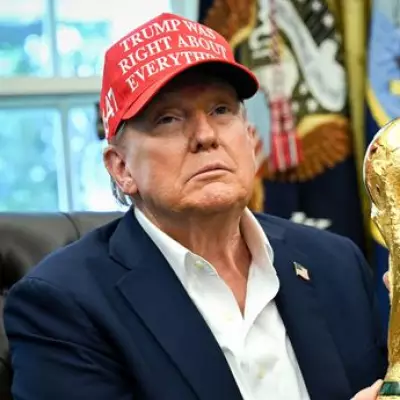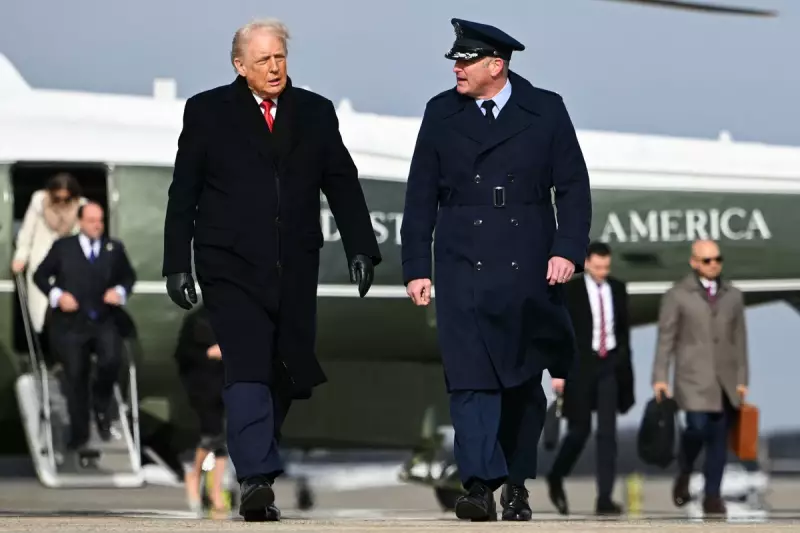
Donald Trump has become the Republican Party's most significant liability in the battle to maintain its Senate majority, as the president's actions repeatedly undermine his own party's candidates and sow internal division.
Trump's Direct Assault on Incumbents
Republicans secured a 53-47 majority in the upper chamber following the Democratic Party's collapse in the 2024 elections. For much of 2025, it appeared Democrats would require multiple election cycles to recover. However, as January 2026 passes its midpoint, the prospects of Republicans retaining that majority through the November midterms have darkened considerably. The primary reason, though rarely voiced publicly by GOP senators, is President Trump himself.
Democrats need a net gain of four seats to reclaim control. Trump's interference in several pivotal races has complicated, rather than aided, Republican incumbents' re-election efforts. According to Politico, Trump is refusing to endorse three Senate Republicans: John Cornyn of Texas, Bill Cassidy of Louisiana, and Susan Collins of Maine.

The situation escalated over the weekend of 17-18 January 2026. On Saturday, the president posted on Truth Social that he would support Louisiana state representative Julia Letlow if she launched a GOP primary challenge against Senator Cassidy. This public endorsement of a potential challenger supercharges the primary threat Cassidy has been labouring to contain for months.
Leadership's Uphill Battle to Protect Seats
For Cassidy, the race remains tenable but far more difficult. He retains a substantial campaign war chest, having raised $17 million in the 2025-2026 cycle, and represents a deep red state. However, Senate Majority Leader John Thune now faces a significant drain on resources. Thune is actively working to protect Cassidy and will likely be forced to continue headlining fundraisers and dedicating time to defend the senator's seat.
Thune's motivation is twofold: protect a crucial Senate seat and safeguard a reliable leadership ally. This effort risks a confrontation with Trump and, critically, saps time and money that could be directed towards other vulnerable races. One such race is in North Carolina, where Governor Roy Cooper appears dominant against Republican Michael Whatley.
Trump's endorsement of Letlow raises a parallel question regarding Texas, where scandal-prone Attorney General Ken Paxton, a MAGA loyalist, is challenging Senator Cornyn in the primary. Democrats view a Paxton nomination as their best chance for an upset victory in November. Mirroring the Louisiana scenario, Thune is now compelled to travel to Texas and marshal resources to defend a seat that should have been a straightforward retention.
Policy Fallout and Broader Electoral Consequences
In Maine, the dynamic differs. Senator Susan Collins is no Trump ally, and association with the president does not aid her. However, Trump administration policies are creating headaches for her campaign. Local reports indicate residents are bracing for an influx of ICE agents, sparking protests in cities like Portland. Collins publicly questioned the rationale for the surge, telling HuffPost, "I don't see the rationale for a large number of ICE agents to come in."
This surge could galvanise Democratic and independent voters against her. It may also boost the profile of Governor Janet Mills, who is running in the Democratic primary and could become Collins's general election opponent. The issue is being leveraged by candidates across the spectrum.
Nationally, Senate Republicans have little recent legislative progress to showcase. Talks to extend Obamacare subsidies have collapsed under White House opposition, and the president's provocative stance on Greenland has unsettled the caucus, following a divisive War Powers vote on Venezuela.
While House Republicans openly criticise Speaker Mike Johnson's subservience to the White House, it is John Thune who may have the most challenging role in Washington. The Senate leader must protect a majority that his party's most influential figure, mired in unpopularity and unwilling to assist his allies, seems to have no interest in defending.