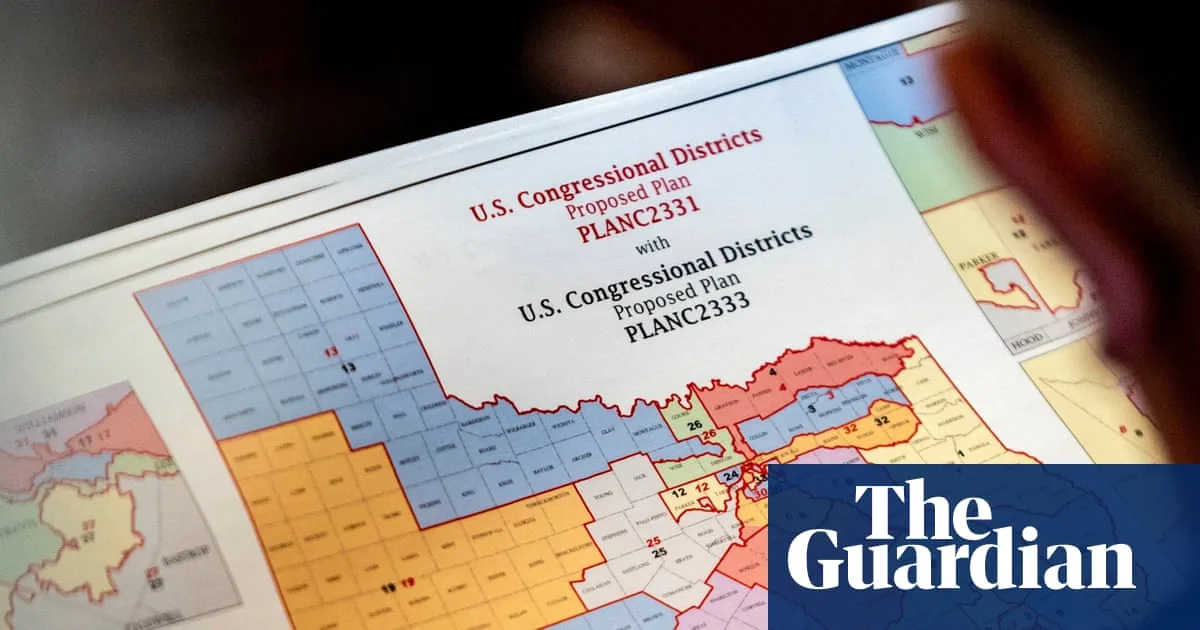
The highest court in the United States has delivered a landmark ruling on electoral boundaries, greenlighting a controversial set of congressional district maps for the state of Texas. This decision, handed down on Friday, December 5th, 2025, effectively ends a protracted legal battle and sets the stage for the next round of congressional elections in 2026.
A Legal Battle Over Political Boundaries
The case centred on maps that were initially redrawn by the Republican-dominated Texas legislature following the 2020 census. These maps faced immediate legal challenges from voting rights groups and Democratic opponents, who argued they unlawfully diluted the voting power of minority communities, particularly Latino and Black voters, in violation of the Voting Rights Act.
After a lower court found the maps to be discriminatory, the state of Texas appealed directly to the Supreme Court. In a significant move, the justices have now reversed that lower court's decision. The court's conservative majority concluded that the challengers had not successfully demonstrated that the Texas legislature acted with a racially discriminatory purpose when crafting the districts.
Implications for Representation and Future Elections
The immediate consequence of this ruling is that the current congressional maps will remain in place for the 2026 elections. This is a substantial victory for Texas Republicans, who are likely to maintain their stronghold in the state's delegation to the US House of Representatives under these district lines.
Legal experts suggest this decision underscores the increasingly high bar for proving racial discrimination in redistricting cases following previous Supreme Court rulings. The ruling makes it notably more difficult to challenge electoral maps on the grounds that they result in a discriminatory outcome, requiring proof of discriminatory intent instead.
Broader Repercussions and Political Fallout
This verdict is expected to resonate far beyond the borders of Texas. It sends a clear signal to other states engaged in the politically charged process of redistricting, potentially emboldening legislatures to enact maps that favour the ruling party with reduced fear of legal reprisal under the Voting Rights Act.
Voting rights advocates have expressed profound disappointment, warning that the decision weakens fundamental protections for minority voters. They argue it allows for the continuation of gerrymandering—the manipulation of electoral boundaries for partisan advantage—which can undermine fair representation for years, given that district maps are typically redrawn only once every decade after the national census.
With the 2026 midterm elections now on the horizon, political strategists from both major parties are recalibrating their campaigns and resource allocation based on these confirmed district boundaries. The ruling effectively freezes the electoral landscape in Texas, one of the most populous and politically significant states in the nation, for the next crucial election cycle.




