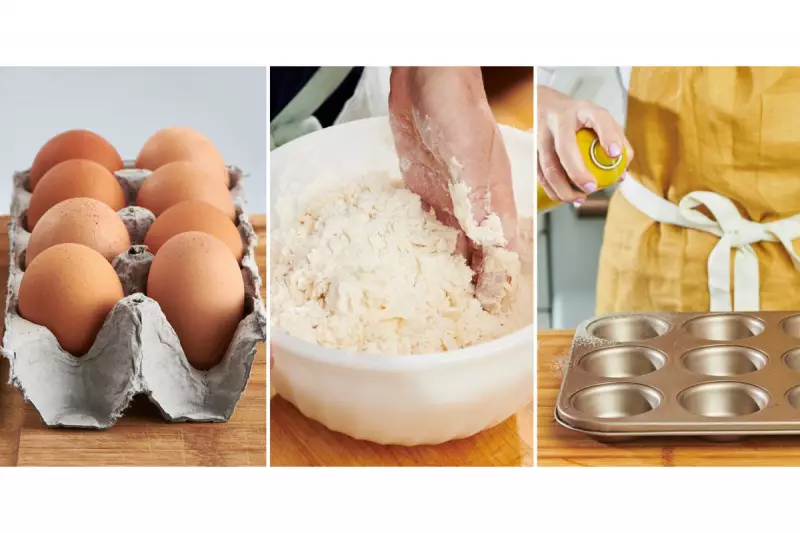
As the winter chill sets in across the UK, many are finding solace not just in the warmth of their kitchens, but in the therapeutic ritual of baking. While the end goal is often a plate of tender cookies or a rich, domed cake, the true value lies in the measured, creative process itself.
The Structured Comfort of Creation
Baking offers a unique form of structured comfort. In a world that can feel chaotic, the act of precisely measuring ingredients, methodically stirring, and witnessing a transformation into something delicious provides a sense of order and control. Chef Joanne Chang, co-owner of Flour Bakery in Boston and a noted cookbook author, describes it as a profound connection. "Baking is how I best connect with the world around me," she says, highlighting the joy of sharing handmade treats to make the world "a bit sweeter one cookie, cake, pie at a time."
This practice can serve as an outlet for a spectrum of emotions. The cosy aroma of something sweet baking is a classic winter comfort. Yet, it can also channel more volatile feelings, a concept popularised as "rage baking" by writer Tangerine Jones, who used flour and sugar to process anger at societal injustices.

Engaging Mind, Heart, and Memory
For many, baking is a deeply engaging activity that stimulates both intellect and emotion. Hannah Skobe, a doctoral student in astrophysics based in Pittsburgh, is fascinated by the chemistry involved—such as how butter's behaviour changes with temperature. She finds the process offers a therapeutic break from her demanding work.
Similarly, Ron Ben-Israel, chef and owner of Ron Ben-Israel Cakes in New York City, recalls a childhood captivated by "watching as ingredients change through technique" in his mother's kitchen, particularly the magic of whipping egg whites into meringue.
Baking is also a powerful conduit for nostalgia and tradition. It can be about recreating a parent's rugalach recipe, honouring a family pie tradition, or marking the calendar with seasonal bakes like an apple crisp after autumn picking or Irish soda bread for St. Patrick’s Day.
The Tangible Joy and Creative Thrill
In our screen-centric lives, the tactile pleasure of baking is profoundly satisfying. Blogger Alex George of Lily P Crumbs emphasises the sensory joy of cracking eggs, creaming butter, and kneading dough. Her readers, she notes, "love the process as much as the payoff."
There is also a thrill in discovery and mastery. George finds inspiration in savoury foods, recently creating caramelised onion biscuits after enjoying a French onion soup. Avid New York home baker Bernard Wong enjoys delving into complex techniques like laminated doughs and the East Asian tangzhong (or yudane) method for softer breads.
Wong highlights the economical and fulfilling aspect of DIY baking, using high-quality ingredients like Callebaut chocolate while still saving money. "It’s economical, I get to control what’s inside of it, and it passes the time... and keeps my hands busy," he explains.
A Shared Language of Sweetness
Ultimately, baked goods are a shareable language of care. A simple cake can convey "I missed you" or "I thought you might need this." Hannah Skobe experienced this directly, sharing a banana cake with cream cheese frosting with colleagues and loving the communal moment it created.
At its heart, baking is a hopeful act. It’s about feeding others, celebrating, or carving out calm. It reinforces the belief that by following the steps, something good will emerge. And for the curious, julekake is a traditional Norwegian Christmas cake.
Katie Workman, who writes regularly about food for The Associated Press and authored "Dinner Solved!" and "The Mom 100 Cookbook," reported the original story.