
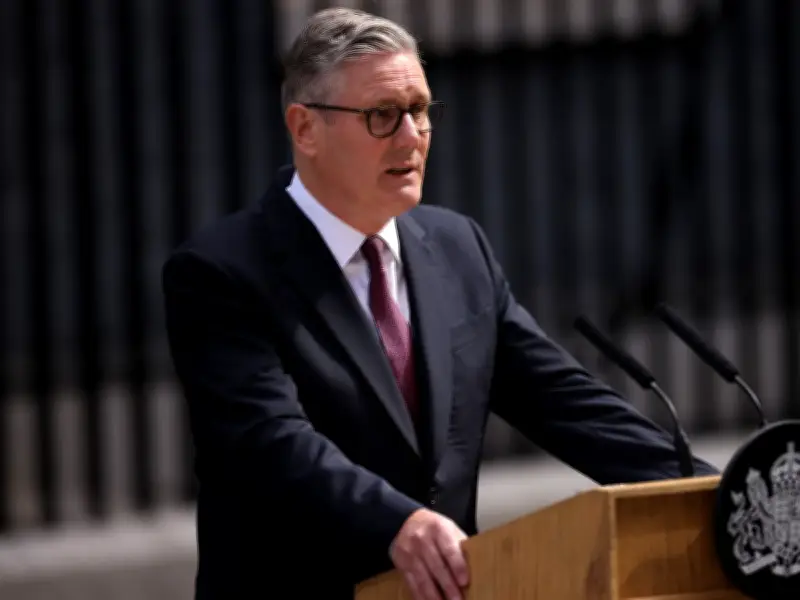
Sir Keir Starmer’s resignation as Prime Minister marks a spectacular fall, less than two years after he led Labour to its best ever election result in the North East. Having come into office promising to end the turmoil of ever-changing Prime Ministers during the Tory years, he has not been able to do so.
From Landslide Victory to Local Election Collapse
At the 2024 General Election, Labour won every single seat in the North East mayoral area. That victory came not long after it had won the first North East mayoral election and had control of the five councils in Tyne and Wear. Local elections this May told a very different story, however, as Labour lost all but one of those councils, some of which it had controlled for their entire 50-year history. In Newcastle, it was reduced to having just two councillors, with the results prompting a number of North East MPs to call for Sir Keir to step down.
The 2024 Triumph and Its Fragile Foundation
It’s easy to forget now what a significant triumph the 2024 General Election was for Labour. Five years earlier it had lost so badly under Jeremy Corbyn that most political commentators thought it impossible to turn around its fortunes in one electoral cycle. That it not only overcame that deficit but won a majority of 174 was testament - in part, at least - to Sir Keir’s transformation of the party. Abandoning the more extreme policies of his predecessor and taking on elements of anti-Semitism within Labour helped make the party electable again. And nowhere was that change more visible than in the North East. Having lost seats in the Red Wall in 2019 that would have been unthinkable - including Blyth Valley, North West Durham and Sir Tony Blair’s old Sedgefield seat - Labour won them back in 2024 and also added places it had never won, including Hexham and North Northumberland. Sir Keir’s first Cabinet was the most Northern of this century and arguably the most representative of society, being made up almost entirely of state-educated people.
Donations, U-Turns, and Scandals
But the early sheen of that election win was dulled by revelations that Sir Keir and other senior Cabinet Ministers had taken donations to buy designer clothes and go to concerts and football matches. Such gifts might now seem quaint at a time when Reform’s Nigel Farage was gifted £5m from a crypto-millionaire but were damaging at the time. And then came policies that really hurt the Government’s standing. A proposal to end winter fuel payments for pensioners may have had some logic given the state of the public finances, but it proved hugely unpopular. By the time it was scrapped, the Government had been badly damaged. Other attempts to reduce the welfare bill also failed and a pattern of Government U-turns began to emerge. Plans to change taxation on farmland, initial resistance to a national grooming gangs inquiry and a deal on the future of the Chagos Islands were all dumped, but not before they had taken a toll on the Government. There were scandals too around Cabinet Ministers, including Deputy Prime Minister Angela Rayner not paying the correct taxation on the purchase of a house. These could be argued to be much less serious than some of what went on during the 14 years of Conservative Government, but hurt the Government nonetheless. The Peter Mandelson affair was even more damaging and led Sir Keir to admit that it was his worst moment of his time in power to date.
Local Election Wipeout and Reform's Rise
Falling polling ratings were reflected in by-election losses but also awful results in local elections. North East Mayor Kim McGuinness has gone from having a cabinet in which six of its seven posts were held by Labour council leaders when she was first elected in 2024 to just one now. Four of the North East’s seven councils are now controlled by Reform UK, with the party having rocketed in the polls. The prospect of Nigel Farage being in Downing Street in three years’ time has terrified Labour MPs, many of whom called on Sir Keir to step down. Greater Manchester mayor Andy Burnham’s win in last week’s Makerfield by-election - and the margin of that victory - probably sealed Sir Keir’s fate. That constituency had voted Reform pretty solidly in May, so to win it by 20 percentage points signalled Mr Burnham as the person who could take on Reform and win.
A Mixed Legacy
Sir Keir and his supporters have pointed to successes of his time in office, with immigration and NHS waiting lists down. The move to scrap the two-child benefit cap - the main driver of shocking levels of child poverty in the North East during the last administration - and backing for rail improvements in the North will both benefit this region significantly. He will argue too that he received a terrible legacy from the previous Government. But Sir Keir will likely be remembered as a decent man who was not very good at politics. All of those achievements were poorly communicated while his failings were magnified hugely. His 2024 election win was achieved on a national vote share of 33.7%, the lowest of any governing party on record, and not much higher than that won by Jeremy Corbyn five years earlier. Those results showed that he had broadened his party’s appeal but meant that a lot of MPs with small majorities were always looking over their shoulders at possible challenges.
The End of an Era
In the current volatile political climate, many of those MPs will hope that replacing an unpopular Prime Minister with someone who is popular - in Greater Manchester at least - could turn around Labour’s fortunes. Reform’s rise in local elections has not been matched at three recent by-elections, each of which has seen voters unite to defeat Nigel Farage’s party. The UK’s parliamentary system works on the basis that the leader who can command the confidence of the highest number of MPs is our Prime Minister. Once Sir Keir realised that that was no longer him, stepping down was his only option.




