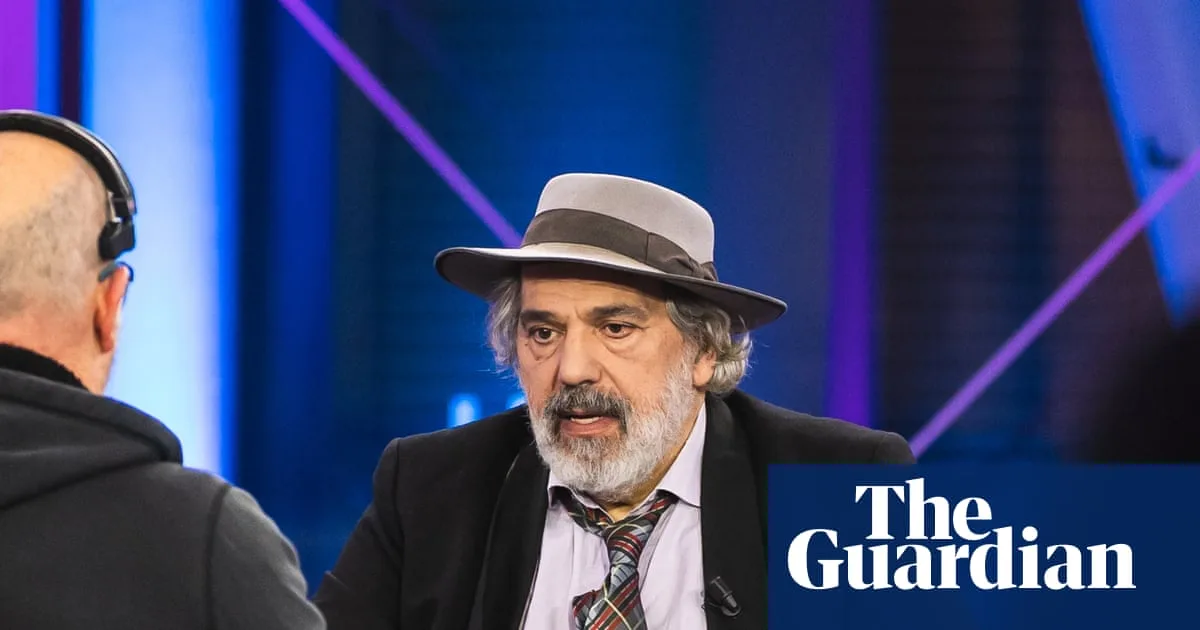
In an unusual presidential election featuring eleven candidates, a satirical campaign promising every citizen a Ferrari and wine on tap is capturing the public's imagination in Portugal. The race, set for Sunday, will decide the successor to outgoing President Marcelo Rebelo de Sousa.
The Absurdist Campaign Capturing Voters' Imaginations
The man behind the extravagant promises is Manuel João Vieira, a renowned Portuguese artist, musician, and comedian. He is running officially as Candidato Vieira, a fictional character he created and portrays. His platform is a deliberate exercise in absurdity, designed to critique the political establishment.
Beyond the headline-grabbing pledge of a Ferrari for every Portuguese citizen, Vieira's manifesto includes wine flowing from household taps, the creation of a futuristic city named Vieirópolis powered by AI to eliminate work, and even a skin-tone homogenisation treatment to combat anti-migration sentiment. He describes his aim as wanting to "mobilise people's imagination" to find solutions for society's problems.
At Lisbon's Campo de Ourique market, the campaign has sparked conversation. "Wouldn't you like a Ferrari, as he promised?" one fishmonger joked to a colleague, though the colleague remained committed to the far-right candidate André Ventura.
A Tight Race in a Changing Political Landscape
This election is notable for its lack of a clear frontrunner. Polls show little separating the top five candidates, making it almost certain that, for the first time in forty years, the contest will proceed to a second-round runoff. The president, while lacking direct legislative power, holds significant authority to dissolve parliament and veto laws.
Political scientist António Costa Pinto of the University of Lisbon notes this election marks a shift away from presidents being strong figures associated with the political elite. This is underscored by the independent candidacy of retired admiral Henrique Gouveia e Melo, who led Portugal's Covid vaccination campaign.
Currently, André Ventura of the populist far-right Chega party holds a narrow lead in the polls, closely followed by the Socialist Party's António José Seguro. Chega capitalised on widespread dissatisfaction in last year's general election to become the main opposition party.
Costa Pinto suggests that if Ventura reaches the runoff and secures a significant share of the vote, it would fundamentally alter Portugal's right-wing political landscape, proving Chega's appeal extends beyond its current base.
Satire as a Political Tool
Vieira's campaign, largely waged through viral social media posts and intentionally crude AI-generated memes, borrows from Portuguese popular imagery and often uses vulgar language to mock traditional political advertising. He has run in several previous elections but this is the first time he has gathered enough support to appear on the official ballot.
He openly states his ambition is to be "more absurd than Donald Duck Trump" and rejects comparisons to Ventura as fellow anti-establishment figures, arguing the Chega leader is merely repackaging old ideas.
Despite the comedic facade, Vieira insists his campaign has a serious purpose. "I use metaphorical language, and I am interested in mixing fantasy with reality," he said. "Fantasy is a part of life, and Utopia used to be a part of politics... I want to mobilise people's imagination because it's through imagination that we create solutions that lead to happiness."
With polls giving him around 1% of voting intentions—trailing candidates from the Portuguese Communist Party and the left-wing Livre party—his run is symbolic. Yet, for voters like 18-year-old student Manuel Gil, the satire is vital. "I think the way he ridicules politics is important to get people to pay attention," Gil said, highlighting the campaign's role in engaging a disillusioned electorate.
As Portugal heads to the polls, the presence of Candidato Vieira underscores a political environment marked by apathy and a search for alternatives, where even the most absurd promises can spark necessary conversation about the future.




