Portugal Braces for Political Shockwave in Pivotal Presidential Vote
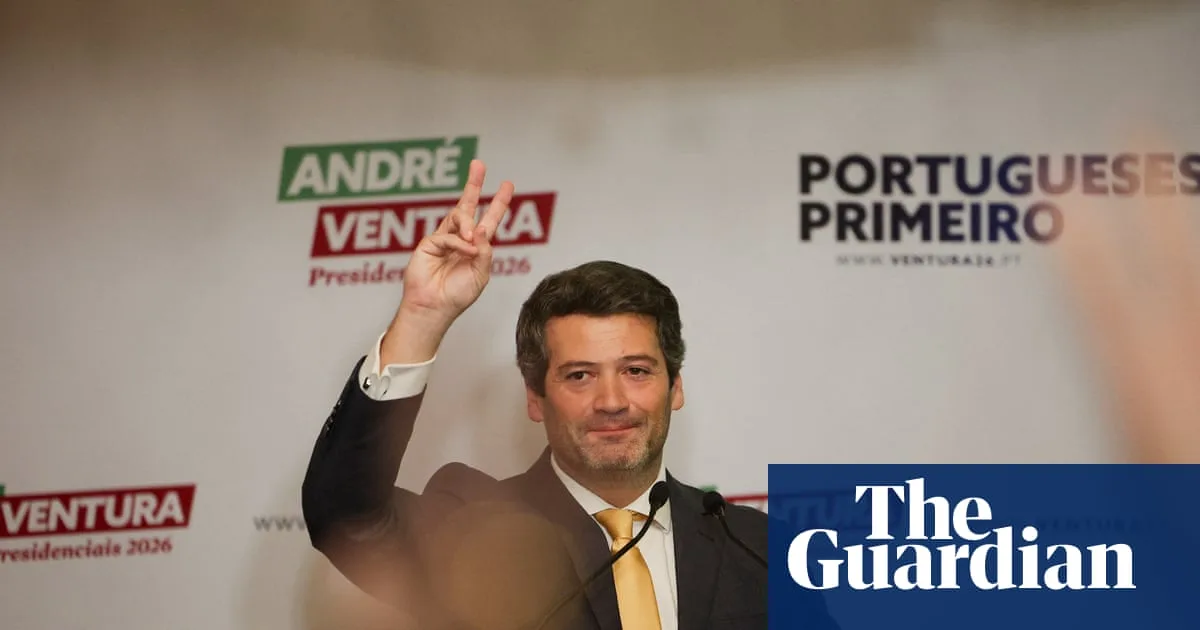
Portugal is voting today in a presidential election that could deliver a seismic shock to the nation's political establishment, with a record-breaking field of eleven candidates battling for the top job. The contest is widely seen as a potential breakthrough moment for Europe's surging far-right, led by the populist firebrand André Ventura.
With no single candidate expected to secure an outright majority of more than 50 per cent, the race is almost certain to head to a second-round run-off on February 8. This would mark the first time a Portuguese presidential election has gone to a second round since 1986.
The Rise of Chega and the Ventura Phenomenon
At the centre of the political storm is André Ventura, the outspoken leader of the populist Chega (meaning 'Enough') party. A former football pundit and ex-trainee priest, Ventura has propelled his party from obscurity to becoming the second-largest force in parliament in just six years. Following a general election in May last year, Chega holds 60 seats after winning 22.8 per cent of the vote.
Ventura has made hardline views on immigration the defining issue of his campaign, a stance once considered unthinkable in mainstream Portuguese politics. His party's controversial billboards, bearing slogans like 'This isn't Bangladesh' and 'Immigrants shouldn't be allowed to live on welfare', have sparked national debate.
"Portugal is ours," Ventura has repeatedly declared, railing against the growing presence of foreign workers and welfare spending. Multiple opinion polls now place him at the forefront of the presidential race, though he is widely seen as having little chance of ultimately winning a second round.
A Crowded Field and the Run-Off Scenario
Nearly 11 million eligible voters can cast their ballots, with polling stations open from 8am for twelve hours. Results are anticipated late into the evening.
The likely run-off is expected to pit Ventura against either António José Seguro of the centre-left Socialist Party, or Luís Marques Mendes, the candidate of the governing centre-right Social Democratic Party, which is backed by Prime Minister Luís Montenegro. Only these two are believed to have a realistic chance of progressing alongside Ventura.
Other notable contenders include:
- Henrique Gouveia e Melo: A retired Rear Admiral and independent candidate, widely admired for overseeing Portugal's rapid Covid-19 vaccination rollout.
- João Cotrim Figueiredo: A liberal MEP whose campaign has been damaged by allegations of harassment from a former staff member.
Political scientist António Costa Pinto noted that Ventura's bid is as much about consolidating his voter base as winning outright. "Andre Ventura is running to keep his voter base," he said. "There could be a surprise increase."
High Stakes for a Nation in Flux
The election will decide who replaces the outgoing president, Marcelo Rebelo de Sousa, who is stepping down after serving the maximum two five-year terms. The winner will move into the president's iconic riverside residence, the Pink Palace in Lisbon.
While the role is largely ceremonial, it carries significant constitutional power. The head of state can veto legislation, refer laws to the constitutional court, and, in extreme circumstances, dissolve parliament—a power known as the 'atomic bomb'.
Portugal has endured its worst spell of political instability in decades, holding three general elections in as many years. Steadying the ship is now viewed as a key task for the next president. Despite Ventura's focus on immigration, voters appear more concerned about the spiralling cost of living and a deepening housing crisis.
The next president may also have to confront a controversial euthanasia law, approved by parliament in 2022 but delayed by constitutional challenges. Furthermore, the election highlights a lack of diversity in Portuguese politics; only one woman is among the eleven candidates, and the country has never had a female or non-white head of state.
Although the outcome is unlikely to alter the overall direction of the European Union, a strong showing for Ventura would pile pressure on Prime Minister Montenegro's minority government, which relies on Chega's support to pass some policies. For now, all eyes are on Sunday's vote to see if Portugal takes its boldest step yet into Europe's populist age.




