
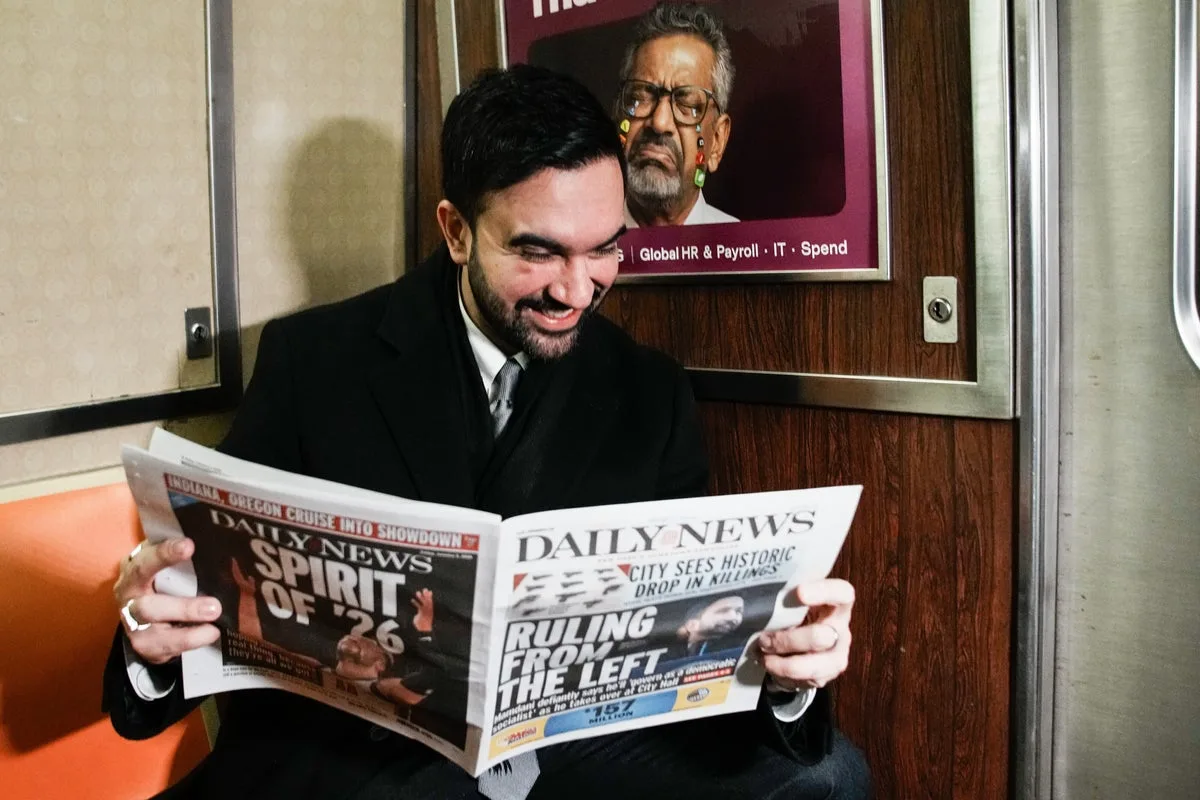
Zohran Mamdani, the 34-year-old democratic socialist who was sworn in as New York City mayor on Thursday, began his first full day in office with a subway commute from his Queens apartment. Bundled against the cold and battling a cold, the new mayor travelled to City Hall accompanied by security guards and aides, pausing for selfies with riders and showing a copy of the New York Daily News to prove his identity to doubtful French tourists.
The commute was seen as a symbol of Mamdani's pledge to ensure his government “looks and lives like the people it represents,” a theme he echoed in his inaugural speech. Shortly after arriving at City Hall, he visited a Brooklyn apartment building where he promised to escalate a legal fight against a landlord accused of negligence, drawing cheers from a tenants union.
Mamdani also moved quickly to revoke a series of executive orders issued by his predecessor, Eric Adams, including two related to Israel. One adopted a contentious definition of antisemitism that includes certain criticism of Israel, and the other barred city agencies and employees from boycotting or divesting from the country. The move drew swift backlash from Jewish groups and accusations from the Israeli government that Mamdani had poured “antisemitic gasoline on an open fire.”
Asked about the revoked orders, Mamdani read from prepared remarks, promising his administration would be “relentless in its effort to combat hate and division.” He noted that he had left in place the Mayor’s Office to Combat Antisemitism. He also announced the creation of a “mass engagement” office to bring more New Yorkers into the political process, building on his campaign’s field operation.
Reflecting on the public’s renewed faith in city government, Mamdani said, “We have an opportunity where New Yorkers are allowing themselves to believe in the possibility of city government once again... That is not a belief that will sustain itself in the absence of action.” Among his immediate tasks is moving to the mayor’s official residence on the Upper East Side before his lease on his Queens apartment expires later this month.




