

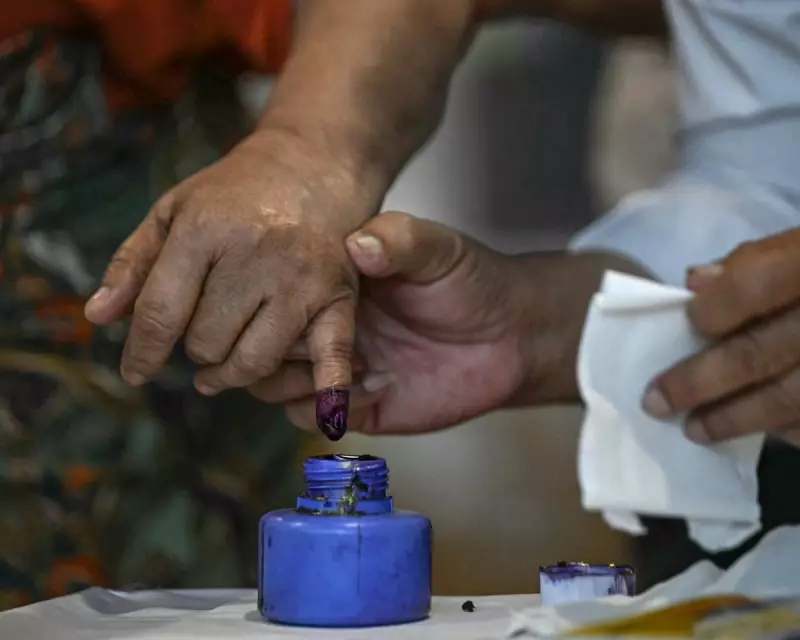
Voting has commenced in Myanmar for the first time since the military seized power in a 2021 coup, in an election process widely condemned by the international community as a sham designed to legitimise the junta's stranglehold on the country.
A Poll Under the Shadow of the Gun
The polls opened on Sunday, 28th December 2025, under conditions of intense military control and widespread fear. The most prominent symbol of Myanmar's democratic aspirations, Nobel laureate Aung San Suu Kyi, is barred from participating. Her National League for Democracy (NLD) party, which won a landslide victory in the 2020 election, has been forcibly dissolved by the ruling State Administration Council (SAC).
Security forces are heavily deployed across the nation, with reports of soldiers stationed inside and outside polling stations. The military government, led by Senior General Min Aung Hlaing, has framed the election as a step towards what it calls "disciplined democracy." However, critics and independent observers argue the process is a carefully orchestrated facade.

A Controlled Political Landscape
The electoral landscape has been meticulously engineered to ensure a favourable outcome for the junta and its proxy political parties. Key opposition groups have been systematically dismantled or excluded. More than 40 political parties were banned from contesting, leaving the field dominated by military-aligned entities.
Voter intimidation and a pervasive climate of violence have marred the campaign period. Armed conflict continues to rage across large swathes of the country, particularly in ethnic minority regions, effectively disenfranchising millions. Independent media has been silenced, and international election observers were not invited to monitor the vote.
"This is not a free and fair election. It is a ritual to rubber-stamp military rule," said a Yangon-based analyst, speaking on condition of anonymity due to security concerns. "The outcome is predetermined."
International Condemnation and Domestic Defiance
The international response has been one of uniform condemnation. Western nations, including the United Kingdom, have dismissed the election as illegitimate. A spokesperson for the UK Foreign Office stated that the vote "lacks any credibility" and fails to represent the will of the Myanmar people.
Within Myanmar, a powerful civil disobedience movement has called for a boycott of the election, urging citizens to reject the junta's political roadmap. Many voters interviewed expressed apathy or fear, with some stating they would spoil their ballots as a silent protest.
The results, expected in the coming days, are anticipated to deliver a sweeping victory for the military's Union Solidarity and Development Party (USDP) and its allies. This would provide a veneer of electoral legitimacy for Senior General Min Aung Hlaing to assume the presidency and extend military rule for the foreseeable future.
Analysts conclude that these elections mark not a return to democracy, but the consolidation of an authoritarian regime. The deep political crisis triggered by the 2021 coup is set to continue, with the junta using the ballot box to entrench its power while the majority of the population remains marginalised and oppressed.






