The government has initiated a controversial move to delay local elections, prompting accusations of creating a democratic deficit and suspicions of political manoeuvring aimed at curbing the rise of Reform UK.
The Postponement and Its Official Justification
Ministers have written to a number of Conservative and Labour-led local authorities, asking if they wish to push elections scheduled for May back to 2027. In some cases, this represents a further delay for contests originally due in 2025, meaning some councils will remain unchanged for a total of seven years.
The official reason given is the ongoing, complex reorganisation of local government in England. The government argues it is more efficient and cost-effective to extend the terms of existing councillors in authorities about to be abolished, rather than hold elections for soon-to-be-defunct bodies. Alison McGovern, the minister for local government, stated that "multiple" authorities had requested a postponement, citing the burden of running "resource-intensive" elections while simultaneously establishing new structures.

Suspicions of Political Motives and Reform's Potential Gains
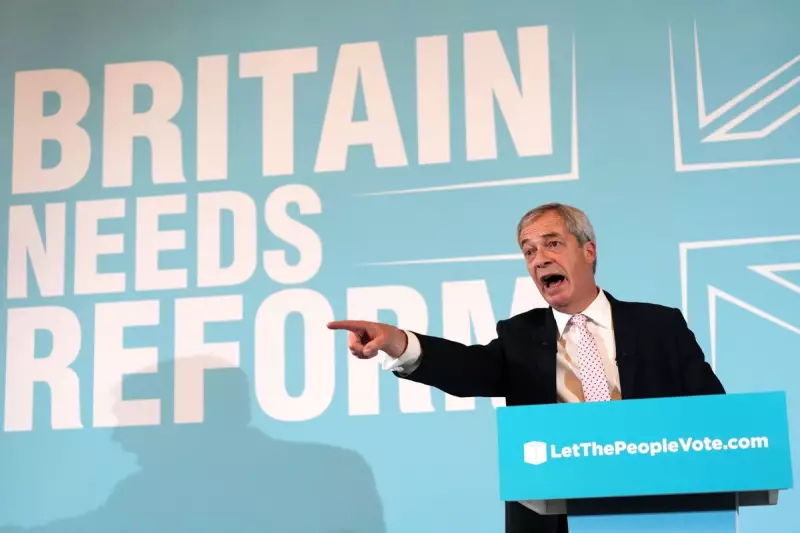
However, many suspect a more partisan motive. Reform UK, buoyed by its performance in the last general election and strong polling numbers, is widely expected to make significant gains in the local contests now being postponed. The delay could stall the party's ability to build a base of sitting councillors and maintain its sense of momentum.
Nigel Farage has been vocal in his criticism, drawing a colourful analogy: "Turkeys don’t vote for Christmas. Tory county councils look set to collude with Labour to keep their control until 2027. Only a banana republic bans elections." The move is seen by some as a tactic to protect the established parties from Reform's advancing challenge.
A History of Unsettled Local Government
The necessity of this latest council reorganisation is itself highly debatable. England has seen successive waves of restructuring—in 1974, 1995, and the 2010s—with little clear evidence of improved services or accountability. This instability has often come at the cost of local identity, with historic counties like Middlesex and Yorkshire ridings disappearing, while newer creations like Avon had brief lifespans.
The result is a bewildering patchwork of structures across the country. Some cities, like Sheffield, lost and later regained unitary status, while others, like Norwich, did not. Bristol adopted a directly elected mayor in 2012 only to scrap the role a decade later in 2022.
While Reform is not predicted to win all new councils, any delay in its progress could provide the party time to address questions about its competence in power, following controversial cost-cutting experiments in some areas it already controls. Nevertheless, the central controversy remains: the postponement of democratic contests risks undermining public trust in the system, regardless of the administrative reasoning provided.