

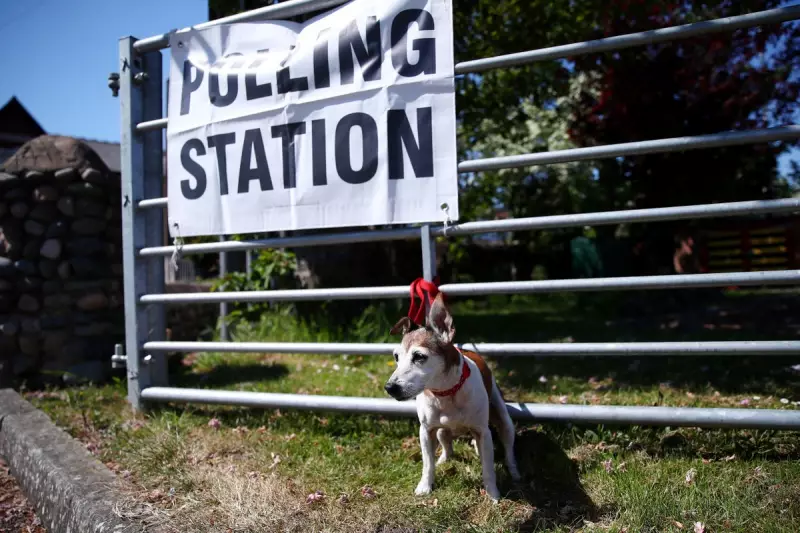
A significant democratic event is being reshaped as millions of voters across England are set to be denied their chance to cast ballots this spring. Dozens of local authorities have opted to postpone or cancel elections scheduled for 7 May 2026, in one of the most substantial disruptions to the local electoral cycle in decades.
Who Is Losing Their Vote?
The scale of the disruption is considerable. Estimates suggest that between 2.5 million and 4 million voters will be affected by the delays or outright cancellations. This stems from a government offer allowing councils undergoing reorganisation to push their elections back, likely to 2027, when new authority structures are in place.
Of the 63 councils eligible for a postponement, 25 have requested a delay, 36 are proceeding as planned, and two remain undecided. The decision means sitting councillors in those areas will effectively serve an extra year in office without facing the electorate.

The list of councils scrapping their 2026 polls is extensive and includes authorities such as Adur, Basildon, Blackburn with Darwen, Burnley, Cheltenham, and Chorley. Also on the list are Crawley, East Sussex County Council, Exeter, Hastings, Hyndburn, Ipswich, Lincoln, Norwich, and Nuneaton and Bedworth. The cancellations extend to Pendle, Peterborough, Preston, Redditch, Rugby, Stevenage, Tamworth, Thurrock, West Sussex County Council, and Worthing.
Furthermore, the launch of four new combined authorities with directly elected mayors has been pushed back to 2028. These are: Greater Essex; Hampshire and the Solent; Norfolk and Suffolk; and Sussex and Brighton.
A Patchwork Electoral Landscape
While these delays create notable gaps, a major nationwide test of political sentiment will still go ahead on 7 May. This date remains crucial, representing the most substantial gauge of public opinion since the 2024 general election.
Voters across Scotland and Wales will head to the polls to elect members to the Scottish Parliament and the Senedd, respectively. In England, elections will proceed for all 32 London boroughs, 32 metropolitan boroughs, 18 unitary authorities, six county councils, and 50 district councils. Six directly elected mayoral contests outside London are also still scheduled.
In total, 5,036 council seats across 136 English authorities are up for grabs. Eligibility for these local and devolved contests is broader than for Westminster elections, encompassing more EU and Commonwealth citizens. In Scotland and Wales, 16- and 17-year-olds will also have the franchise, though photo ID requirements remain in place.
The Political Winners and Losers
The pattern of cancellations carries immediate political consequences. Analysis suggests the main loser is Reform UK, which will miss key opportunities to build momentum and extend its influence in local government chambers across England.
For the two main parties, the still-scheduled elections on 7 May are predicted to be difficult. Both Labour and the Conservatives are expected to be hit hard, as they enjoyed far higher levels of support when the affected seats were last contested in 2021 or 2022. At that time, the equivalent national vote share stood at around 35% for Labour and 30% for the Tories, compared to significantly lower figures in current opinion polls.
In contrast, the Greens and Plaid Cymru are forecast to perform well in line with national polling trends. The Liberal Democrats and the SNP are anticipated to largely break even. The delays, while administratively motivated for councils, will undoubtedly shape the political narrative and party strategies in the coming year.
This piecemeal approach to local government reorganisation, contrasting with the more synchronised efforts of 1974 and 1995, has created an uneven electoral map. It leaves a significant portion of the electorate waiting an extra year for their democratic say, confirming the fragmented nature of the UK's emerging multi-party system.






