

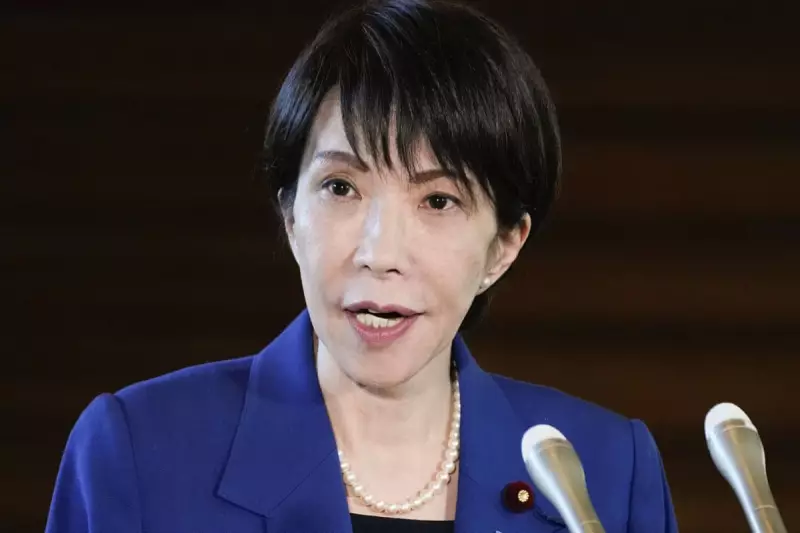
Japanese Prime Minister Sanae Takaichi has made a bold political gamble, announcing a surprise snap election for early February. The move is an attempt to capitalise on her relatively high personal approval ratings and secure a stronger mandate for her conservative government.
A High-Stakes Gamble for Public Mandate
Prime Minister Takaichi confirmed on Monday that she will dissolve the powerful lower house of the Diet, Japan's parliament, on 23 January. The subsequent election will be held on 8 February. This is a significant shift in the political calendar, as the next lower house poll was not constitutionally required until October 2028.
"I am putting my future as prime minister on the line," Takaichi stated at a press conference, describing the decision as "very difficult." She expressed her desire for voters to judge directly whether she is "fit" to continue leading the nation and whether they can "entrust the management of the country" to her.

Takaichi, who became Japan's first female prime minister three months ago following her predecessor's resignation, appears confident that her personal popularity can reverse a series of poor electoral performances by her long-ruling Liberal Democratic Party (LDP).
Navigating Foreign Tensions and Domestic Scandals
The Prime Minister's early tenure has been marked by significant foreign policy challenges, most notably a deepening dispute with China over Taiwan. Takaichi angered Beijing by suggesting Japan could become militarily involved in any China-Taiwan conflict if its own security were threatened. She has refused to withdraw the remark, a stance that has garnered her broad domestic support but risks prolonged economic repercussions.
China has since urged its citizens not to travel to Japan and this month banned exports of "dual-use" items with potential military applications to Japanese defence firms. Takaichi has labelled this move a violation of international protocols.
Domestically, the LDP faces persistent public scrutiny. The party, which has governed Japan almost uninterrupted since the 1950s, is still grappling with a lingering political funding scandal involving slush funds. Furthermore, the rising cost of living is a primary concern for voters. A recent NHK poll found 45% of respondents cited prices as their main worry, ahead of diplomacy and national security at 16%.
In response, Takaichi's coalition is reportedly considering a two-year suspension of the 8% consumption tax on food items. Media also suggest she may impose a ban on political fundraisers by ministers to address public anger.
A Fragile Majority and New Opposition Threat
Takaichi's decision carries inherent risk. She leads a fragile ruling coalition after the LDP and its former partner Komeito lost their majorities in the lower house in October 2024 and in the upper house last July. Upon taking office, Takaichi was forced to forge a partnership with the populist Japan Innovation Party to govern.
This razor-thin majority now faces a fresh challenge from a newly merged opposition party. The main opposition Constitutional Democratic Party of Japan (CDPJ) and the LDP's ex-partner Komeito have united to form the Centrist Reform Alliance. Its secretary general, Jun Azumi, stated the new party aims to move from "divisive, confrontational politics to one of coexistence and inclusion."
As she prepares to seek her first public mandate, Takaichi has emphasised her commitment to economic stimulus and securing parliamentary approval for the national budget. The coming weeks will test whether her confidence and personal popularity can translate into a stable parliamentary majority and a renewed mandate to lead Japan through a complex period of geopolitical and economic uncertainty.






