

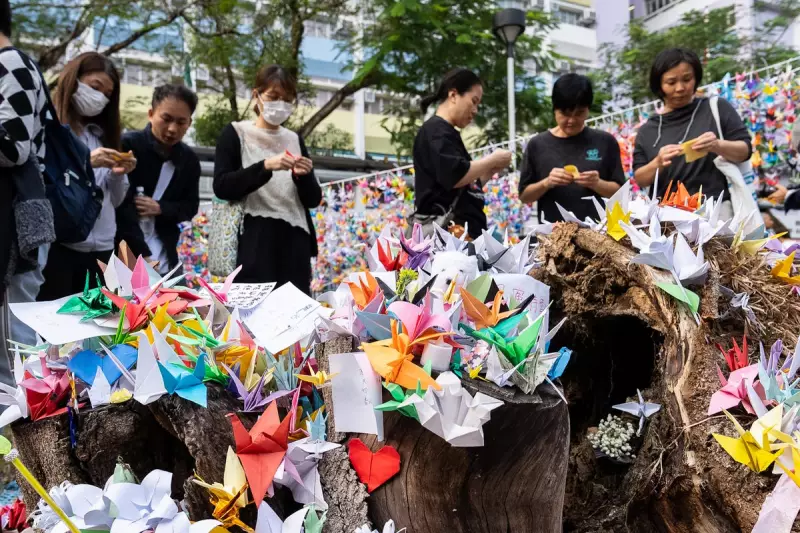
Hong Kong is preparing for a pivotal legislative election this Sunday, a vote already viewed as a step to consolidate Beijing's authority, now overshadowed by the city's deadliest fire in decades. The tragedy, which claimed at least 159 lives, is piling pressure on the governance model and raising urgent questions about public oversight.
A Vote Under the Shadow of Tragedy
The election to choose new lawmakers for Hong Kong's 90-seat Legislative Council comes just 11 days after a catastrophic blaze engulfed a high-rise complex. This disaster, the worst since 1948, has ignited intense public debate about government accountability in building safety and maintenance.
With significant pro-democracy voices absent following a sweeping national security crackdown, political apathy has grown. Consequently, Sunday's voter turnout rate is seen as a crucial indicator of public sentiment towards the administration and its handling of the fire's aftermath. While widespread protests are unlikely due to the security climate, residents have voiced concerns privately and on social media.

A Changing Guard: Loyalists and Mainland Ties
The candidate lineup reveals a significant shift. Nearly 40% of sitting lawmakers, including well-known figures, are not seeking re-election. Officials like Regina Ip cite a desire to pass the torch, denying external pressure.
Observers note the changes signal Beijing's tightening grip, even over loyalists, favouring politicians aligned with its national agenda. The electoral landscape was fundamentally altered in 2021 when China overhauled the rules. Now, only 20 seats are directly elected, down from 35, with the rest chosen by pro-Beijing committees. All candidates must pass vetting, including by national security authorities.
The new candidate pool marks a deeper integration with mainland structures. An Associated Press analysis found at least 26 of 161 candidates hold roles in Chinese-funded businesses, nearly double the figure from 2021. Furthermore, 16 are delegates to China's national legislature, more than double the previous election.
John Burns, an honorary professor at the University of Hong Kong, stated the central government has "very much controlled" elections since 2021. He suggested new informal criteria, like an age limit, and a preference for figures like national parliament delegates who inherently align with Beijing's perspective. "They're trying to ensure that the new people adopt a national perspective, national agenda," Burns said.
Turnout Drive Meets Fire Aftermath
The government faces an uphill battle to boost participation. The 2021 election saw a record low turnout of 30.2%. Authorities had launched a major push to improve this figure, but the fire has dramatically altered the public mood.
Professor Burns noted that around 60% of voters historically backed the pro-democracy camp before their exclusion. He believes many will continue to abstain. While some may appreciate the government's disaster response, others may hesitate to vote due to systemic failures highlighted by the fire. "This fire has run a truck right through that campaign," Burns remarked, predicting turnout could fall below 30%.
In their push, authorities have extended voting hours, added stations, and offered subsidies. City leader John Lee has urged civil servants to vote, and companies have given time off. Simultaneously, arrests have been made over social media content alleged to discourage voting.
Beijing's Hong Kong affairs office has framed the new candidates as boosting "high-quality democracy" suited to the city, bringing in new blood to align with China's national development plans. As Hong Kong votes, the shadow of the fire and the shape of its future governance are inextricably linked.






