

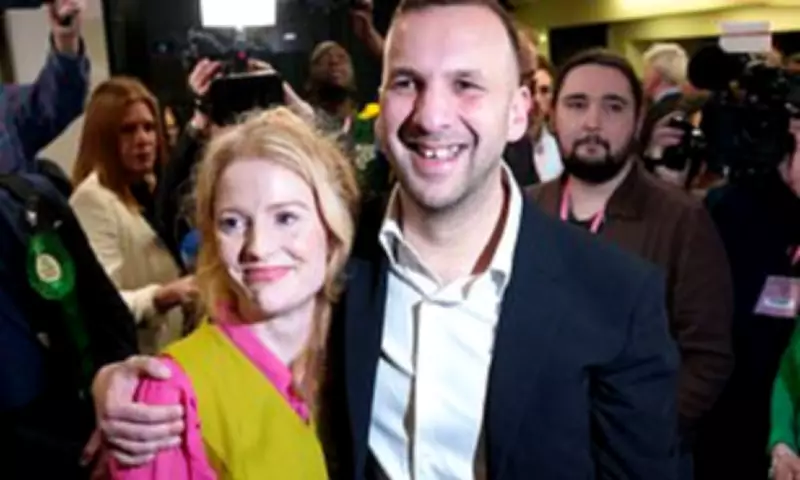
Green Party's Gorton Victory Sparks Alarm Over Britain's Political Future
Following her dramatic by-election win, Hannah Spencer, the newly elected MP for Gorton and Denton, boldly declared: 'There’s no part of the country where the Green Party cannot win.' If this statement holds even a fraction of truth, Britain faces profound political turmoil. Once regarded as a coalition of earnest environmental advocates, the Greens are now accused of promoting a toxic blend of envy, division, and sectarian politics.
A Shift in Political Landscape
The Greens' unexpected victory has left many citizens feeling anxious and confused, fearing the traditional two-party system is disintegrating, allowing more extreme elements to fill the void. To secure significant support from Muslim voters, the party embraced anti-Zionist rhetoric that critics argue borders on anti-Semitism, often appearing more focused on international conflicts like Gaza than local issues in Gorton. Consequently, many British Jews report feeling increasingly unsafe in the current climate.
Furthermore, disturbing allegations have emerged from an independent monitor regarding 'family voting' practices, where Asian wives were allegedly escorted into polling booths and instructed by their husbands on how to vote. This apparent misogynistic coercion demands a thorough and immediate investigation to uphold electoral integrity.

Scrutinising Green Party Policies
Unlike other political parties, the Greens have largely avoided rigorous media scrutiny. A brief examination of their policy platform reveals a series of radical proposals that critics label as dangerous and delusional. Key policies include:
- Implementing a universal basic income, effectively providing free money for all citizens
- Legalising all drugs without restriction
- Advocating for completely open borders
- Demanding slavery reparations
- Promoting various other left-wing causes deemed unrealistic by opponents
With characteristic far-left disingenuity, the Greens claim these ambitious programmes can be funded solely through wealth taxes—a proposition dismissed by critics as sixth-form politics at its most absurd. Yet this message continues to attract supporters, particularly among younger demographics.
Labour's Existential Crisis
One immediate consequence of this by-election humiliation is the severe blow to Sir Keir Starmer's leadership. The fundamental question now is whether the Labour Party itself faces extinction. Between 1859 and 1922, the Liberal Party produced seven prime ministers, including William Gladstone who secured four election victories. In his 1935 work, The Strange Death Of Liberal England, George Dangerfield attempted to explain how a party that dominated British politics for over six decades suddenly lost its direction and collapsed.
While it would be premature to declare Labour similarly doomed, the party faces an identity crisis: What is its purpose? Who does it truly serve? Modern Labour MPs no longer represent the working-class roots of their predecessors, instead comprising human rights lawyers, think-tank analysts, single-issue activists, political advisers, union officials, and various lanyard-wearing commentators.
As these representatives obsess over trans rights, assisted dying legislation, and the rapid transition to Net Zero, constituencies like Gorton and Denton continue their economic decline. If Labour cannot retain this traditional working-class stronghold, its electoral prospects appear bleak nationwide.
Strategic Dilemmas and Future Prospects
Labour now faces a strategic conundrum: shifting leftward to counter the Green threat risks exposing its right flank to Reform UK, while moving rightward creates vulnerability on the left. Although some suggest new leadership might help, none of Sir Keir's potential successors currently possess substantial credibility. Many observers believe this government will serve only a single term.

Looking toward the 2029 general election, the right must develop a coherent strategy. Reform UK performed reasonably well in the by-election but not sufficiently to suggest it could form a majority government. The party's peculiar candidate selection—an academic frequently featured on GB News—and lacklustre campaigning indicate a troubling complacency among those who view Reform as Britain's primary conservative hope.
The Conservative Party, while never competitive in Gorton, is rebuilding effectively under Kemi Badenoch's leadership and should be prepared for battle by the next general election. Although formal alliances may be premature, some arrangement between right-leaning parties appears necessary within the next three years.
The alternative—a coalition of left-wing parties—could plunge the nation into what critics describe as a 'doom spiral' from which recovery might prove impossible. Britain's political future hangs in the balance as traditional structures fracture and new forces emerge.





