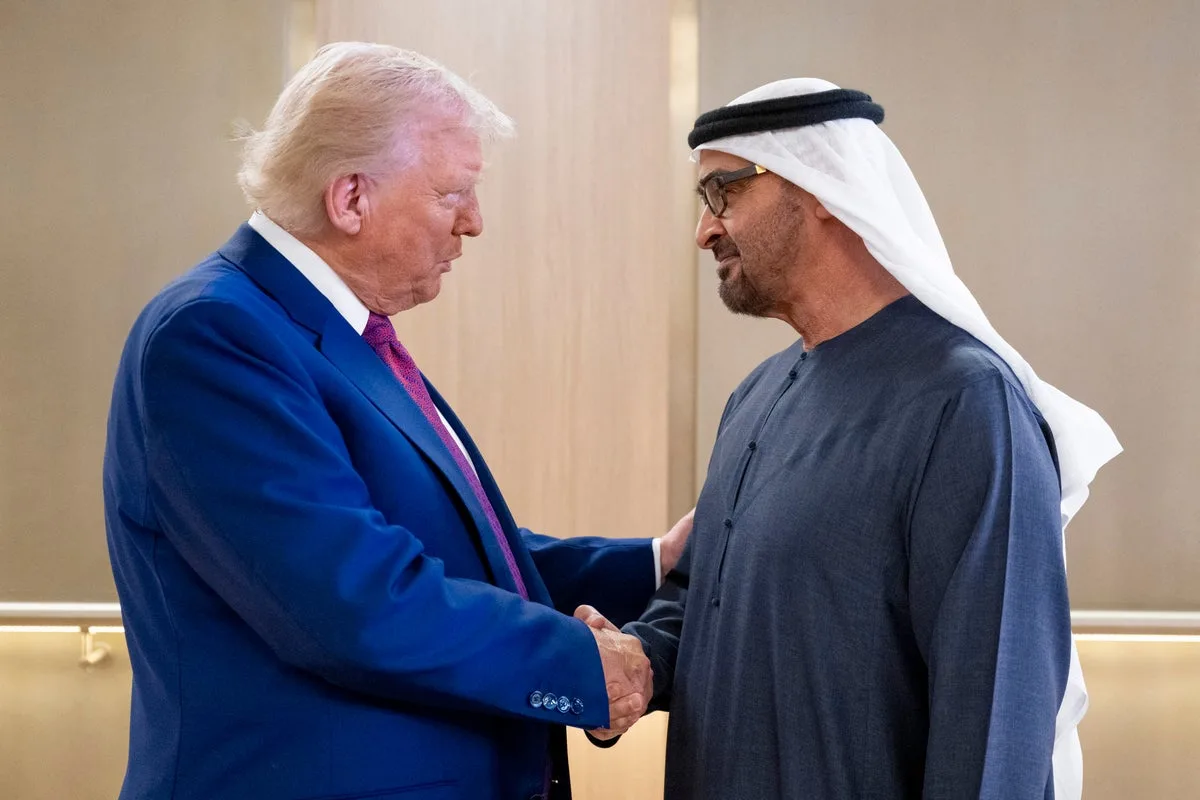
How a Presidential Phone Call Rekindled Middle East Tensions
President Donald Trump stands accused of inadvertently igniting a significant diplomatic feud between two crucial United States allies in the Middle East—Saudi Arabia and the United Arab Emirates—through a single phone call last November, according to a detailed report.
The Disputed Conversation
The controversy stems from a call President Trump made to Sheikh Mohamed bin Zayed, the Emirati leader, following a Washington, D.C., meeting with Saudi Arabia's Crown Prince Mohammed bin Salman. During that meeting, Trump had publicly stated, "His Majesty would like me to do something very powerful having to do with Sudan. We're going to start working on it."
Subsequently, Trump informed Sheikh Mohamed that the Crown Prince had requested the imposition of sanctions on the UAE. This demand was linked to Emirati support for the Rapid Support Forces (RSF), a paramilitary group engaged in the Sudanese civil war, as reported by The New York Times citing four anonymous sources.
Conflicting Narratives and Escalating Rift
A Saudi official provided an alternative account to the newspaper, asserting that Crown Prince Mohammed bin Salman had actually asked Trump to sanction the RSF directly, not the UAE. The objective was purportedly to cut off external support to the militia and help end the conflict in Sudan.
Regardless of the precise details debated, the outcome was unequivocal: a sudden eruption of tensions between these two Gulf oil states, which had previously maintained a relatively close alliance. The situation deteriorated significantly in December when Saudi Arabia conducted an airstrike on an alleged shipment of Emirati weapons destined for Yemen, marking a low point in their relations.
Broader Implications for US Policy and Trump's Interests
This diplomatic flare-up presents a substantial headache for the Trump administration. The Sudanese civil war has garnered minimal attention from U.S. policymakers thus far, but the rift between Saudi Arabia and the UAE threatens to undermine American strategy in the Middle East. Both nations' support is deemed essential for success in key areas, including dealings with Iran and the Gaza situation.
Moreover, the tensions could pose personal complications for President Trump, who maintains significant business connections with both countries. Notably, an Emirati investment firm reportedly acquired a stake in the Trump family's cryptocurrency venture, World Liberty Financial, last year. Simultaneously, the Saudi sovereign wealth fund has collaborated with a private equity firm led by Jared Kushner, Trump's son-in-law, on a massive $55 billion buyout of video game publisher EA Sports.
Presidential Denials and Contradictory Claims
When questioned about his involvement in the Saudi-UAE rift on February 16, President Trump denied direct participation but suggested he could intervene if necessary. "We can get it settled very easily," he remarked. "That's an easy one to settle."
This incident further complicates Trump's frequently repeated assertion that he has "ended eight wars" since returning to office in January. He has cited this achievement in appeals for the Nobel Peace Prize and reiterated it during his recent State of the Union address. In reality, many of these conflicts remain unresolved, with hostilities resurging in several regions where he claims to have established lasting peace.
Concurrently, the United States has adopted a more aggressive stance under his administration in other global theaters. This includes efforts to force regime change in Venezuela, strikes on Iran's nuclear facilities, and strained relationships with NATO allies over disputes such as the president's demands for control of Greenland.
The Independent has sought comments from the White House and State Department regarding these developments, but responses are still pending as the diplomatic situation continues to evolve.




