
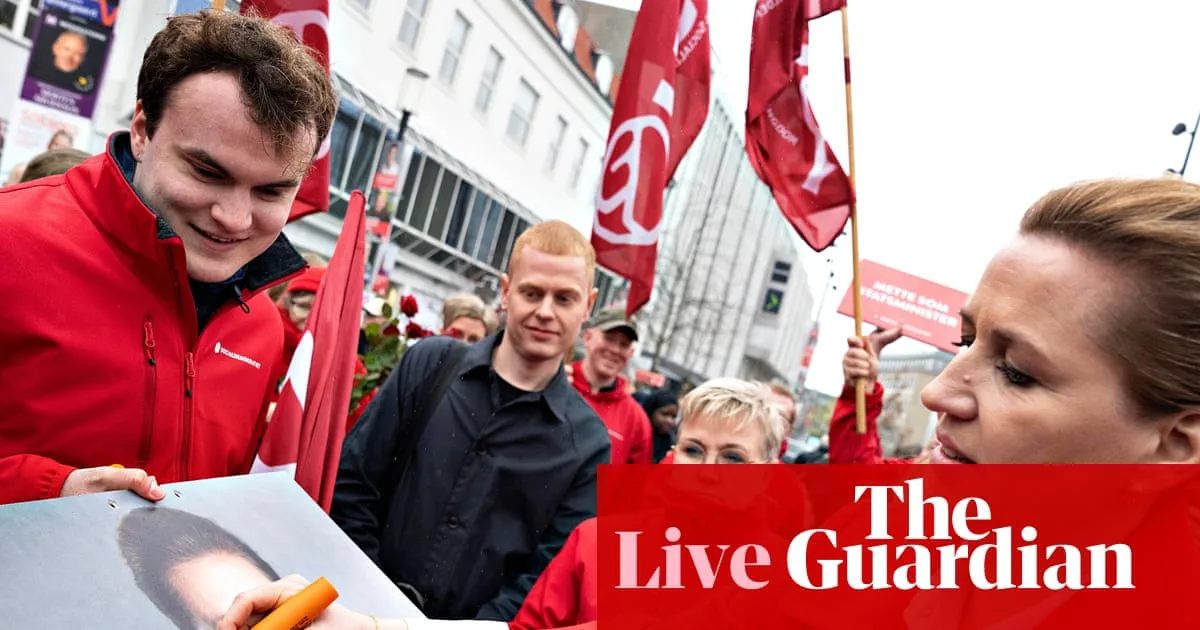
Denmark's left-wing bloc, led by Prime Minister Mette Frederiksen's Social Democrats, has won the general election but fallen short of a majority. With all votes counted, the 'red bloc' secured 84 seats in the 179-seat parliament, while the 'blue bloc' won 77 seats. The centrist Moderates, led by former prime minister Lars Løkke Rasmussen, won 14 seats and are poised to be kingmakers in coalition talks.
The Social Democrats remained the largest party with 21.9% of the vote (38 seats), followed by the Green Left with 11.6% (20 seats) and the Liberal Party with 10.1% (18 seats). Other parties include the Liberal Alliance (9.4%, 16 seats), Danish People's Party (9.1%, 16 seats), Moderates (7.7%, 14 seats), Conservative People's Party (7.6%, 13 seats), Red-Green Alliance (6.3%, 11 seats), Denmark Democrats (5.8%, 10 seats), Danish Social Liberal Party (5.8%, 10 seats), The Alternative (2.6%, 5 seats), and Citizen's Party (2.1%, 4 seats).
Neither the red nor the blue bloc reached the 90 seats needed for a majority, leaving the Moderates in a pivotal position. Rasmussen urged Frederiksen and Liberal Party leader Troels Lund Poulsen to 'come down from the trees' and join him in the centre ground, stating there is no majority to the left or right of his party. Denmark now faces weeks of coalition negotiations, with a centrist coalition seen as likely.
Poulsen, the outgoing defence minister, appeared to rule out continuing the current three-party coalition, saying he wants a blue centre-right government and that the Liberal Party would otherwise go into opposition. The election was held amid geopolitical tensions with the US over Greenland.




