

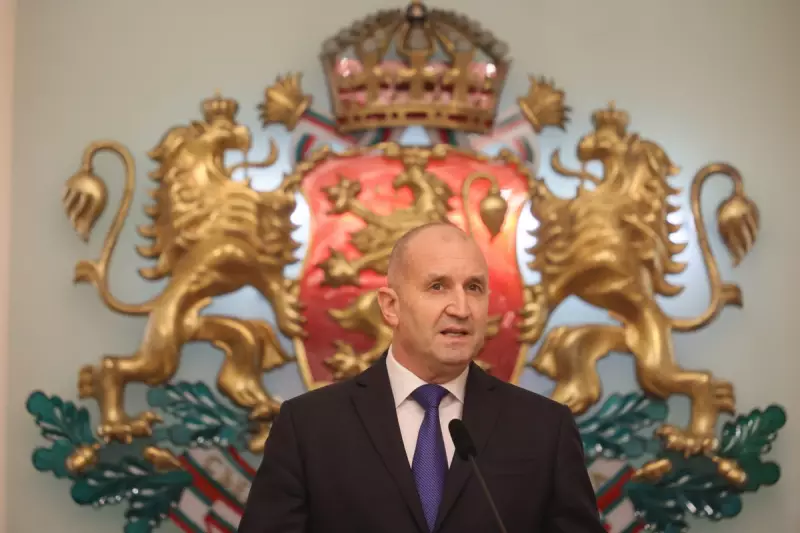
In a dramatic televised address on Monday, 19th January 2026, Bulgaria's President Rumen Radev declared his intention to step down from office, marking an unprecedented moment in the nation's modern history.
A Historic Resignation Amidst Turmoil
Rumen Radev's decision to resign is the first by a Bulgarian head of state since the end of communist rule. The 62-year-old former Air Force general, known for his left-leaning stance, stated he would formally submit his resignation to the Constitutional Court the following day, Tuesday. His second presidential mandate was not due to end until 2026.
This seismic move occurs as Bulgaria, a member of both the European Union and NATO, grapples with a deep and prolonged political crisis. The country is now headed towards its eighth parliamentary election since 2021, following the collapse of the centre-right GERB-led coalition government last month after large-scale anti-corruption protests.

Constitutional Process and Political Vacuum
Under the Bulgarian constitution, Vice President Iliana Yotova must now be sworn in by parliament to assume the presidency for the remainder of the term. This transition of power will provide temporary stability at the head of state.
However, the political landscape beneath remains fractured. Attempts to form a new government within the current parliament have failed entirely, leaving a power vacuum. Radev has been a vocal critic of key political figures, notably GERB party leader Boyko Borissov and the sanctioned oligarch-politician Delyan Peevski, whose MRF New Beginning party has propped up the outgoing coalition.
What Comes Next for Radev and Bulgaria?
While Radev did not specify his future plans in Monday's address, his resignation fuels widespread speculation that he will launch a new political party. He has repeatedly hinted at participating in the forthcoming snap elections.
In recent comments about a potential new party, Radev spoke of the need for a force that "unites all democrats — left and right" to ensure fair elections and democratic development. His farewell speech struck a rallying cry: "The battle for the future of our homeland lies ahead... We are ready. We can, and we will succeed!"
The immediate consequences are clear: Vice President Yotova's imminent ascent and the swift march towards another national vote. The longer-term impact hinges on whether Radev transitions from head of state to the leader of a new political movement, potentially reshaping Bulgaria's fragmented party system amid ongoing crises of governance and public trust.






