Jean-Michel Aulas Ruffles Feathers in Lyon After Swapping Football for Politics
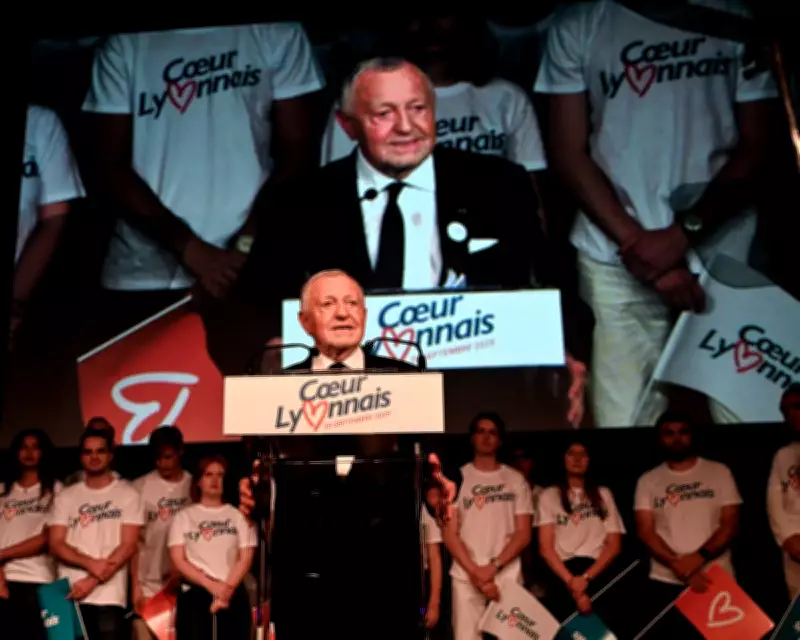
Jean-Michel Aulas, the former president of Olympique Lyonnais, is stirring controversy as he leads the polls in Lyon's mayoral race, accused by opponents of offering little substance despite his high-profile campaign. The 76-year-old entrepreneur launched his electoral bid in September 2025, positioning himself as a "civil society" candidate above traditional party lines, yet he has secured backing from a coalition ranging from President Emmanuel Macron's Renaissance party to the right-wing Les Républicains.
Football Stars and Political Endorsements
Karim Benzema, the Lyon-born striker, publicly endorsed Aulas in a video aired on LCI news channel, praising his leadership and experience. Bafétimbi Gomis also voiced support, highlighting Aulas's deep roots in the city. However, critics like Gautier Chapuis, a deputy mayor seeking re-election, argue that such endorsements distract from core issues such as housing, healthcare, and safety. Chapuis, a left-wing Green politician, contends that Aulas's campaign lacks substantive policies, focusing instead on infrastructure projects like new tunnels and stadiums.
Conflicts of Interest and Ethical Concerns
Aulas's roles as vice-president of the French football federation and president of the national women's football league have raised ethical questions. The FFF's ethics committee intervened to remind him to avoid campaign promises linked to football, forcing him to retract a pledge to build a stadium in Lyon's La Duchère neighbourhood. Additionally, a proposed metro line serving an indoor arena owned by his family's investment firm, Holnest, has sparked accusations of conflict of interest. Pierre Oliver, a Républicains mayor and Aulas's running mate, defends him, noting that Aulas transferred professional activities to his son and emphasizing the project's goal to connect the city centre to the airport.

Political Strategy and Public Perception
Romain Meltz, a political science professor at Lumière University Lyon 2, observes that Aulas's political capital stems from his football success, reducing the need for sports-focused promises in his Coeur Lyonnais manifesto. The campaign has shifted rightward with the involvement of Laurent Wauquiez, making centre-left support unlikely. Paul Bacot, a political scientist at ENS Lyon, suggests that Aulas portrays himself as an entrepreneur capable of better city management than career politicians, appealing to voters seeking change.
Controversial Campaign Moments
The killing of far-right activist Quentin Deranque in mid-February became a flashpoint, with Aulas calling for his portrait to be displayed at city hall to reject violence, a move criticized by incumbent Green mayor Grégory Doucet as an "indecent political appropriation." In a televised debate, Aulas faced accusations of tolerating violent ultra groups at football matches, which he denied, stating he always condemned such behaviour. He later admitted struggling in the debate, citing his political inexperience, and skipped a subsequent event, leading Doucet to accuse him of "empty-chair politics."
Election Dynamics and Outlook
As the first round approaches, Aulas consistently polls around 40%, ahead of Doucet and other candidates. If no candidate secures 50%, a second round will follow. Despite the scrutiny, Aulas remains a favourite, leveraging his status as a Lyon institution to attract voters beyond traditional political circles. Oliver notes that his campaign has engaged football fans who see supporting him as a duty, broadening the coalition's reach. The outcome will test whether a football legend can translate sports success into political victory in a divided city.