
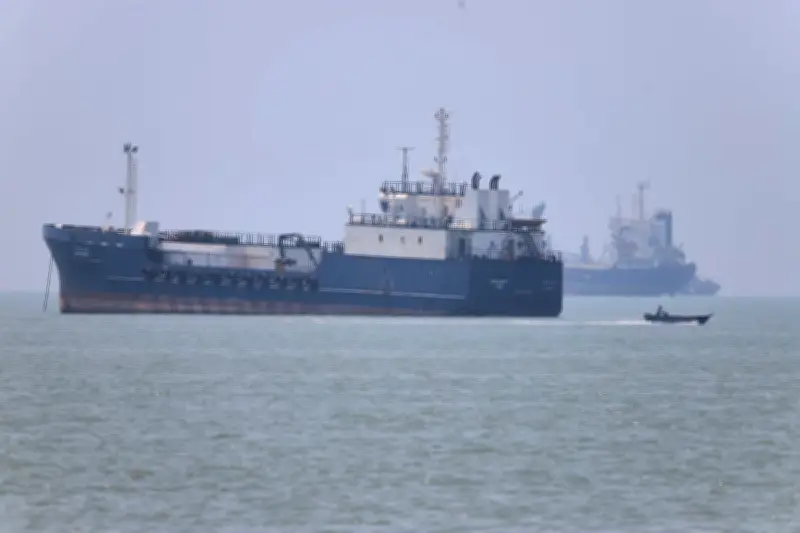
The United States has demanded that Iran publicly state the Strait of Hormuz is open and that ships using the vital waterway will not be attacked. Officials blame the latest strikes against vessels on a power struggle in Tehran, with rogue hardliners seeking to derail the fragile truce.
Trump Declares Ceasefire Over
President Donald Trump said the US has agreed to continue talks with Iran but stressed the ceasefire was over. He made these remarks after recent clashes in the region.
However, just as Washington sought public guarantees over the strait, Tehran’s top diplomat at the United Nations insisted any activity in the Gulf channel “rests exclusively with Iran”.
Key Demand in Previous Negotiations
Ending Tehran’s stranglehold on the sea route, which disrupted global oil and gas supplies and drove up fuel and food prices, had been a key demand in previous negotiations. The initial deal between the US and Iran only provides for safe, toll-free passage for 60 days, pending a final agreement on Tehran’s nuclear plans. The pact also leaves it to Iran and Oman, along with other Gulf states, to define future administration and maritime services in the Strait of Hormuz.
Iran's Defiance
Iran has responded with defiance, continuing to exert leverage over the channel, including demanding ships seek permission to transit and raising the spectre of future charges. Iran’s ambassador to the UN, Amir Saeid Iravani, said on Friday: “Any attempt, by external actors, to interfere with or establish a power arrangement would violate the (interim deal), and undermine its implementation, delay the restoration of normal commercial navigation, jeopardise maritime safety, and increase regional tensions.”
Meanwhile, the US military has been working to counter claims by Iran that it controls the sea route and that transit is only permitted through its approved designated routes. Nevertheless, shipping using the channel has plummeted following the recent fighting, with traffic well down compared to before the war.
Trump's Comments and Retaliatory Moves
Earlier in the week, President Trump branded the Tehran leadership “scum” and said it was “a waste of time” dealing with the regime, amid exchanges of fire after Iran targeted three tankers in the strait. In a post on Truth Social on Friday, Trump said: “The Islamic Republic of Iran has asked us to continue ‘talks’. We have agreed to do so, but the United States has stated to them, in no uncertain terms, that the Cease Fire is OVER!”
The trading of strikes has again caused severe disruption to maritime traffic in the critical sea route, casting doubt on securing a permanent end to the conflict launched by the US and Israel on February 28. Trump has also suggested the US could reimpose its blockade of Iranian ports, having already pulled Tehran’s licence to sell oil. In a further retaliatory move, the US Treasury acted to crack down on a key financier to the Tehran regime, Dubai-based banker and businessman Ali Ansari, previously sanctioned by Britain for his role in financially supporting the activities of Iran’s Islamic Revolutionary Guard Corps (IRGC).
Diplomatic Efforts and Israel's Stance
Prior to the latest flare-up, negotiations between the two sides had been due to restart following the burial of Iran’s late supreme leader Ayatollah Ali Khamenei, who was killed on the first day of the conflict. Mediators are engaged in frantic diplomatic efforts to try and salvage the tattered peace process. At the same time, Israel has said it stands ready to confront Iran again if needed. The country’s defence minister Israel Katz said: “If we will have to return, we will return with even greater force.”




