Zelenskyy Condemns US Waiver on Russian Oil Sanctions as Harmful to Peace Efforts
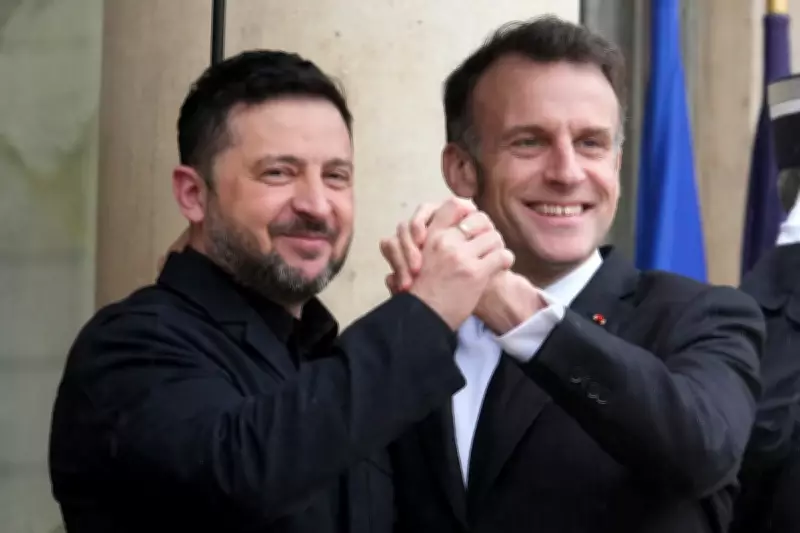
Ukrainian President Volodymyr Zelenskyy has strongly criticised a recent decision by the United States to grant a 30-day waiver on Russian oil sanctions, describing it as "not the right decision" that fails to support efforts to end Russia's prolonged invasion of Ukraine. Speaking at a news conference in Paris alongside French President Emmanuel Macron on Friday, Zelenskyy emphasised that this move could inadvertently bolster Russia's military capabilities.
Financial Implications and Strategic Concerns
Zelenskyy highlighted that the waiver could provide Russia with approximately $10 billion in additional revenue, funds he asserts are directly channelled into financing the ongoing conflict. "This easing alone by the United States could provide Russia with about $10 billion for the war," he stated, adding, "This certainly does not help peace." He further argued that lifting sanctions, even temporarily, strengthens Russia's position by enabling it to purchase more weapons, which are subsequently used against Ukrainian forces.
The U.S. Treasury Department announced the waiver on Thursday, aiming to address supply shortages caused by the Iran war by freeing up stranded Russian oil cargoes. However, analysts note that rising oil prices due to production blockages in the Persian Gulf are benefiting the Russian economy, which relies heavily on oil revenues to sustain its military operations.
International Reactions and Diplomatic Context
French President Emmanuel Macron sought to downplay the impact of the waiver, noting that broad sanctions against Russia remain in place. "U.S. waivers announced in recent days are 'limited' and 'taken on an exceptional basis,'" Macron said. "It does not broadly or permanently roll back the sanctions that they themselves decided to apply."
In contrast, German Chancellor Friedrich Merz adopted a more critical stance, aligning with Zelenskyy's concerns. Merz revealed that during a recent Group of Seven meeting, six members expressed clear opposition to waiving Russian sanctions. "We learned this morning that the U.S. government has apparently decided otherwise. Once again, we believe this is the wrong decision," Merz stated during a visit to Norway. He questioned the U.S. motives, pointing out that while there is a price problem, there is no supply issue.
Ukraine's Drone Expertise and Broader Security Cooperation
Amid these diplomatic tensions, Ukraine is leveraging its expertise in drone technology to strengthen international partnerships. Zelenskyy announced that Ukraine has become a leading producer of drone interceptors and is offering its knowledge to the United States and Gulf partners involved in the Middle East conflict. In return, Kyiv hopes to acquire high-end weaponry that it cannot manufacture domestically.
Zelenskyy disclosed that Ukraine has received requests for drone combat assistance from six countries and has already deployed expert teams to three, though he did not name them. Additional requests have come from the United States and Jordan. He stressed that effective drone defence requires more than just interceptors, advocating for integrated systems involving radars and comprehensive air defence strategies. "Ukraine is ready to share this experience for the sake of the security of those partners who are helping us," he affirmed.
Furthermore, Ukraine is awaiting White House approval for an agreement on producing battle-tested drones, as mentioned by Zelenskyy on Thursday. U.S.-mediated talks between Moscow and Kyiv, aimed at halting Europe's largest conflict since World War II, are currently on hold due to the Iran war but may resume next week, according to Zelenskyy.
This development underscores the complex interplay between global energy markets, sanctions policy, and military strategy, with Zelenskyy's remarks highlighting the ongoing challenges in achieving a peaceful resolution to the Ukraine conflict.