European leaders and California Governor Gavin Newsom have unleashed a torrent of criticism at the World Economic Forum in Davos, Switzerland, with the gathering dominated by escalating tensions over Greenland and global trade disputes. The forum has become a focal point for international condemnation of Donald Trump's continued advocacy for acquiring Greenland and imposing related trade tariffs, creating what many describe as a crisis in Western diplomacy.
Newsom's Explosive Critique and Macron's Colonial Warning
In the forum's entrance hall, California Governor Gavin Newsom delivered an expletive-laden rebuke to fellow world leaders, urging them to develop stronger backbones in dealing with the Trump administration. The prominent Democrat did not mince words, stating: "I can't take this complicity. People rolling over. I should've brought a bunch of knee pads for all the world leaders."
Newsom offered a particularly vivid analogy for diplomacy with Donald Trump, comparing it to dealing with a prehistoric predator: "You mate with him or he devours you. One or the other ... Wake up! Where the hell has everybody been? Stop with this diplomacy of sort of niceties."

French President Emmanuel Macron, sporting aviator sunglasses due to an eye infection, issued a stark warning about what he described as a "new colonial approach" that threatens to dismantle decades of international cooperation. After opening with a sardonic joke about "peace, stability and predictability," Macron declared: "It's a shift towards a world without rules. Where international law is trampled underfoot and where the only law that seems to matter is that of the strongest."
Direct Criticism of American Policies
President Macron then turned his attention directly to the Trump administration, denouncing what he called fundamentally unacceptable practices: "Competition from the United States of America, through trade agreements that undermine our export interests, demand maximum concessions, and openly aim to weaken and subordinate Europe, combined with an endless accumulation of new tariffs that are fundamentally unacceptable, even more so when they are used as leverage against territorial sovereignty."
His comments highlighted the growing rift between traditional allies over both economic policy and territorial ambitions in the Arctic region.
Carney's Warning and the Plight of Middle Powers
Canadian Prime Minister Mark Carney, who received a standing ovation after warning of a potential global "rupture," highlighted the particular vulnerability of smaller nations in the current geopolitical climate. The former central banker explained: "Great powers can afford for now to go it alone. They have the market size, the military capacity, and the leverage to dictate terms. Middle powers do not."
Carney urged nations outside the top tier of global power to maintain multilateral cooperation through what he described as a new, "dense web of connections." He presented middle powers with a stark choice: "In a world of great power rivalry, the countries in between have a choice: compete with each other for favor or to combine to create a third path with impact."
The Canadian leader concluded with a memorable culinary metaphor that captured the precarious position of smaller nations: "We argue the middle powers must act together because if we're not at the table, we're on the menu." He firmly opposed US aspirations in the Arctic, stating: "We stand firmly with Greenland and Denmark and fully support their unique right to determine Greenland's future."
European Leaders Voice Profound Concerns
Belgian Prime Minister Bart De Wever expressed deep alarm over Trump's Greenland provocations, stating that "so many red lines have been crossed" in Europe. He warned against complacency in the face of American pressure, declaring: "Being a happy vassal is one thing. Being a miserable slave is something else. If you back down now you're going to lose your dignity."
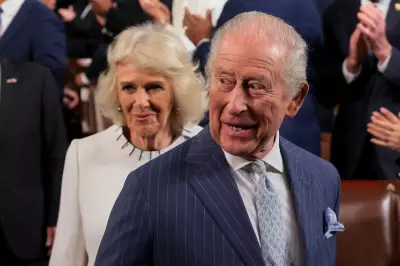
De Wever confirmed that he and Belgium's King Philippe would meet with Donald Trump to advocate for preserving the traditional military alliance between Brussels and Washington. He cautioned: "We either stand together or we will stand divided, and if we are divided, there is the end of an era, of 80 years of Atlanticism, really drawing to a close."

Literary Analogies and Philosophical References
The Belgian leader employed both children's literature and political philosophy to illustrate his concerns about Trump's approach. Quoting Italian philosopher Antonio Gramsci, De Wever suggested that in this period of significant transformation, it is up to Donald Trump to decide the fate of the alliance: "It's up to him to decide if he wants to be a monster - yes or no."
De Wever also referenced The Very Hungry Caterpillar, Eric Carle's famous children's picture book about an insect with an insatiable appetite. He accused Trump of not behaving like an ally, adding: "My feeling is that the sweet-talking is over. You reach the point where sweet-talking and sweet-talking is counterproductive. It only encourages them to go a step further – it's The Very Hungry Caterpillar."
Von der Leyen Warns of Downward Spiral
European Commission President Ursula von der Leyen warned that a diplomatic "downward spiral" in the West would only empower common adversaries. She criticised the proposed additional tariffs as "a mistake, especially between long-standing allies," reminding attendees that "The European Union and the United States have agreed to a trade deal last July. And in politics, as in business, a deal is a deal."
Von der Leyen stressed Europe's obligation to respond to international pressure with permanent changes: "My point is: if this change is permanent, then Europe must change permanently too. It is time to seize this opportunity and build a new independent Europe." She concluded by emphasising the bond between the continents: "We consider the people of the United States not just our allies, but our friends. And plunging us into a downward spiral would only aid the very adversaries we are both so committed to keeping out of the strategic landscape."
Administration Defense Amid Growing Rift
With Donald Trump scheduled to address the forum later in the week, his treasury secretary, Scott Bessent, sought to defend the administration's stance amid the growing criticism. Bessent downplayed the rift among Western nations over Greenland, asserting: "I think our relations have never been closer." He urged attendees to "Calm down the hysteria. Take a deep breath."
The treasury secretary added: "We are in the middle of President Trump's policies. And of course, Europe is an ally, the U.S.-NATO membership is unquestioned. We are partners in trying to stop this tragic war between Russia and Ukraine, but that does not mean that we cannot have disagreements on the future of Greenland."
As the World Economic Forum continues, the stark divisions between the United States and its traditional European allies have moved from diplomatic backrooms to the main stage, with leaders employing increasingly vivid language and dramatic analogies to express their concerns about what many see as a fundamental shift in international relations.