White House Employs Video Game Aesthetics in Iran Strike Propaganda
Governments worldwide are increasingly adopting the visual language of video games and internet memes to communicate warfare, a trend that critics argue trivializes violence and numbs public emotional responses to suffering. This tactic subtly shapes how societies interpret conflict and determines which deaths are acknowledged as meaningful losses.
Call of Duty Meets Real Warfare in White House Video
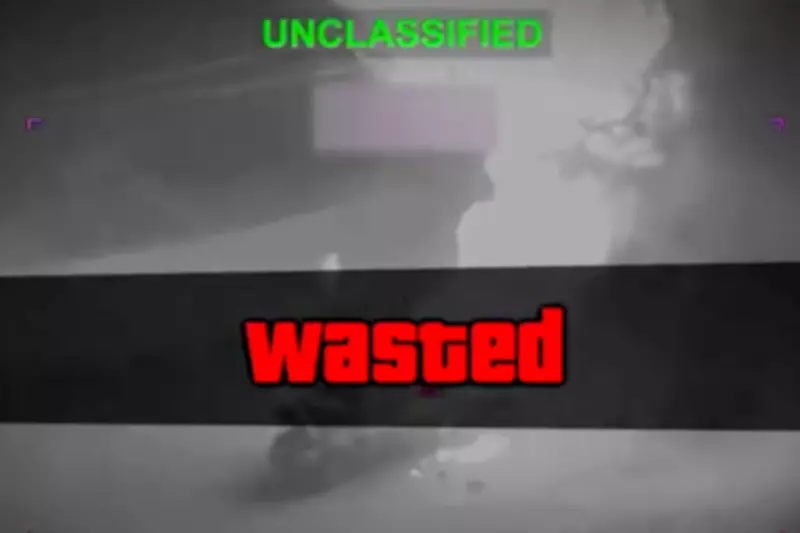
Millions recently viewed a White House-posted video showing US strikes against Iranian targets that blended authentic military footage with clips from Call of Duty: Modern Warfare III. The montage featured "killstreak" animations typically used in gaming to reward player performance, creating a disturbing fusion of entertainment and actual warfare.
This is not an isolated incident. Across social media platforms, military footage circulates as gaming content or memes, complete with cross-hair graphics, pulse-pounding soundtracks, and even humorous overlays like the Pokémon theme song accompanying Department of Homeland Security ICE raid videos.

- Who was specifically targeted in the strikes?
- Were civilians accidentally harmed during operations?
- Was the military action legally justified under international law?
These crucial questions rarely receive attention in twenty-second viral content pieces designed primarily for engagement rather than informed public discourse.
From CNN Effect to Gaming Aesthetics
The traditional "CNN effect" of television conflict coverage brought distant wars into living rooms through footage of suffering, generating moral pressure on governments through emotional connection. While imperfect, this model operated on the premise that seeing produced feeling, and feeling produced accountability.
This paradigm began fracturing during the 1991 Gulf War, which introduced the aesthetic of precision strikes filmed from above, rendering targets as abstract geometries on green-tinged screens. As critic Susan Sontag observed, this trained audiences to focus on military technology rather than human consequences.
Today's evolution toward gaming aesthetics represents a further departure. United States Defence Secretary Pete Hegseth has publicly celebrated strikes under Operation Epic Fury, blurring lines between military spokesperson and combat enthusiast in a manner that collapses critical distance.
The Problem of Ungrievable Lives
Philosopher Judith Butler's concept of "grievability" explains how some lives become culturally and politically recognized as worth mourning while others remain outside moral concern. The visual grammar employed by the White House frames people as game avatars—targets to be eliminated rather than human beings to be grieved.
This abstraction had tragic real-world consequences when over 160 girls, mostly under twelve years old, were killed by a US air strike at Shajareh Tayyebeh elementary school in Minab on February 28. These victims appeared nowhere in the White House's viral content.
When questioned about the incident, President Trump suggested Iran might have struck the school using a Tomahawk missile before stating, "I just don't know enough about it. Whatever the report shows, I'm willing to live with that." Meanwhile, Secretary Hegseth dissolved the Pentagon's civilian protection mission and dismissed military lawyers responsible for ensuring operations complied with international law, describing them as "roadblocks."
Meme Culture as Anti-Grief Mechanism
Meme culture compounds these issues through its inherent reliance on irony and humor, which function structurally as anti-grief mechanisms by creating emotional distance. When violence circulates as jokes or highlight reels, the emotional reality becomes increasingly inaccessible to audiences.
Former US special operations targeting specialist Wes J. Bryant, who worked on civilian harm prevention, starkly summarizes the situation: "We're departing from the rules and norms that we've tried to establish as a global community since at least World War II. There's zero accountability."

Restoring Moral Response to Warfare
Democratic scrutiny of conflict depends not merely on information availability but on moral response—the capacity to feel that what is happening truly matters. While memes will continue circulating and governments will compete for digital attention, audiences can learn to pause and question not just what happened, but what the format prevents them from feeling and about whom.
War is not experienced as a highlight reel but as loss, uncertainty, grief, and irreversible destruction. Restoring this understanding transcends media literacy—it represents a fundamental moral challenge for societies witnessing conflict through increasingly gamified lenses.
About the author: Daniel Baldino is a Senior Lecturer in Politics and International Relations at the University of Notre Dame Australia. This article is republished from The Conversation under a Creative Commons license.