The White House has firmly denied that United States naval forces have escorted any oil tankers through the strategically vital Strait of Hormuz, directly contradicting a now-deleted social media claim made by Energy Secretary Chris Wright. This conflicting information has sparked confusion and triggered significant fluctuations in global oil markets, highlighting the sensitivity of energy security in the region.
Conflicting Statements Cause Market Turmoil
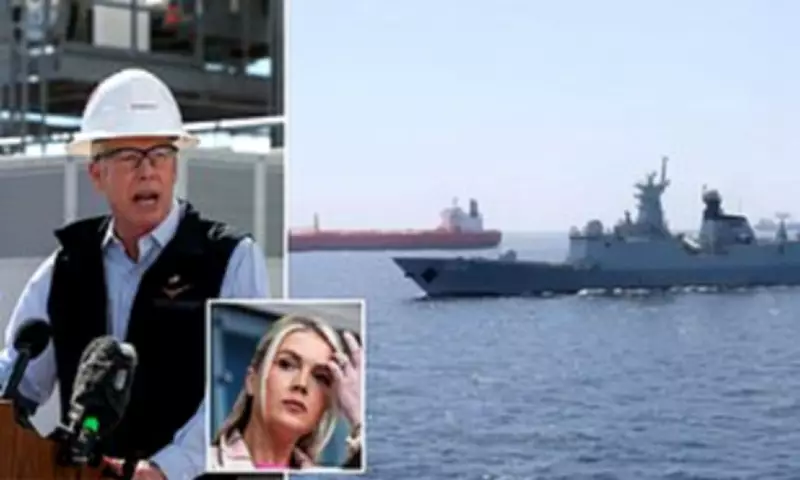
During a press briefing on Tuesday, White House Press Secretary Karoline Leavitt was unequivocal in her denial. 'I can confirm that the US Navy has not escorted a tanker or a vessel at this time,' she stated emphatically. This statement came after Energy Secretary Chris Wright posted, and then quickly removed, a message on the social media platform X claiming the opposite.
In the deleted post, Wright shared a video clip from a press conference in Colorado with text asserting, 'The US Navy successfully escorted an oil tanker through the Strait of Hormuz to ensure oil remains flowing to global markets.' In the accompanying video, Wright remarked, 'A large oil tanker went through about 36 hours ago. I think you will see more of those coming.'

Official Clarification and Internal Error
When pressed about the discrepancy, Leavitt noted she had not yet spoken directly with Secretary Wright about the incident but confirmed the post was taken down rapidly. The Department of Energy later issued a statement attributing the error to staff, explaining the video was 'incorrectly captioned by Department of Energy staff.' The spokesperson added, however, that discussions on ensuring oil flow from the region do include 'the potential for our Navy to escort tankers.'
Leavitt declined to comment on whether there would be any repercussions for the misinformation but did not rule out the possibility of future US naval escorts. She indicated that President Donald Trump could approve such an option if deemed necessary in the ongoing regional tensions.
Immediate Impact on Global Oil Prices
The conflicting reports had an immediate and dramatic effect on financial markets. Following Wright's initial post, prices for US crude oil plunged by as much as 19 percent, briefly falling below $77 per barrel. International Brent crude also saw a sharp drop of 17 percent to under $80 before recovering to over $90. Even after the White House correction, prices remained volatile and below their earlier levels.
Leavitt acknowledged at the briefing that oil prices would experience a temporary increase but suggested they could stabilize or even dip lower than pre-conflict levels once US operations in the region are concluded.
Presidential Posturing on Social Media
The incident unfolded alongside continued assertive rhetoric from President Trump on his Truth Social platform. In a post following Leavitt's briefing, Trump issued a stark warning regarding the Strait of Hormuz, a critical chokepoint for oil shipments from Iran, Iraq, Kuwait, Saudi Arabia, Qatar, and the UAE.
'If Iran has put out any mines in the Hormuz Strait, and we have no reports of them doing so, we want them removed, immediately!' Trump declared. He threatened an unprecedented military response if such obstacles were not cleared, while also framing their removal as a 'giant step in the right direction.' This followed similar threats made the previous day, underscoring the administration's focus on securing the vital waterway.
The episode illustrates the complex interplay between official communications, market sensitivity, and geopolitical strategy. While the White House has walked back the specific claim of a naval escort, the underlying discussion about using US military assets to secure oil transit through the Strait of Hormuz remains very much alive, with significant implications for global energy stability and regional diplomacy.