White House Press Secretary Defends Trump's Iran Decision as 'Feeling Based on Fact'
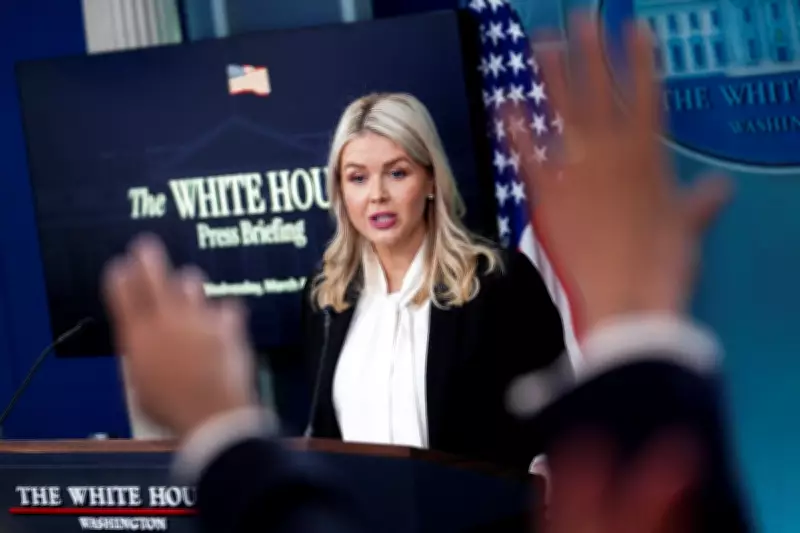
White House Press Secretary Karoline Leavitt has insisted that President Donald Trump's decision to launch military strikes against Iran was grounded in what she described as a "feeling based on fact" regarding an imminent threat to the United States and its allies. This statement came during a briefing on Wednesday, as the administration faces mounting criticism over shifting and contradictory justifications for the conflict that has erupted across the Middle East.
Contradictory Explanations Emerge from Top Officials
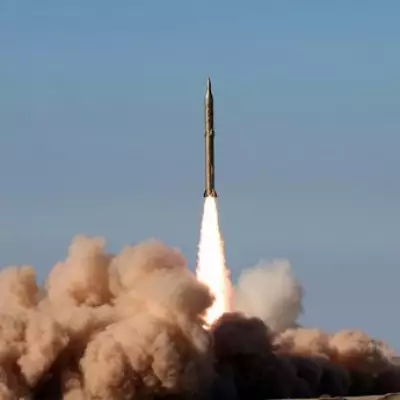
Since Trump announced the initiation of Operation Epic Fury via a social media post on Saturday, administration officials have provided rapidly changing rationales for the extensive and costly military campaign. Leavitt, addressing reporters for the first time since the American-Israeli bombing campaign began five days ago, emphasized that Trump would not "pass the buck" and allowed the threat to escalate. However, she declined to provide specific details about the alleged imminent danger, stating the president acted on a determination based on intelligence and instinct.
Secretary of State Marco Rubio initially framed the strikes as a preemptive measure to degrade Iran's ability to retaliate against American bases following an Israeli action. In contrast, Trump himself contradicted this narrative on Tuesday, suggesting he might have "forced Israel's hand" and asserting his strong belief that Iran was poised to attack first. This inconsistency highlights the administration's struggle to present a unified front.

Further Justifications and Military Claims
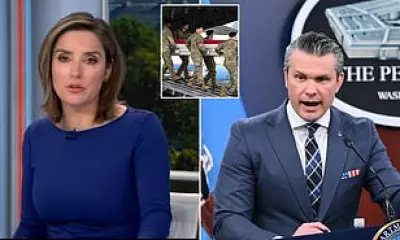
Adding to the confusion, Secretary of Defense Pete Hegseth offered another explanation during a Pentagon briefing, linking the strikes to Iran's alleged involvement in an unsuccessful assassination attempt against Trump. Hegseth claimed that a leader of an Iranian unit behind this plot had been "hunted down and killed," and he boasted about U.S. efforts to dominate Iran's airspace and waterways, including the sinking of an Iranian ship named for late Revolutionary Guard Corps leader Qassem Soleimani.
Despite Hegseth's assertion that this was the first torpedo sinking of a surface ship since World War II, historical records show similar incidents involving Pakistani and British submarines in 1971 and 1982, respectively. This discrepancy further undermines the administration's credibility as it navigates the complexities of the conflict.
Regime Change Ambitions and Lack of Post-Conflict Plan
While administration officials have attempted to distinguish this campaign from previous regime-change wars in Iraq and Afghanistan, the initial strikes effectively decapitated Iran's government by killing Supreme Leader Ali Khamenei and other top officials. Trump's announcement urged the Iranian people to rise up against their government, yet he acknowledged that Khamenei's replacement could be "as bad," labeling this a "worst-case scenario."
The White House has openly expressed a desire to destabilize and topple the Islamic Republic regime, which has ruled Iran since 1979. However, it has failed to outline any concrete plan for establishing a friendlier government in Tehran. The regime's violent repression of dissent complicates the identification of credible opposition figures, and Trump has shown lukewarm interest in prominent exiles like Reza Pahlavi, son of the late Shah, suggesting a preference for internal alternatives.
As the conflict continues to unfold, the administration's mixed messaging and lack of a clear strategic vision raise concerns about the long-term implications for regional stability and U.S. foreign policy. The ongoing scrutiny from media and political observers underscores the challenges in justifying a war that has already sparked significant chaos and humanitarian concerns across the Middle East.