War Is Not a Video Game – Even if Donald Trump Is Acting Like It Is
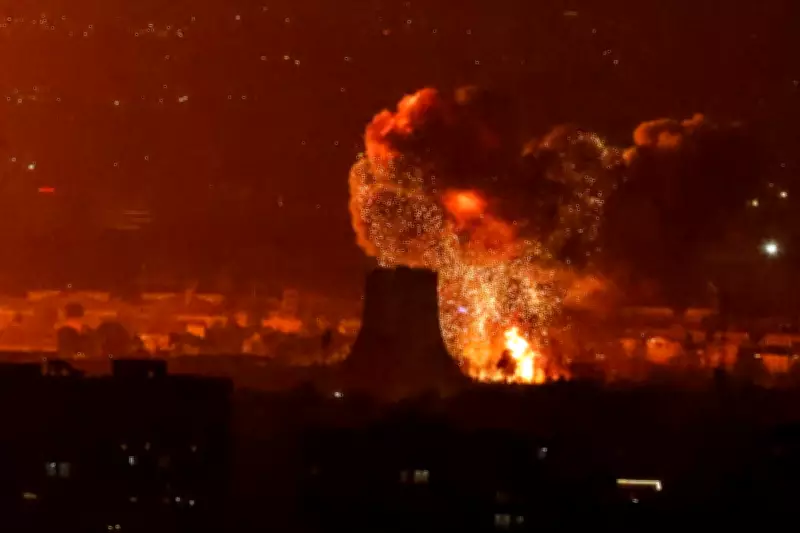
Washington may hope that airstrikes and overwhelming force will bring Tehran to heel, but history suggests wars between democracies and ideological regimes rarely end so neatly. The apocalyptic scenes captured on dash cams in Tehran, as motorists witnessed and fled US and Israeli strikes on oil infrastructure, will be seared into global memory.
The Civilian Cost of Precision Warfare
The awful nature of the Iranian regime should not blind us to the civilian costs of precision air strikes. War is not a video game, even if Donald Trump is acting like it is one. The latest escalation of the air war over Iran – extending from military targets to deliberately paralysing the civilian economy – is being carried out by two democracies. It now aims not only to cripple the regime's armed forces but also the paramilitary machinery through which it projects aggression abroad and repression at home.
Winston Churchill once observed: "Democracy is more vindictive than Cabinets. The wars of peoples will be more terrible than those of kings." Joseph Goebbels called for a "total war," but the RAF waged it. Ayatollahs may chant "Death to America and Israel," but democracies have developed far more powerful weapons of destruction – and because their leaders are elected, they often wield them with terrible self-righteousness, believing their intentions must be good.

Historical Parallels and Strategic Miscalculations
Wanting to bring democracy and freedom to Iran is not a wicked desire. Yet liberty dropped from a B-1 bomber is rarely a welcome gift. Americans like to say that after 1945, Allied occupation fostered democracy in West Germany and Japan. That's true, but it is also beside the point. Nazi Germany and Imperial Japan had attacked the US, and their peoples recognised that their regimes' aggression had brought catastrophic defeat.
Being attacked by a democracy armed with the best of intentions and the worst of weapons is no more likely to spark an uprising on Tehran's streets than Saddam Hussein's invasion of Iran 18 months after the Islamic Republic's establishment. The early history of the regime is instructive. In January 1980, the new Islamic Republic was convulsed by opposition after the upheavals of 1979. The Shah's flight did not usher in a smooth transition to Khomeini's autocracy. Instead, it was the Iraqi invasion that rallied Iranians around him and allowed the mullahs to crush dissent brutally in the name of national survival.
Economic Consequences and Global Fallout
Donald Trump presumably believed that Iran's regime would be thunderstruck by losing its Supreme Leader and so many close collaborators in the war's first moments – that resistance would collapse as futile. But even on auto-pilot, Iran's Revolutionary Guards launched counter-attacks, striking not only at American interests but at Gulf allies on whom the West depends for energy.
Spiking energy prices, as after Russia's invasion of Ukraine four years ago, are good for the American economy. Fracking has made the US an energy exporter. But the global consequences may be profound. The impact of sanctions on Russian exports could pale beside the combined effects of US-Israeli strikes on Iran's energy sector, its droning of neighbours across the Gulf, and the closing of the Strait of Hormuz to tanker traffic. America's allies from Europe to the Far East are already feeling the economic pain after a week of war.
Political Risks and Unpredictable Outcomes
Washington appears to have expected that spectacular US and Israeli airstrikes would make Iran "cry uncle." What it seems not to have planned for is Iran's willingness to sacrifice relations with Gulf states to squeeze Western economies outside the US into demanding a compromise peace. Donald Trump has called for Iran's "unconditional surrender" and denounced the new ayatollah, Mojtaba Khamenei, as unacceptable. Yet he appears reluctant to do what the US did in 1945 to secure unconditional surrender – invade the enemy's territory.

Boots on the ground mean body bags. In an election year, a drawn-out conflict could spell political disaster for the Republican Party. As Trump knows, Americans love a winner. That is why he constantly portrays himself as one while branding opponents, at home and abroad, as "losers." But if the regime in Tehran manages to hold on despite massive losses – as it did during the brutal war of the 1980s – then political costs could mount quickly. A frustrated electorate, the burden of a "forever war" Trump once vowed never to start, and an economic slowdown among Western allies cutting imports from the US could all rebound on Washington.
The Path Forward: Attrition or Resolution?
Declaring victory and trumpeting damage inflicted on Iran may prove far harder than some Trump supporters imagine. Both Iran and Israel have reasons to continue the fight. Iran will demand an end to Israeli and US airstrikes; Israel will fear giving its most implacable enemy time to rebuild for the next round – one in which American support might not be guaranteed.
Unless something changes very soon, a brutal war of attrition began on 28 February. Unlike the Second World War, it is not life-and-death for America. But it is existential for the mullahs. The question now is whether they can emulate North Vietnam – survive US bombing and wear down American willingness to fight a distant war. Churchill warned that war is inherently unpredictable. Donald Trump can shuffle scripts, but he cannot control events.